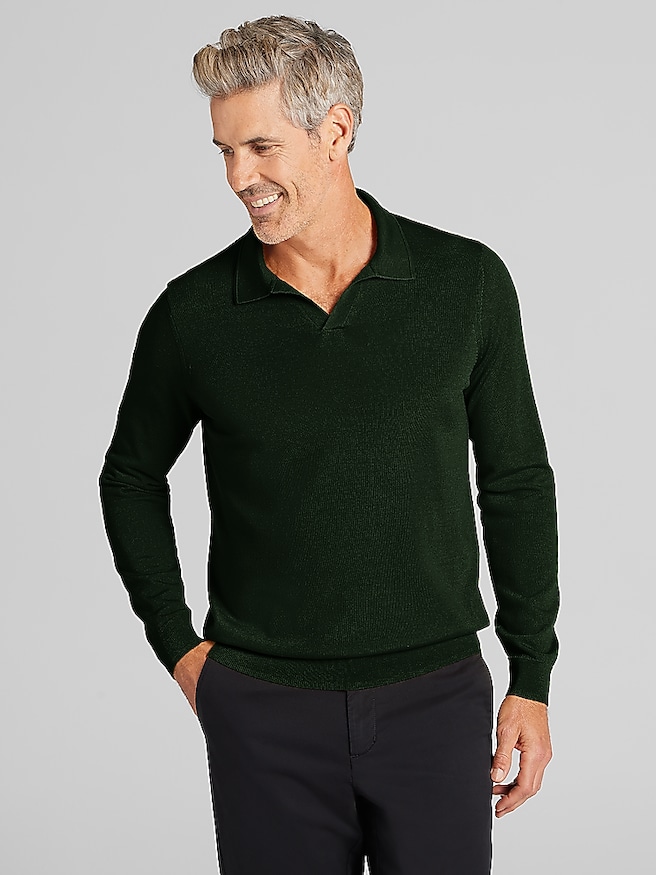
Big and tall knit shirts offer an easy balance of comfort and a finished appearance, with fabrics that flex through everyday movement and proportions designed to give larger or taller frames the room they need. Unlike woven fabrics, knits are formed from interlocking loops of yarn, which give the material a natural degree of flexibility. That structure makes a difference when reaching across a desk, settling into a restaurant booth, or spending several hours behind the wheel. The right fit feels comfortable through the chest and upper arms without leaving excess fabric gathered around the waist. Big and tall sizing addresses different needs: a bigger build may call for additional room through the body, while a taller build often benefits from added torso and sleeve length. Simply choosing a larger standard size can create a loose neckline or dropped shoulders without providing enough coverage where it matters. A well-proportioned knit shirt keeps the shoulder seams near the shoulders, allows the sleeves to follow the arms naturally, and provides enough length to stay comfortable when sitting or reaching. For an untucked look, the hem should offer coverage without extending so far that it overwhelms the outfit. For tucked-in wear, enough body length helps the shirt remain neatly in place through a full day. Necklines also influence the overall effect. A polo collar adds definition around the face, a crew neck creates a clean, casual line, and a buttoned henley neckline introduces subtle detail without the structure of a full placket. Short sleeves should leave room around the upper arm rather than grip it, while long sleeves should reach the wrist without pooling over the hand. Across these variations, the appeal of big and tall knit shirts is straightforward: relaxed movement, useful coverage, and a silhouette that looks intentional rather than oversized. Those qualities make them dependable choices for everyday dressing, whether the day involves a casual workplace, a family meal, or time spent away from home.
Fabric gives each knit shirt its character, from the smooth surface of jersey to the small, raised texture of piqué. Cotton knits are known for their soft feel and absorbency, making them a familiar choice for clothing worn close to the skin. Jersey generally drapes smoothly, while piqué has a more textured appearance that can give a polo a slightly more structured look. Cotton blends may combine that familiar softness with fibers that support shape retention or easier maintenance, depending on the construction. Polyester can contribute durability and resistance to wrinkles, while a small amount of elastane can add stretch and help the fabric recover after movement. Performance-oriented knits may also incorporate moisture-management features, though those properties depend on the individual fabric rather than the knit category alone. Fabric weight matters as much as fiber content. A substantial knit can skim the torso cleanly and provide a more defined outline; a lighter, more fluid knit may feel less restrictive but follow the body more closely. Neither is automatically better, and personal preference often comes down to how the shirt hangs through the chest, midsection, and hem. Details such as an even collar, secure buttons, reinforced shoulder seams, and tidy stitching can influence how a shirt looks after repeated wear. A collar that lies flat and a placket that does not pull help preserve a polished appearance without requiring a formal outfit. Care is part of that lasting appeal. Following the garment’s care label is especially important because cotton, blended fibers, and stretch fabrics can respond differently to washing and drying. Excessive dryer heat may contribute to shrinkage or affect stretch recovery, while rough handling can encourage surface wear. Turning knit shirts inside out before washing can help limit friction on the outer surface. Folding heavier knits rather than leaving them on narrow hangers can also help prevent stretched shoulders. With suitable care, a thoughtfully constructed knit shirt can remain a reliable part of a regular clothing rotation.
As part of a rotation of Big And Tall Shirts, knit styles make it easy to adjust the feel of an outfit without sacrificing comfort. A solid polo with flat-front chinos has enough definition for a relaxed office or dinner with friends, while a simple crew neck and dark denim create a clean foundation for everyday plans. A textured knit can add interest to an otherwise understated combination, especially when the pants and shoes have smooth finishes. For settings that call for a little more polish, a fine-gauge knit under an unstructured jacket provides a softer alternative to a woven shirt. The shirt should lie smoothly beneath the jacket, with enough room through the sleeves and armholes to avoid bunching. When worn on its own, the same shirt relies on the fit of the neckline, shoulders, and hem to give the outfit its shape. Color and pattern offer another way to make these pieces feel personal. Navy, charcoal, and other versatile neutrals are easy to repeat with different pants, while richer colors or restrained patterns bring variety to a familiar wardrobe. Stripes and small-scale textures work best when they remain visually consistent across the chest rather than distorting from a tight fit. For travel, a comfortable knit can move naturally between a long drive, a casual lunch, and an evening gathering, especially when its fabric holds its shape and coordinates with more than one pair of pants. Big and tall knit shirts can also be thoughtful gifts for someone who appreciates useful clothing but finds standard proportions frustrating. Knowing the recipient’s usual size, preferred shirt length, favorite neckline, and approach to tucked or untucked wear makes the choice more personal. The most useful shirt is not necessarily the boldest one; it is often the one that sits comfortably at the neck, leaves room to move, and works naturally with clothes already worn and enjoyed.