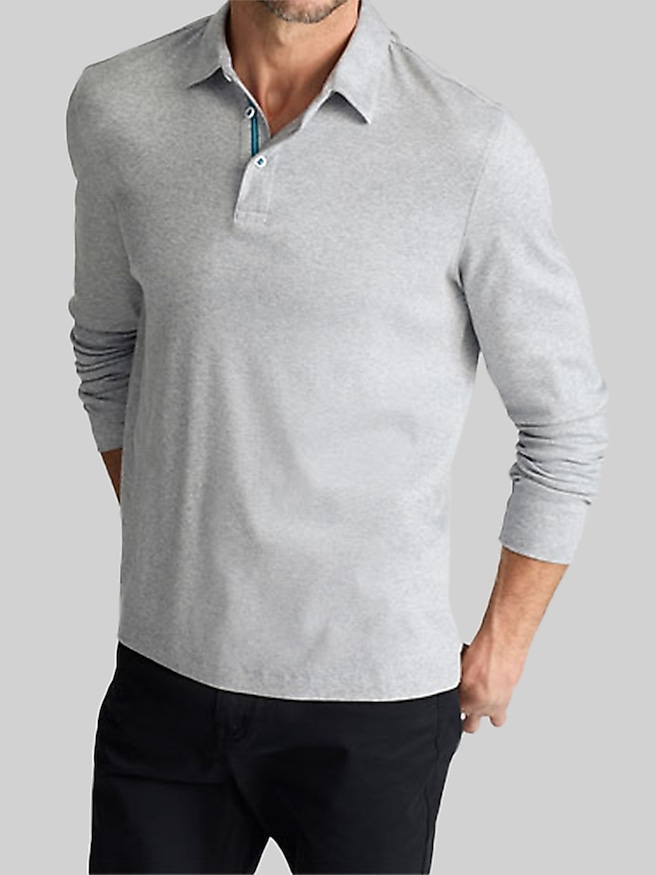
Big and tall golf polo shirts combine the collared look associated with the course with proportions designed for a larger frame, a longer torso, or both. Big sizing generally provides additional room through the chest, shoulders, and midsection, while tall sizing adds body length and may adjust sleeve length and placement. Those distinctions matter: sizing up in a standard polo can create excess width without providing enough coverage, while a longer shirt alone may still feel restrictive across the upper back. A balanced fit leaves room to rotate through a swing, bend to read a putt, and reach into a golf bag without the hem pulling free or the shoulder seams digging in. The fabric should skim the body rather than cling across the stomach or gather heavily at the waistband. Shoulder seams that sit near the edge of the shoulder and sleeves that allow a comfortable bend at the elbow help keep the silhouette clean. For a tucked-in look, sufficient length below the belt helps the shirt stay in place through repeated movement. An untucked polo benefits from a hem that provides coverage without extending so far that it overwhelms the rest of the outfit. Side vents can ease the fit at the hips, and a slightly longer back hem can provide additional coverage when bending. A neat collar and button placket give golf polos their recognizable structure, making them appropriate for many course settings and casual occasions beyond a round. Individual clubs and workplaces set their own dress expectations, so the same shirt may serve several purposes when its fit and styling suit the setting. Size labels are useful starting points, but chest, waist, and body-length measurements provide a clearer picture of how a polo will sit. For builds that need added length without unnecessary width, men's tall polo shirts reflect that more length-focused approach to proportion.
Fabric plays an equally important role in how a golf polo feels through a full round, a practice session, or a day that includes both desk time and activity. Polyester performance knits are often used for their light feel, shape retention, and quick-drying characteristics. Moisture-wicking constructions are designed to move perspiration away from the skin toward the fabric’s surface, where it can evaporate; that feature is distinct from stretch, and a shirt may provide one without the other. Elastane blended into a knit can add flexibility, while four-way stretch describes fabric that extends both across its width and along its length. That movement can be particularly helpful across the shoulders and upper back during a swing. Stretch works best alongside an appropriate fit, however, rather than compensating for a shirt that is too small. Cotton offers a familiar, soft hand, and cotton blends can balance that feel with the resilience of synthetic fibers. Piqué knits have a subtly textured surface that gives a polo definition, while smoother jersey constructions tend to have a more fluid drape. Neither texture alone establishes performance; fabric weight, knit structure, and fiber content all contribute to the experience. Breathability, moisture management, snag resistance, and stretch recovery deserve separate consideration because they describe distinct qualities. Features such as odor control or ultraviolet protection should be supported by the garment’s stated specifications rather than assumed from its athletic appearance. Visually, solid colors create an understated foundation with golf pants or chinos, while small-scale patterns and stripes add interest without requiring a complicated outfit. A collar that lies flat and a placket that remains smooth help the shirt look composed when worn on its own. Under a quarter-zip or casual jacket, a polo with comfortable shoulder room and limited excess fabric layers more cleanly. That versatility makes big and tall golf polos useful for practice days, casual office settings, travel, and relaxed gatherings where a T-shirt feels too informal but a dress shirt feels unnecessary.
Lasting comfort depends on construction and care as much as the initial feel of the fabric. Secure stitching at the shoulder seams, sleeve joins, side vents, and placket helps a polo withstand repeated movement and laundering. Even seams and firmly attached buttons are practical details for a shirt that moves between a golf bag, a suitcase, and regular rotation in a closet. A resilient collar should hold its shape without feeling rigid against the neck, and fabric with good recovery should settle back into place after reaching or twisting rather than remaining stretched at the elbows or hem. Care requirements vary by fiber blend and finish, so the garment’s label is the best reference for washing, drying, and ironing. Excessive dryer heat can contribute to shrinkage in some fabrics and can shorten the life of stretch fibers. Fabric softener may interfere with moisture-management finishes, making label-specific guidance especially useful for performance polos. Fastening buttons when recommended, washing with compatible fabrics, and keeping rough hook-and-loop closures away from fine knits can help reduce abrasion and snags. Prompt attention to grass marks or food spots is generally gentler than repeated aggressive washing after a stain has set. Folding a polo neatly or using a hanger that supports the shoulders helps preserve its shape between wears. For someone who plays regularly, a golf polo is also a practical gift when the recipient’s preferred fit, measurements, and usual colors are known. A familiar size designation is helpful, but knowing whether extra chest room, additional torso length, or both are needed makes the choice more personal. Someone who enjoys a driving-range session may value freedom through the shoulders, while a wearer who moves from a round to a casual meal may appreciate a tidy collar and an easy-to-coordinate color. The most useful big and tall golf polo shirts bring those everyday details together: comfortable proportions, purposeful fabric, dependable construction, and a look that feels at home both on and off the course.