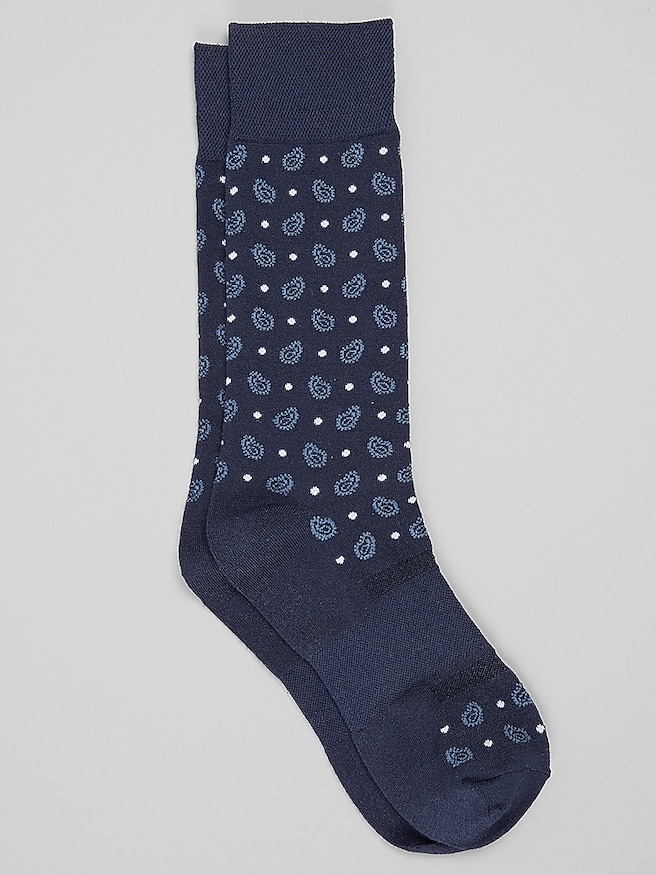
Bamboo blend socks bring a smooth, soft feel to an everyday essential, with fabric combinations suited to everything from tailored trousers to casual chinos. In most socks described as bamboo blends, the bamboo-derived component is rayon or viscose, a manufactured cellulose fiber made using bamboo as a source material. That distinction matters: the finished fabric is not simply raw bamboo spun into yarn, and its performance depends on the complete blend and the way the sock is knitted. Nylon or polyester may contribute strength and help the fabric withstand repeated wear, while spandex or elastane supplies stretch so the sock can follow the shape of the foot. Cotton may also appear in the blend, adding another familiar fiber to the mix. The result can be a supple sock with a close, comfortable fit, although softness, thickness, and elasticity vary by construction. A fine-gauge knit generally creates a smoother profile inside dress shoes, while a more substantial knit can provide additional cushioning beneath the foot. Bamboo-derived viscose is absorbent, but absorbency is not the same as moisture-wicking or quick drying; those qualities depend on the yarn, fabric structure, and other fibers included. Breathability also varies with thickness, knit density, and the shoes worn over the socks. For a workday that moves between a desk, a commute, and time on your feet, that balance of softness, stretch, and bulk can matter more than a single fiber percentage. Bamboo content alone does not establish antibacterial performance, odor prevention, or environmental benefits, so any such claims should be supported by information about the finished fabric and its production. What makes this category appealing is more straightforward: a smooth feel against the foot, versatile styling, and blended constructions that can balance comfort with the resilience needed for regular wear. A less prominent toe seam can further improve the feel inside close-fitting footwear, particularly when the front of the shoe leaves little room for extra fabric.
The fit of bamboo blend socks should feel secure without creating unnecessary pressure at the toes, heel, or calf. A well-positioned heel pocket sits around the heel rather than slipping underneath it or pulling up toward the ankle, and the toe area should allow the toes to rest naturally without stretching the fabric taut. Socks that are too large can gather beneath the arch or bunch near the toes, while an undersized pair may pull downward and place extra strain on the heel and toe. Shoe-size ranges provide a useful starting point, but foot width, calf shape, and the amount of stretch in the knit also influence comfort. A wider cuff can distribute pressure over more of the leg, although cuff construction and elasticity determine how firmly it holds. For dress wear, crew-length and over-the-calf styles can maintain coverage between the trouser hem and shoe when seated. That detail becomes especially noticeable when trousers rise during a meeting, at a wedding ceremony, or over dinner. Lower cuts create a more exposed ankle line, but their usefulness depends on the shoe opening and how securely the sock stays in place. Thickness deserves equal attention: a heavily cushioned sock can crowd a close-fitting loafer or Oxford, while a lighter knit may leave more room without changing the shoe’s fit as much. Color and pattern help connect the fabric choice to the rest of an outfit. Navy, charcoal, black, and brown can create a quiet transition from trousers to shoes, while a small geometric pattern or restrained stripe adds interest when the ankle becomes visible. Choosing a color close to the trousers often produces a more continuous line; a contrasting shade creates a deliberate accent. For another dress-focused fabric option, Cotton Blend Dress Socks offer a useful point of comparison, with the full fiber blend, cuff, seams, and cushioning remaining important considerations in either category. The most comfortable choice works with the proportions of the foot and the available space inside the shoe, rather than relying on softness alone.
Everyday durability comes from the entire construction of bamboo blend socks, including yarn quality, knit density, reinforcement, and care. Heels and toes experience repeated rubbing against shoe linings, so reinforced areas can be useful for frequent wear. Stretch fibers help a sock recover after being pulled on, but rough handling and unsuitable laundering can affect that recovery over time. The care label should determine the washing and drying routine, since blends do not all respond alike. When permitted by the label, a gentle wash cycle and a mesh laundry bag can limit tangling and abrasion; keeping socks away from exposed hook-and-loop fasteners can also help protect a smooth knit from snags. Excessive dryer heat may affect elastic components, and bleaching or other treatments should only be used when the care instructions allow them. Letting socks dry completely before wearing them again supports everyday hygiene, while rotating pairs gives each one time to be washed and dried properly. Shoe condition matters as well: a rough heel lining, an exposed interior seam, or a fit that allows the foot to slide can wear through fabric regardless of its softness. For daily office wear, travel, dinners, and celebrations that call for polished footwear, bamboo blends can provide a comfortable finishing layer without adding much visual weight. A refined dress construction, however, should not be assumed to provide the cushioning, targeted support, or abrasion resistance needed for demanding athletic use. As a gift, socks in this category can suit someone building a work wardrobe, preparing for a graduation, or refreshing the essentials worn with a favorite pair of dress shoes. Knowing the recipient’s shoe size, preferred sock height, and usual colors makes the choice more personal and practical. A smooth navy pair that stays neatly beneath tailored trousers may be more useful to a frequent suit wearer than a bold pattern, while someone with a relaxed wardrobe may appreciate subtle texture. The strongest choice balances the intended outfit, the feel inside the shoe, and a care routine that fits everyday life.