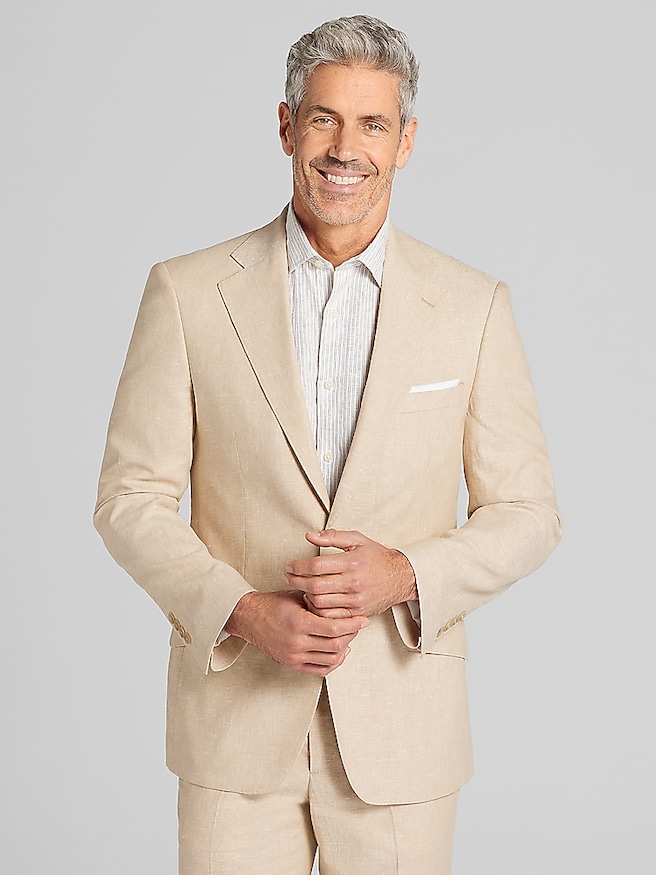
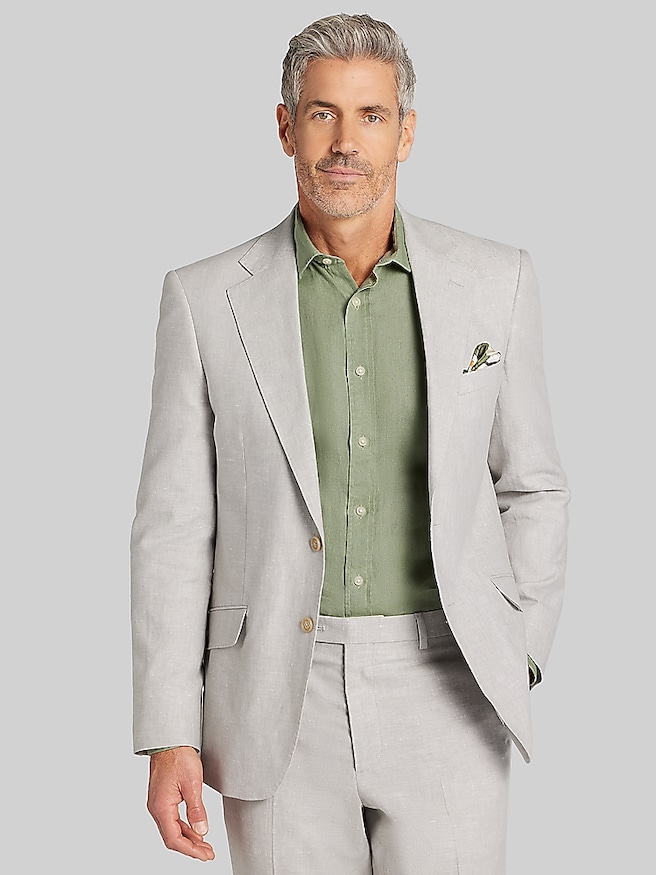
Ankle-length suits pair a tailored jacket with trousers that finish at or just above the ankle, creating a clean, abbreviated line that keeps footwear in view. In men’s tailoring, the term generally describes the trouser length rather than the jacket: the defining detail is a hem that falls clear of the shoe instead of folding over it. That distinction separates an ankle-length silhouette from a conventional full-break suit, where the fabric forms a noticeable crease above the instep. A no-break trouser can sit slightly lower than a cropped style, so the overall effect depends on the wearer’s height, the trouser rise, and the shape of the shoe. The appeal is precise rather than flashy. A smooth jacket front, a tapered leg, and an uncluttered hem give familiar suit colors such as navy, charcoal, and medium gray a more contemporary character. These suits fit naturally into business-casual workplaces, dinner reservations, gallery openings, and wedding celebrations where a modern tailored look suits the dress code. For a client presentation, a collared shirt and polished leather shoes keep the shorter trouser length grounded in traditional tailoring. For an evening out, a fine-gauge knit or an open-collar shirt can soften the same silhouette without making it look unfinished. More conservative offices and strictly formal events may call for a conventional trouser length or a separate category of attire altogether; an ankle-length suit is not automatically a substitute for a tuxedo when black tie is requested. Its strongest use is in settings that welcome personal style within a polished appearance. Solid fabrics emphasize the outline, while subtle checks and understated textures add depth without competing with the cropped hem. A matching vest can bring additional structure to a three-piece arrangement, though a two-piece suit often provides all the definition needed. The result is tailoring with a clear point of view, suited to someone who appreciates classic suit construction but prefers less fabric gathering around the shoes.
Fit makes the difference between deliberately cropped trousers and trousers that simply look too short. An ankle-length suit works best when the waistband stays comfortably in place, the seat lies smoothly, and the thighs allow enough room to sit, walk, and climb stairs without pulling. A tapered leg often complements the shorter hem, but taper should not mean fabric gripping the calves. When the lower leg is too narrow, the trousers can catch above the ankle after sitting and fail to fall back into place. A little clearance preserves the clean line. Jacket proportions matter just as much: shortening the pants does not require an unusually short jacket, and adequate coverage through the seat helps keep the outfit balanced. Shoulders should sit neatly, lapels should rest against the chest, and the buttoned front should avoid pronounced tension lines. On a taller frame, an aggressively high crop can interrupt the silhouette; on a shorter frame, excess width around a cropped hem can have a similar effect. The appropriate balance comes from the whole outfit, not a single inseam measurement. Trouser hems are most accurately assessed with the intended shoes and the waistband sitting at its usual position. Loafers leave more of the ankle visible, while lace-up dress shoes bring a stronger visual base to the look. Minimal leather sneakers can work in relaxed settings, but they change the level of formality and should suit the occasion. Socks also become part of the visible outfit. Fine dress socks in a color close to the trousers create continuity, while a restrained pattern adds personality when the wearer sits down. No-show socks offer another option with suitable footwear when an exposed-ankle look is appropriate. For tailored separates, Mens Ankle Length Formal Pants offer the same shorter-hem direction without requiring a matching suit jacket. Separates can broaden outfit combinations, although trousers and jackets in nearly matching colors may still look mismatched if their fabrics, textures, or dye tones differ.
Fabric and construction shape how an ankle-length suit looks after several hours of wear, not just when first put on. Wool suiting is valued for its drape, resilience, and ability to recover from light creasing, making it a practical consideration for repeated office wear and occasions involving long stretches of sitting. Fine worsted wool can produce a smooth, sharply defined appearance, while more textured weaves lend a softer visual finish. Wool blends vary considerably, so fiber content alone does not tell the entire story; the weight, weave, lining, and construction all influence comfort and movement. A modest amount of stretch can make bending and sitting easier, but it does not replace adequate room through the hips and thighs. Cotton brings a more relaxed character and tends to show creases more readily, which may suit less formal gatherings better than highly polished business settings. Linen has a distinctive texture and an intentionally rumpled quality, while synthetic blends can contribute wrinkle resistance and durability depending on their composition. For frequent use, practical details include secure pocket openings, tidy stitching, a stable waistband, and lining that allows the jacket to move smoothly over a shirt. Pockets should hold essentials without bulging, since a phone or overfilled wallet can distort an otherwise streamlined trouser leg. Care also helps preserve the intended proportions. Following the garment’s care label, treating marks promptly according to the fabric’s requirements, and allowing the suit to rest between wears can reduce unnecessary wear. A broad, supportive hanger helps the jacket retain its shoulder shape, while trousers stored along their crease are less likely to develop unwanted folds. Professional cleaning should follow the care instructions and the garment’s condition rather than become an automatic step after every brief wear. When alterations are needed, retaining usable hem allowance where construction permits leaves room for future adjustments. For a graduation gift or a first professional wardrobe, this style can feel personal and useful, though the recipient’s measurements and preferred trouser length are especially important. Thoughtful fit, suitable fabric, and consistent care give ankle-length tailoring lasting value beyond its distinctive hem.