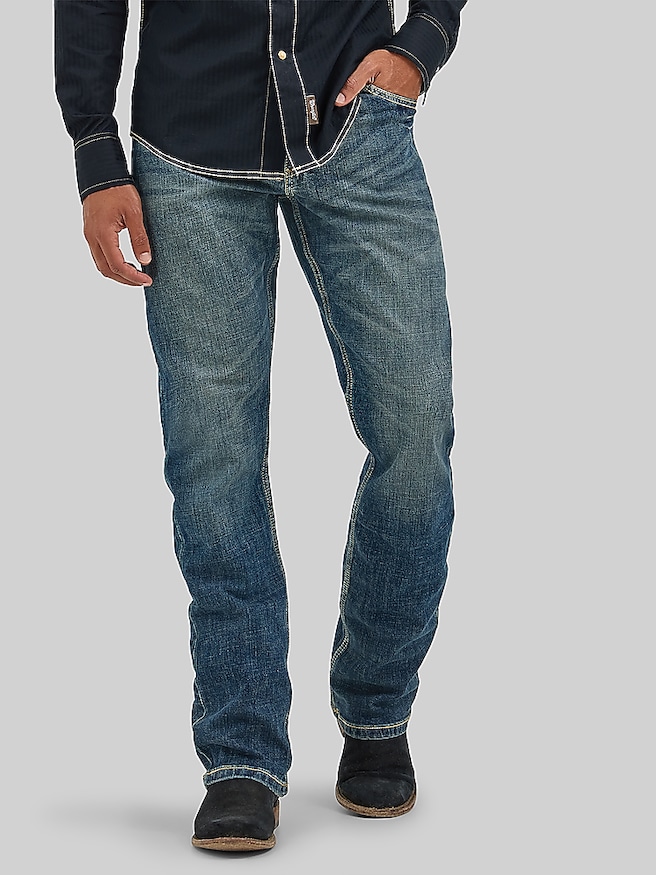
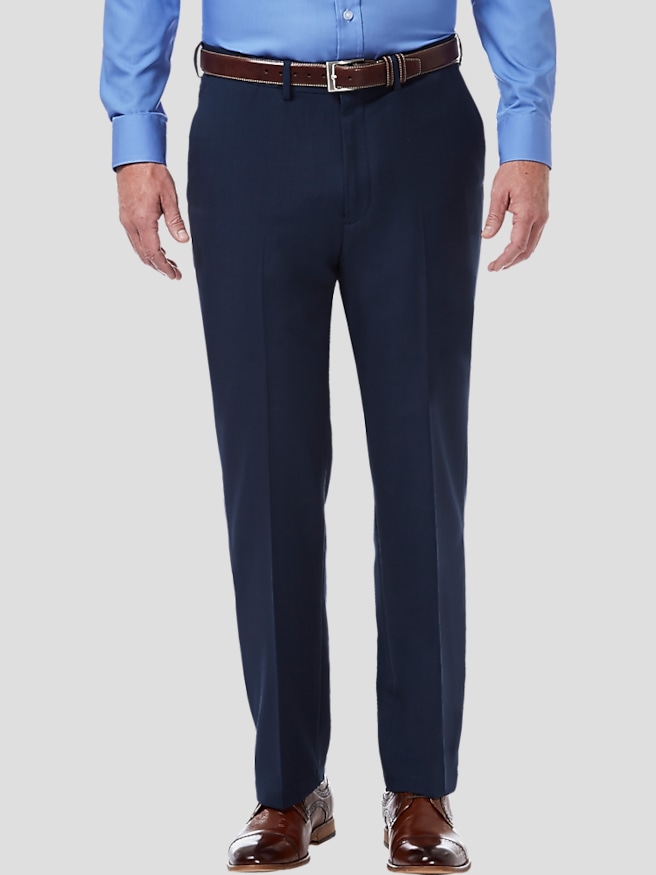
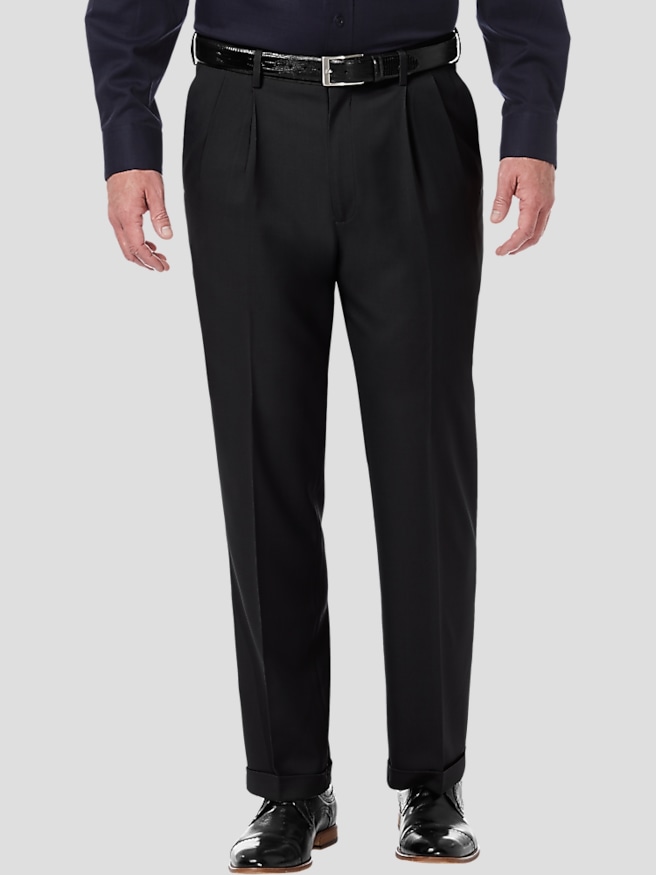
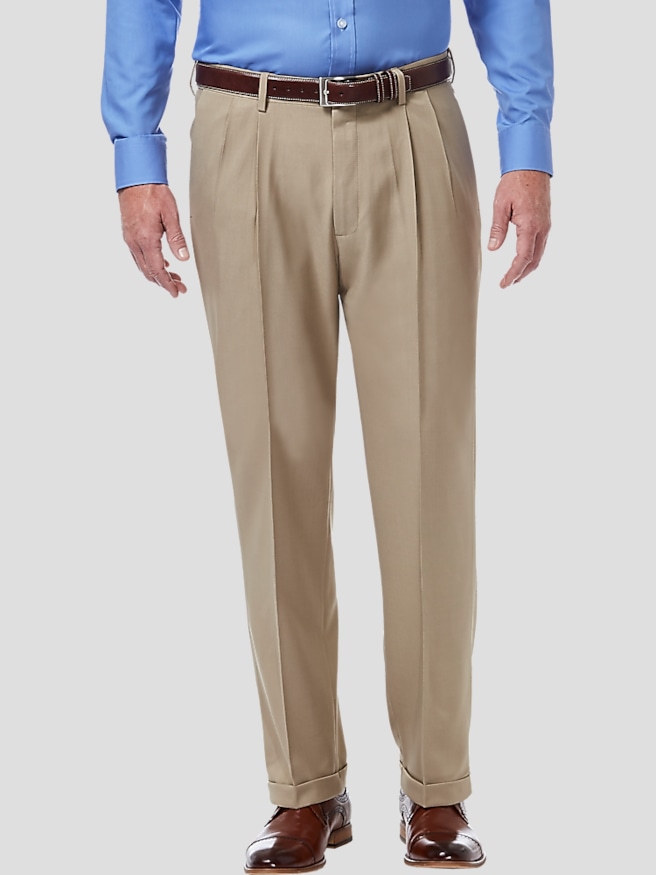
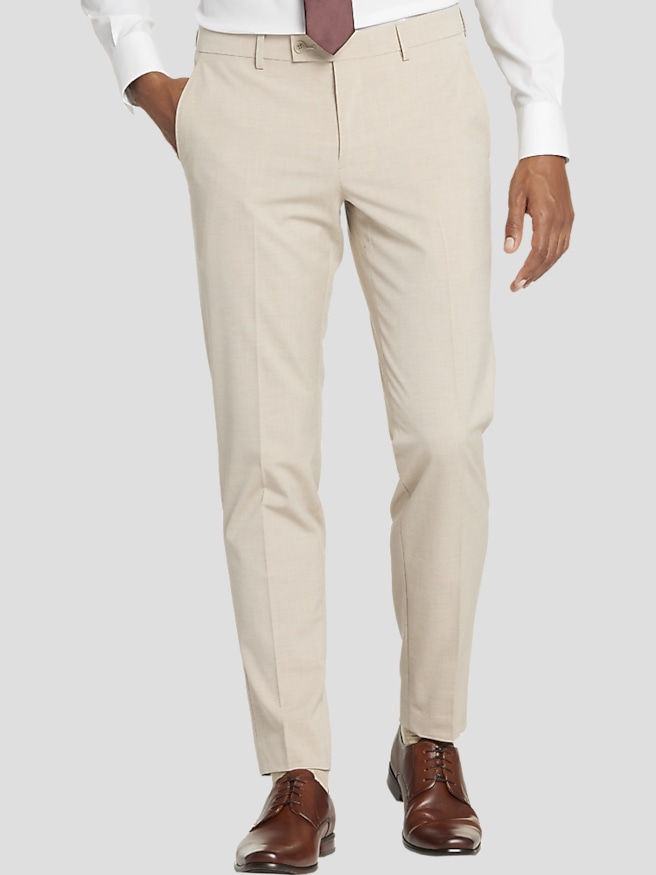
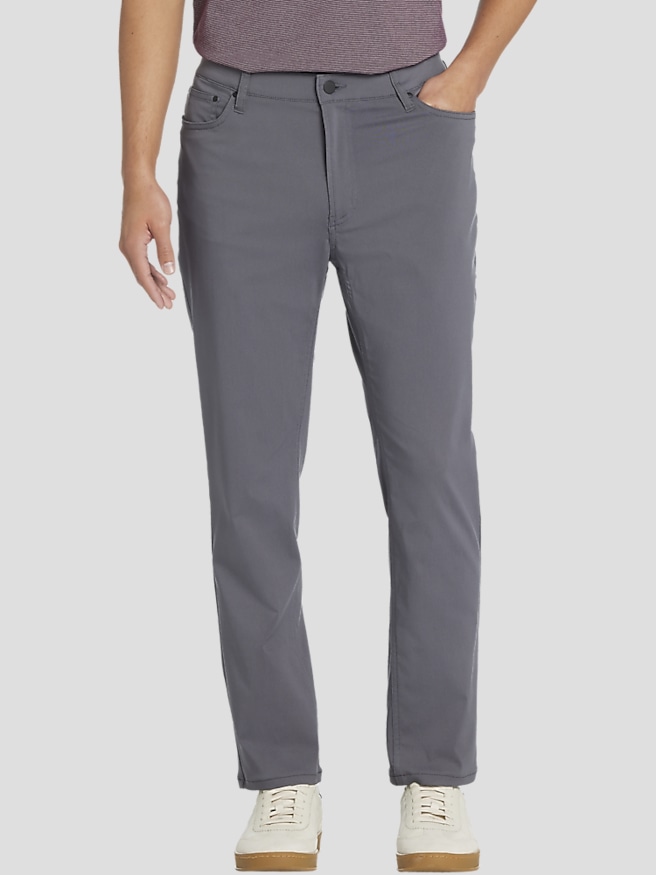
Ankle-length pants are trousers with hems that finish at or just above the ankle bone, creating a clean line with little or no fabric resting on the shoes. That shorter finish distinguishes them from full-length pants, which may form a slight fold, known as a break, over the top of the footwear. Ankle length describes the hem position rather than the overall fit: the silhouette can be slim, tapered, straight, or relaxed through the leg. For men who prefer a neat profile without excess fabric at the cuff, this length brings definition to everyday outfits and more polished combinations alike. A tapered pair can frame leather loafers neatly, while a straight-leg cut offers more room through the calf and a less close-fitting appearance. The result depends as much on proportion as on inseam. A hem that reaches the ankle on one person may sit noticeably higher or lower on someone else, so height, leg length, rise, and shoe shape all influence the finished look. The waistband should sit comfortably at its intended position, with enough room through the seat and thighs to sit at a desk, climb stairs, or step into a car without pulling. Front pockets that lie flat and a crease that falls smoothly help the shorter hem look intentional rather than simply too short. These pants suit a range of routines, from an office with a business-casual dress code to a dinner reservation or a weekend gathering. They also give footwear a more visible role in the outfit, whether that means freshly brushed suede shoes, polished lace-ups, or understated sneakers. Dark navy, charcoal, tan, and muted earth tones are versatile foundations, with the fabric and construction determining how dressed up the pants feel. A crisp wool trouser and a soft cotton chino can share the same ankle-length finish while serving distinctly separate purposes in a wardrobe.
Fabric makes a noticeable difference in how ankle-length pants drape, move, and hold their shape throughout the day. Cotton twill has a familiar, substantial feel and works well for casual offices, errands, and relaxed social plans. Its diagonal weave gives the surface subtle texture, while the weight of the cloth influences whether the leg hangs firmly or feels light and easy. Wool offers a smoother drape for tailored outfits, and wool flannel adds a softly brushed texture that pairs naturally with knitwear during the cooler months. Blended fabrics can combine the qualities of several fibers; depending on their composition and construction, they may offer easier care, improved shape recovery, or less visible wrinkling. A small amount of stretch can make sitting and walking more comfortable, though stretch does not replace adequate room at the waist, seat, and thigh. Lighter cloth tends to move more freely, while midweight fabric often gives a cropped silhouette enough structure to maintain a defined outline. For a day that moves from a morning commute to an evening meal, that balance of comfort and structure can matter more than a sharply fitted appearance alone. Construction details deserve similar attention. Secure seams, firmly attached buttons, smooth zippers, and neatly finished hems contribute to dependable everyday wear. Pocket placement also affects the profile, particularly with closer-fitting cuts, where a bulky phone or wallet can interrupt an otherwise smooth line. Durability depends on both the cloth and how the pants fit: repeated strain across the seat or inner thighs can accelerate wear. Care requirements vary, so the garment label remains the best reference for washing, drying, pressing, or professional cleaning. Excessive heat may shrink some fabrics or affect stretch fibers, altering both comfort and the carefully chosen hem length. Hanging tailored trousers neatly after wear helps preserve their shape, while allowing them to air between outings can keep them fresher. When pressing is appropriate, the correct heat setting and a pressing cloth help protect the surface, especially on darker fabrics where shine can become more noticeable.
Styling ankle-length pants is largely a matter of balancing the shorter hem with the rest of the outfit. A button-down shirt tucked into flat-front trousers creates a defined waistline, while a fine-gauge sweater offers a softer finish without adding much bulk. A sport coat can bring structure to the shoulders and make the exposed shoe line feel considered, particularly when the pants taper gently rather than cling to the calf. For dressier settings, men’s ankle-length formal pants offer a related direction, with suitability depending on the fabric, tailoring, and occasion’s dress code. The shorter silhouette can work for a polished dinner or a creative workplace, while a more conservative business setting may call for a hem that meets the shoe with less ankle showing. Formal occasions still require attention to the invitation; an ankle-length cut alone does not establish the right level of dress. Footwear changes the effect considerably. Low-profile loafers emphasize the space around the ankle, streamlined sneakers keep a casual outfit tidy, and lace-up dress shoes add visual weight beneath a tapered leg. During cooler weather, fine-knit socks provide coverage without crowding the shoe, and colors close to the trousers create a more continuous line. A subtle patterned sock can add interest when seated, when the hem naturally rises. Boots can work as well, provided the leg opening falls smoothly around the shaft rather than catching on it. The most useful length looks balanced both standing and sitting, which makes trying the pants with their intended shoes especially worthwhile. Any alteration should account for that footwear and the amount of taper at the hem. As a gift, ankle-length pants are best suited to someone whose waist measurement, preferred rise, and usual fit are known, since the visible hem makes proportion particularly important. For an established wardrobe or a shift toward cleaner tailoring, this length offers a distinctive finish without requiring an entirely new approach to getting dressed.