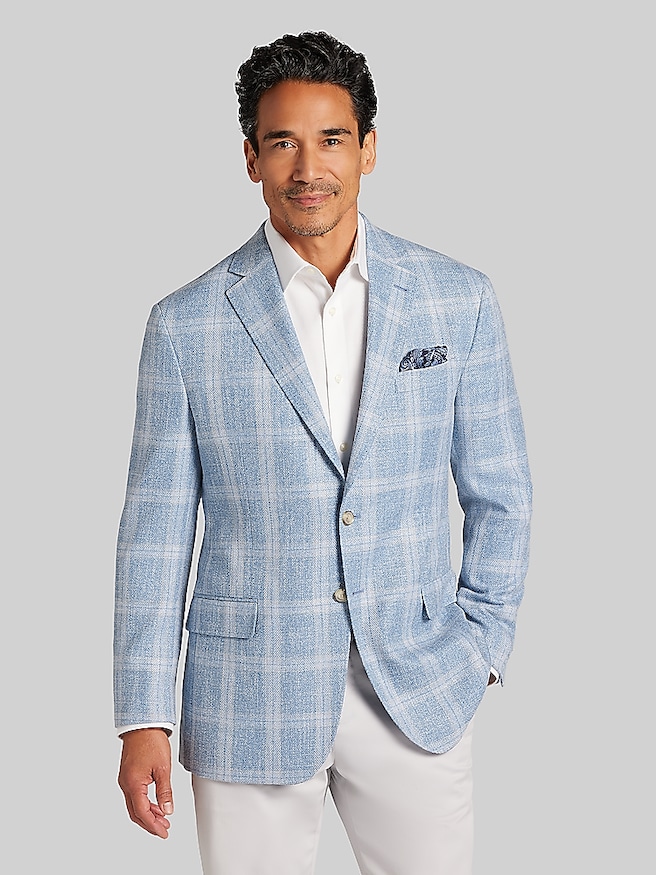
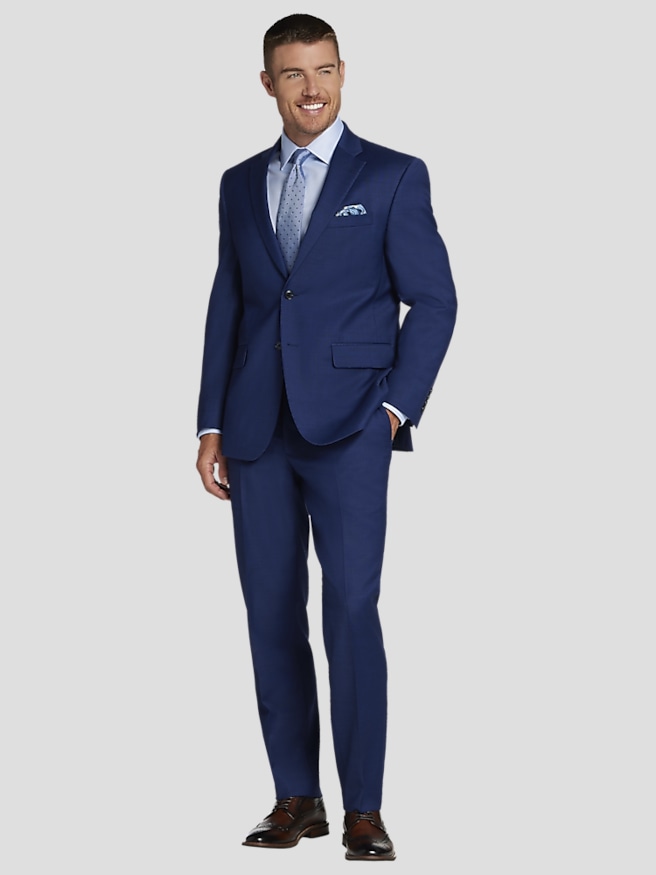
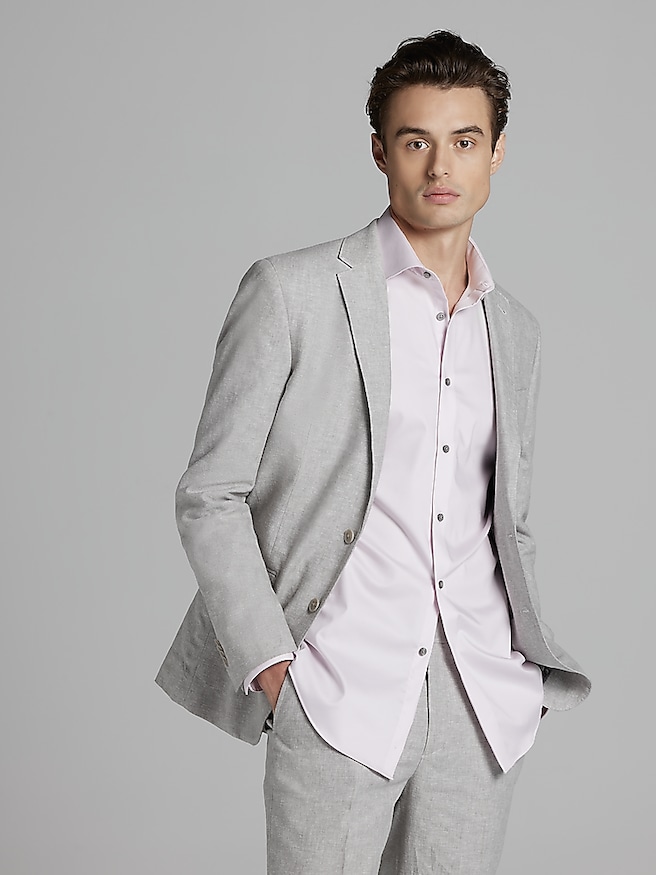
A suit jacket brings definition to an outfit, whether it is worn for a job interview, a wedding ceremony, a graduation, or an ordinary workday that calls for a little more polish. Its usefulness comes from the way the shoulders, lapels, and front panels create a clean outline without requiring elaborate styling. With matching trousers and a dress shirt, it becomes part of a complete suit; with thoughtfully coordinated separates, some jackets can take on a more relaxed role. Fit makes the biggest difference in how that transition looks. The shoulder line should follow the body rather than extend noticeably beyond it, and the collar should sit close to the shirt collar instead of leaving a visible gap. Across the chest, a smooth front usually looks more natural than fabric pulled into an X around the fastening button. There should also be enough room to sit through a ceremony, reach across a conference table, or shake hands comfortably. A slim fit follows the torso closely, while a classic fit generally leaves more room through the chest and waist; neither description replaces the importance of checking how a jacket actually sits on the person wearing it. Length and sleeve proportions finish the picture. A jacket that covers the seat creates a balanced traditional silhouette, and a small glimpse of shirt cuff gives the sleeve a deliberate finish. These details matter just as much for someone putting together a first professional wardrobe as for someone refreshing clothing worn to client meetings or family celebrations. A familiar shirt and pair of trousers can also provide useful context when assessing the shape: the jacket should feel like part of a complete outfit, not an isolated piece. Modest sleeve or waist adjustments may refine the result, but a sound fit through the shoulders provides the strongest starting point. The goal is a jacket that looks composed while allowing its wearer to focus on the conversation, presentation, or occasion rather than repeatedly adjusting the fabric.
Fabric influences how a suit jacket drapes, feels, and holds its shape over repeated wear. Wool is valued for its natural resilience and its ability to fall smoothly through the body, though the weight, weave, and finishing all affect the final result. Wool blends combine fibers to achieve particular characteristics, which may include added stretch, a smoother surface, or greater resistance to creasing. Synthetic blends can also have a consistent appearance and practical performance, but no single fiber description tells the whole story. The fabric label and care instructions provide more useful information than assumptions based on appearance alone. A matte finish often reads as understated and works easily with patterned shirts or textured ties, while a more noticeable sheen creates a dressier impression. Fine texture can give a solid-colored jacket depth without making the outfit feel busy. Inside, the lining helps the jacket slide over a shirt and contributes to the feel of the garment, while internal structure supports the chest and lapels. More structure creates a defined outline; a softer construction follows the body with less rigidity. Durability depends on the combination of fabric, construction, fit, and care. Tightness at the elbows or across the back puts repeated strain on seams, and heavily filled pockets can distort the front. Between wears, a broad, shaped hanger supports the shoulders better than a thin wire hanger, while space in the closet helps prevent crushing. A soft clothing brush can lift surface dust, and allowing a jacket to air out before putting it away can reduce lingering odors. Cleaning should follow the garment label rather than a fixed schedule, with spots addressed using methods appropriate to the fabric. A professional cleaner can assess marks or pressing needs when the label calls for that treatment. Careful handling helps preserve the lapel roll, smooth front, and overall shape that make a jacket look finished.
Color and pattern determine how easily a suit jacket connects with the rest of a wardrobe. Navy and charcoal create a restrained foundation for white, pale blue, or subtly striped shirts, and they work across many professional and social settings. Medium gray offers a slightly softer contrast, while a restrained check or fine stripe adds visual interest without taking attention away from the person wearing it. When a jacket is intended as part of a suit, matching trousers should share the same fabric and color; two pieces that are almost alike can look unintentionally mismatched. A separate-trouser combination works best when the contrast looks purposeful and the jacket’s texture and construction suit that less formal approach. The same attention to coordination applies to another layer. For occasions that call for a more complete ensemble, Affordable Suit Vests can be considered alongside the jacket, with attention to compatible fabric, balanced proportions, and enough room through the chest for comfortable layering. A vest should sit smoothly beneath the jacket rather than create bulk around the buttons or armholes. Finishing pieces can remain simple: a crisp shirt, a tie with a restrained pattern, and clean dress shoes often provide all the detail a tailored outfit needs. For a presentation, that combination keeps the overall impression focused; for a wedding reception, a textured tie or pocket square can add personality without overwhelming the jacket. Someone who wears tailored clothing frequently may find a consistent silhouette especially useful, while an occasional wearer may appreciate a jacket that feels familiar across several kinds of events. As a gift for a graduate, partner, or family member, a suit jacket benefits from knowing the recipient’s measurements, preferred fit, and typical dress requirements. Personal taste matters, particularly in shoulder shape and how closely the waist is cut. A jacket with the right proportions, a pleasing fabric, and manageable care needs can become a dependable part of getting dressed for meaningful occasions and everyday responsibilities alike.