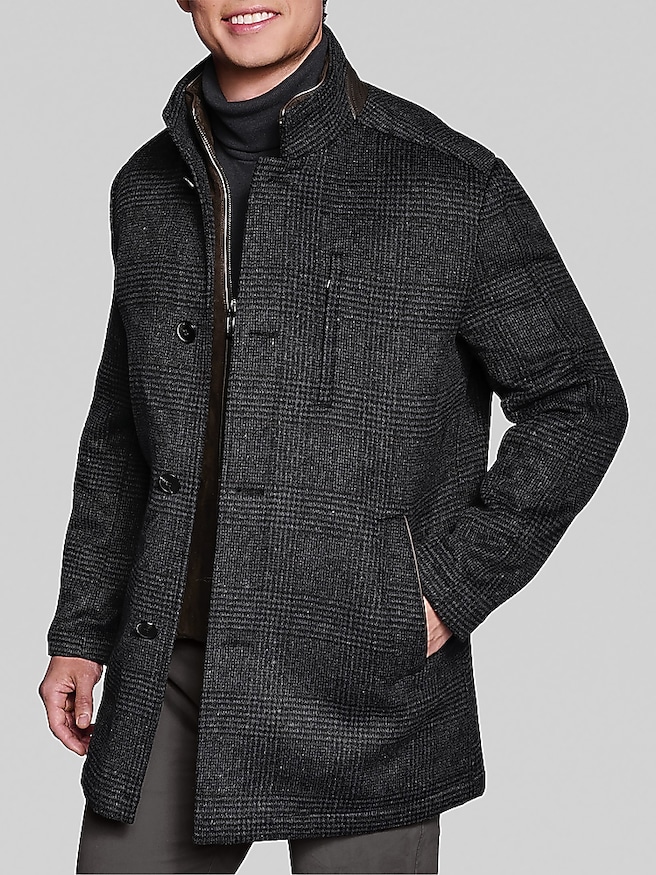
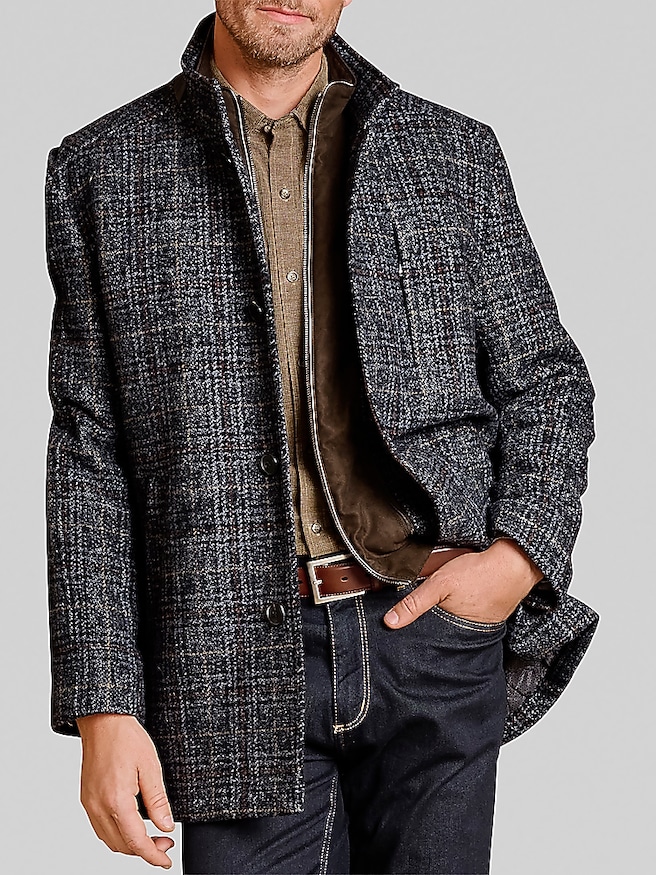
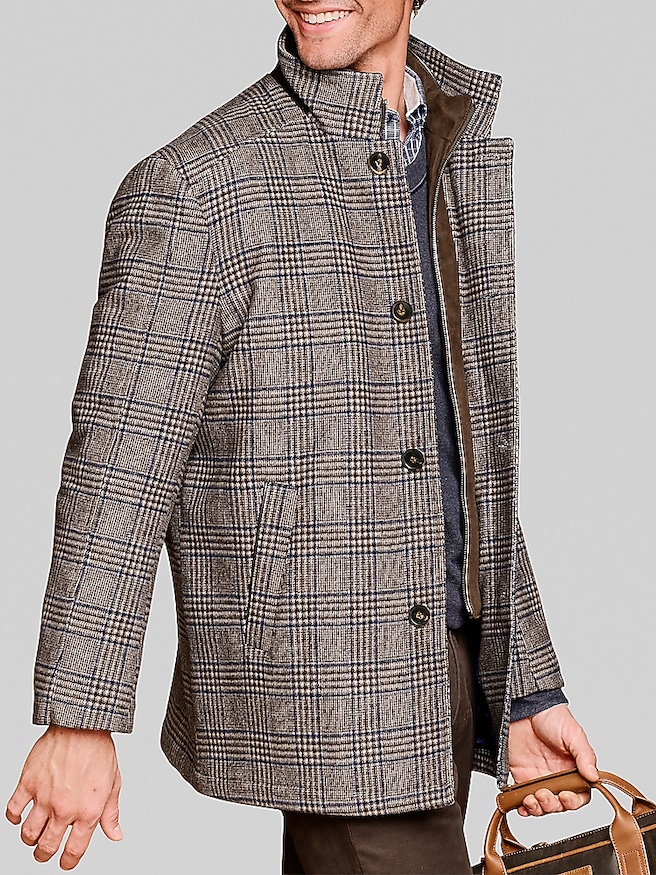
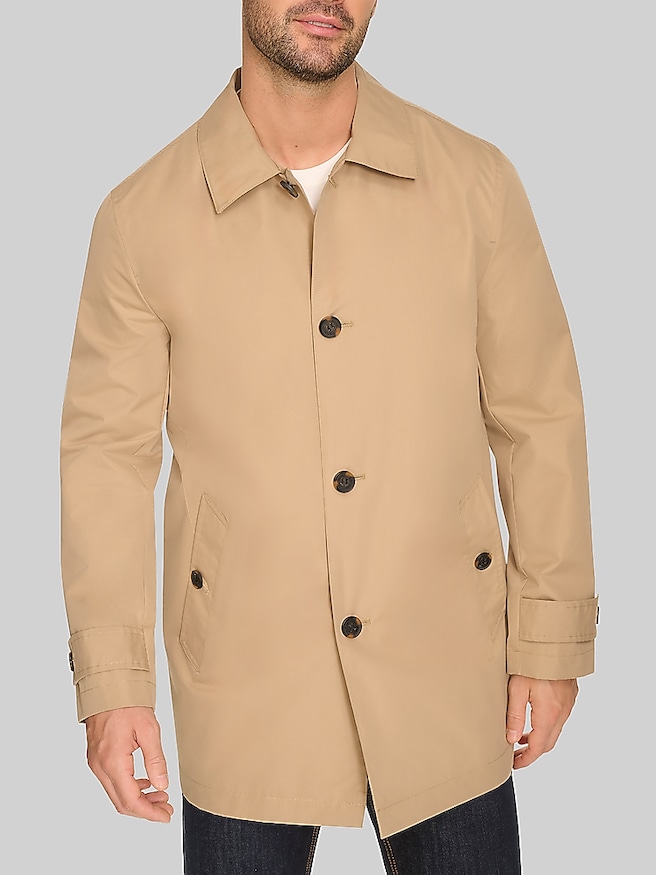
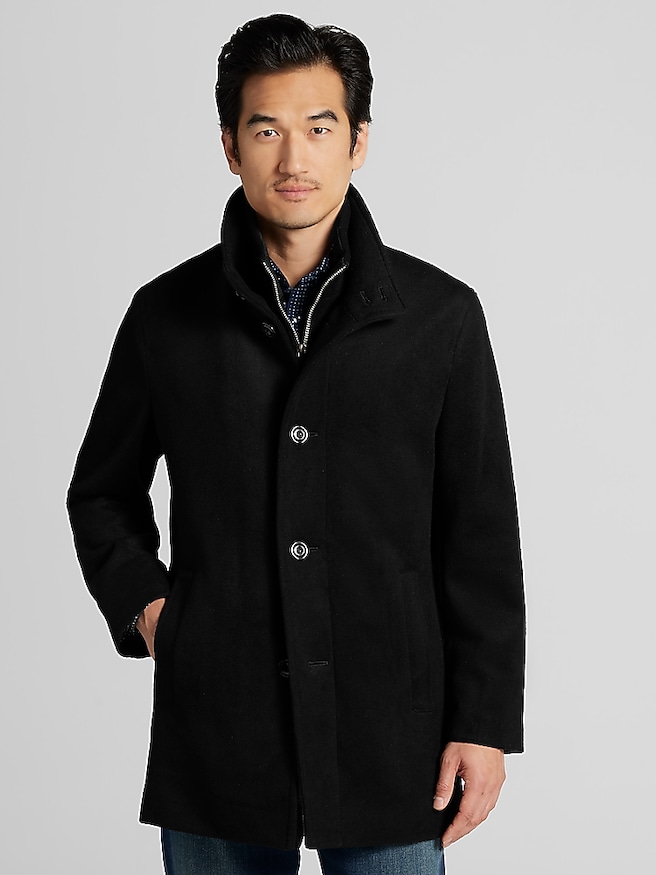
Affordable overcoats are longer outer layers designed to fit over suits, sport coats, sweaters, and everyday clothing, adding coverage without hiding the shape of an outfit. Their appeal comes from that balance of practicality and polish: a well-proportioned coat can look just as natural over a navy suit on the way to work as it does over a textured sweater and dark jeans at dinner. Length is part of what sets an overcoat apart from many casual jackets. A hem that reaches from around mid-thigh to the knee creates a clean vertical line and covers more of the clothing underneath, although the exact placement depends on the wearer’s height and the coat’s cut. Fabric makes an equally noticeable difference. Wool is a traditional choice for its insulating qualities, natural texture, and ability to drape neatly over tailored clothing. Wool blends combine that character with other fibers, which can influence the fabric’s weight, softness, resilience, and care requirements. The fiber percentages tell more than a general fabric name alone, and a heavier feel does not automatically mean a coat will be warmer in every setting. Fabric density, lining, fit, and the layers underneath all contribute to comfort. A smooth lining helps the coat slide over jacket sleeves and knitwear, while an unlined or partially lined construction can feel less substantial. Some coats include added insulation; a lining by itself does not necessarily provide it. For a walk between the train station and the office, coverage at the chest and neck may matter as much as fabric weight. For frequent travel by car, ease of movement and a comfortable seated fit may take priority. A tailored wool or wool-blend overcoat also should not be assumed to be waterproof. Its strongest role is usually as a polished outer layer for cold, dry conditions, with protection from rain depending on the fabric and any stated treatment.
Fit is especially important because an overcoat has to accommodate another outfit beneath it. A coat that looks sharp over a thin shirt may pull across the back once a suit jacket or substantial sweater is added. Enough room through the shoulders, upper arms, and chest allows the fabric to hang smoothly rather than stretching at the buttons or bunching around the armholes. The shoulder line should look intentional, with neither a tight ridge at the upper arm nor so much excess fabric that the coat appears to sag. With the front fastened, reaching forward, climbing stairs, and sitting down should feel comfortable. Sleeves need to cover the clothing beneath them without swallowing the hands, and the hem should generally extend below a suit jacket when the two are worn together. A close, streamlined silhouette works well over lighter layers, while a more relaxed cut leaves room for thicker knitwear and fuller tailoring. Neither needs to look oversized when the shoulders and overall proportions are right. Details also change how an overcoat feels in daily use. A single-breasted front creates a simple, uncluttered line; a double-breasted front adds overlap and a more pronounced tailored look. Lapel width can echo the proportions of the jacket underneath, while a collar that sits neatly against the neck helps the whole coat look settled rather than loose. Back vents give the hem room to move when walking, and pockets are most useful when their placement feels natural with arms at rest. Deep pockets can hold gloves, but overfilling them can distort the front of the coat. Color and texture offer another way to connect the coat with an existing wardrobe. Charcoal, navy, black, and camel tones pair easily with many suit and trouser colors. A subtle herringbone or softly brushed surface adds interest without requiring a bold pattern elsewhere. The result should feel like a continuation of the outfit, not a separate layer competing with it.
An overcoat earns its place through repeated use, from a weekday commute to a winter wedding, a theater evening, or a dinner that calls for something more polished than casual outerwear. For someone who regularly wears tailoring, enough length to cover the jacket and a smooth interior can make getting dressed simpler. For someone whose wardrobe leans toward chinos, denim, and sweaters, a less structured silhouette can provide the same longer coverage with an easier feel. For outfits that call for a shorter outer layer, Affordable Jackets offer another direction. An overcoat can also make a thoughtful gift for a graduate starting an office role, a partner who enjoys dressing well, or someone whose calendar includes formal gatherings. Familiarity with the recipient’s measurements, preferred fit, and usual layers matters more than relying on a shirt size alone. Durability depends on more than fabric thickness. Even stitching, securely attached buttons, tidy buttonholes, and a lining that does not pull at the seams are useful signs of careful construction. Areas exposed to repeated friction, including cuffs, pocket edges, and the places where a shoulder bag rests, deserve attention over time. Care should follow the garment label, especially when wool, structured fronts, or multiple fabric types are involved. Some coats require professional cleaning, and washing them at home can affect both the fabric and the internal structure. Between cleanings, gentle brushing with a brush suited to the fabric can remove surface lint and dust. A sturdy, broad hanger supports the shoulders better than a thin wire hanger, and a damp coat should air-dry away from direct heat before being stored. Giving the coat space in the closet helps preserve its shape, while breathable storage is useful when it will not be worn for an extended period. These small habits help affordable overcoats maintain the clean drape, comfortable fit, and finished appearance that make them useful across workdays and dressed-up occasions.