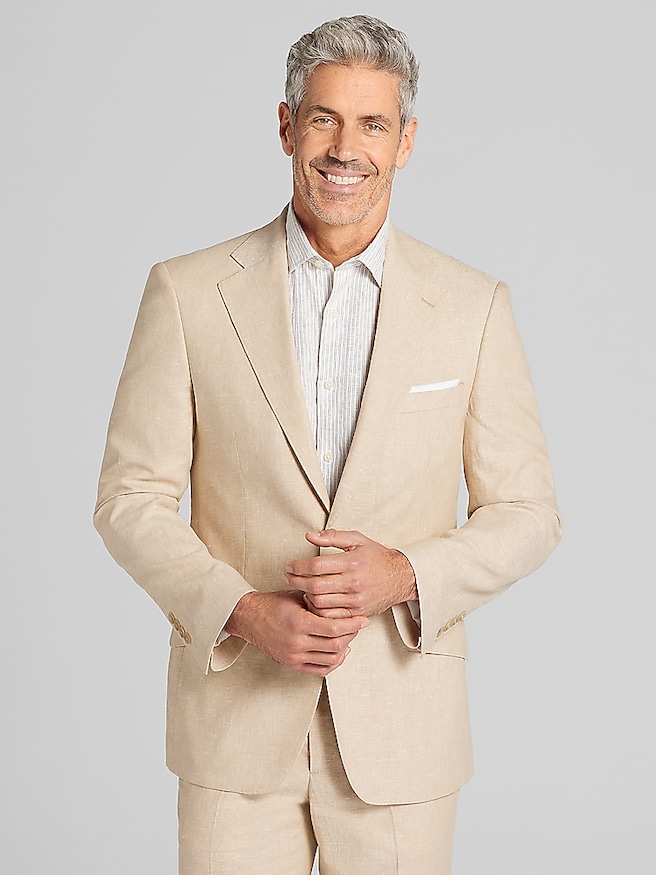
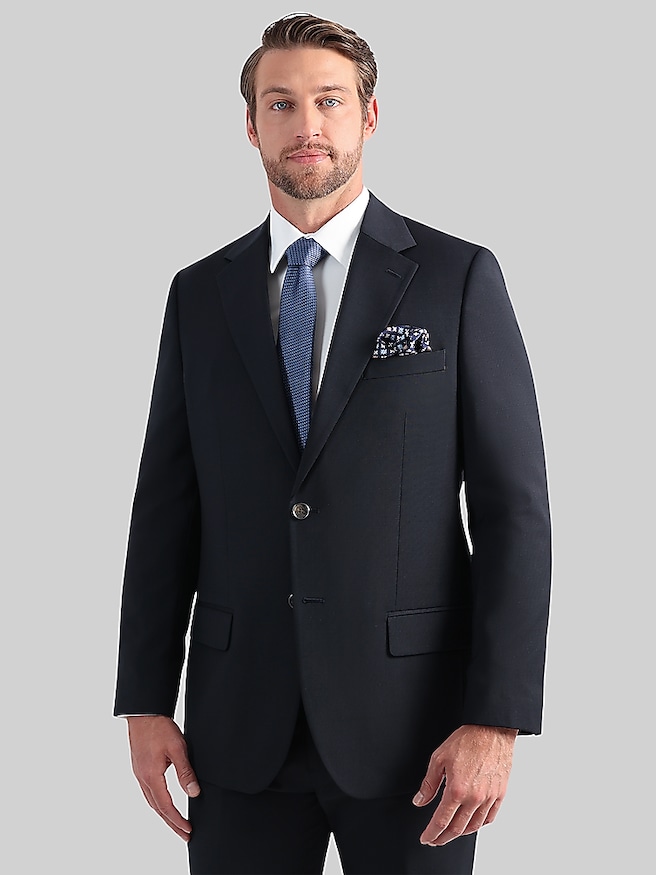
A 6X suit is designed for a fuller build, but the size label is only a starting point for finding a jacket and trousers that fit well together. The labels 6X and 6XL both identify extended sizing, but neither corresponds to a universal chest measurement or a single numbered jacket size. One size chart might also list body measurements while another gives the dimensions of the finished garment, which already include room for movement. For body measurements, keep the tape level around the fullest part of the chest and seat, and measure the waist where the suit trousers will sit. A familiar jeans size is less useful than that waist measurement, especially if the two waistbands sit at noticeably distinct heights. Height and sleeve length matter, too: a fuller chest doesn’t necessarily call for a longer jacket, and a longer sleeve won’t correct a jacket that sits too short through the body. In a matched suit, the jacket and trousers may be sized using a standard drop. A drop of six, for example, means a numbered jacket size of 60 is paired with a trouser waist labeled 54. That’s a sizing convention, not a rule about how a person should be proportioned. A wearer who needs more room at the waist or seat than a matched set allows may get a better fit from suit separates, which let the jacket and trouser sizes be chosen independently. If the waist is right but the trousers pull across the seat, going up at the waist alone can leave the waistband loose without fixing the cut. The same principle holds at the chest and shoulders: extra room in one area cannot make up for a poor fit elsewhere. When shopping for several people in a wedding party, start with each person’s measurements rather than assuming everyone needs the same cut; someone whose measurements correspond to 2X can start with 2x Sized Suits.
The best indication of a good fit is how the suit looks and feels in motion. A jacket can look smooth in the mirror with arms at the sides and still pull when the wearer reaches across a table or extends a hand. The shoulder seams should sit near the natural edge of the shoulders, the collar should rest against the back of the neck without a gap, and the lapels should lie flat when the jacket is buttoned. Diagonal lines radiating from the button often signal that the jacket needs more room through the middle. A classic cut can give a fuller build room through the chest and waist while keeping a clean line down the front. Trousers should drape smoothly through the seat and thighs and feel comfortable at the waistband when sitting. These details matter over a long ceremony, a business dinner, or an afternoon spent moving between meetings. A fitting with the intended dress shirt and shoes makes it easier to judge how much cuff shows below the jacket sleeve and how the trouser hem meets the shoe. Hems and sleeve lengths are generally easier for a tailor to adjust than jacket shoulders, so it makes sense to settle the fit through the upper body first. For interviews, presentations, or other occasions that call for business attire, a two-piece suit in navy or charcoal offers a straightforward backdrop for a crisp shirt and simple tie. At a wedding or formal celebration, a three-piece suit adds a vest that keeps the outfit looking pulled together after the jacket comes off. The vest needs enough room to lie flat when seated and enough length to meet the trouser waistband without a strip of shirt showing. A suit can also make a thoughtful gift for a graduation, a new job, or another milestone when the recipient can take part in choosing the fit and having the hems and sleeves set to the right length.
Fabric affects how a 6X suit hangs, how readily it creases, and how much care it needs between wears. A smooth wool weave typically drapes well across the chest and down the leg, while a subtly textured weave can add depth to a solid color without drawing attention away from the shirt and tie. Wool blends vary in feel and wrinkle recovery, so the fiber content and the way the cloth is woven are both worth considering. A touch of stretch can make sitting or reaching more comfortable, but it won’t replace a cut with enough room through the back, seat, and thighs. Fabric weight and structure also shape the silhouette: a cloth with more body can give the trouser leg a defined line, while a softer cloth tends to fall more fluidly. A smooth jacket lining can help the sleeves slide over a dress shirt without bunching. For a suit that will see regular wear at work or at formal gatherings, a fabric that recovers well from creasing can make a noticeable difference after a long stretch at a desk or a drive to an event. Fit contributes to durability, too. Trousers that bind across the thighs or seat put repeated stress on the fabric and seams, and a jacket that pulls hard at the waist strains the button and the cloth around it. Between wears, a broad hanger supports the jacket shoulders, and hanging trousers along their crease helps preserve the line. Emptying the pockets keeps keys and other small objects from stretching the fabric out of shape. Follow the garment’s care label for cleaning and pressing rather than assuming all suit fabrics can be treated alike. If both pieces of a matched suit need professional cleaning, sending them together helps keep the finish consistent. Regular care and a fit that allows for ordinary movement help the suit keep its shape, whether it’s worn on a regular workday or brought out for a milestone celebration.