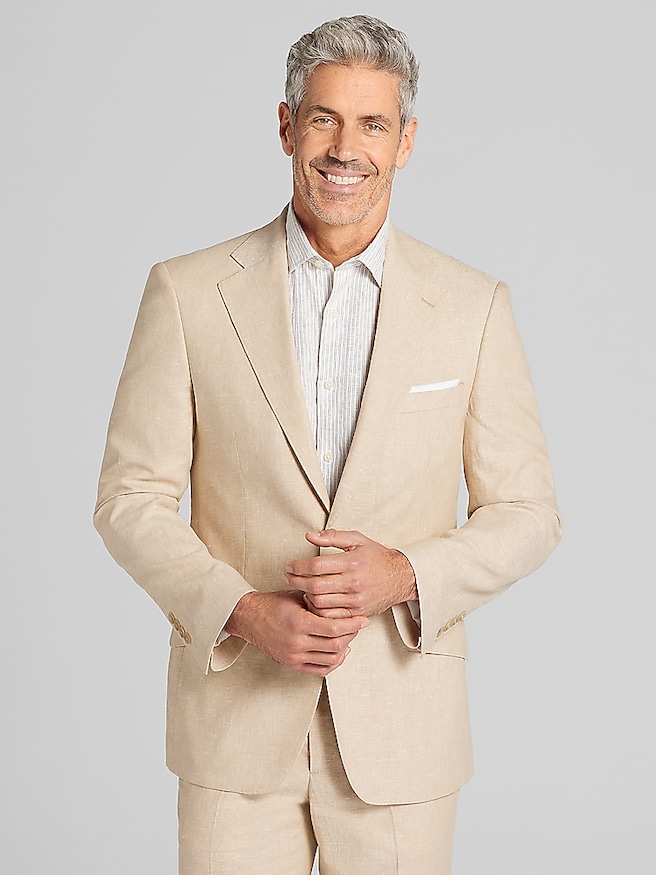
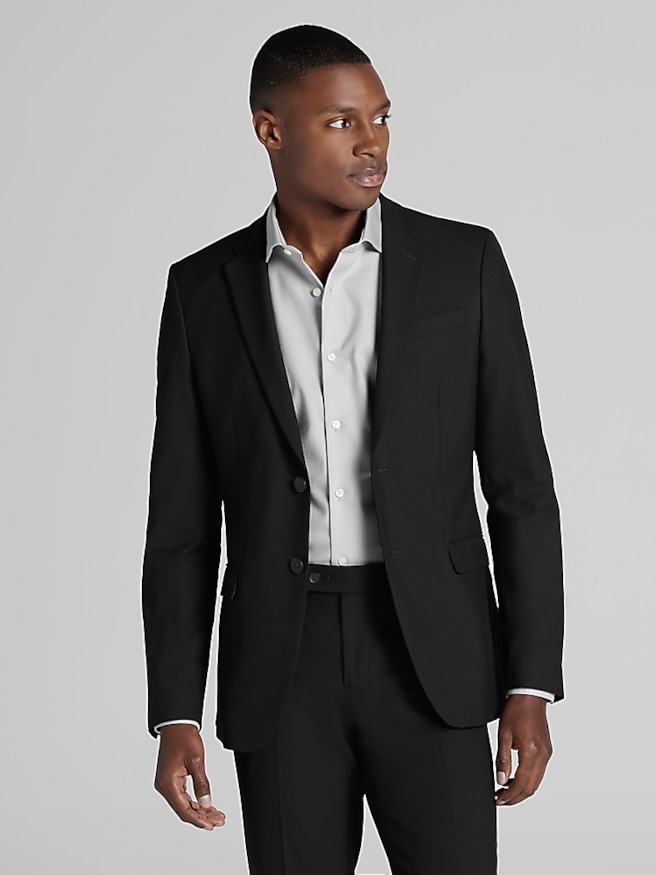
For men's suits, 5X is an extended alpha-size designation, not a standardized jacket measurement. A 5X label alone does not establish an exact chest circumference, waist size, or jacket length, and its meaning can vary by manufacturer. Many tailored suits use numbered jacket sizes instead, making the size chart and body measurements more useful than a direct conversion from a T-shirt or sweatshirt size. Chest, waist, seat, sleeve, and height measurements help clarify the proportions needed for a comfortable fit. Big and tall sizing also addresses two distinct needs: additional room through the body and additional length. A broader build does not necessarily call for a tall jacket, just as greater height does not automatically require more room at the waist. The appeal of a well-proportioned 5X suit is the way those details work together, with shoulders that sit cleanly, a jacket front that closes without strain, and trousers that allow comfortable movement. For a fuller chest or midsection, sufficient room through the torso helps the lapels lie flat rather than pull outward. Upper-arm room matters, too, especially when reaching across a desk or bringing both hands forward to greet someone. A comfortable standing fit should carry through to sitting in a meeting, riding to a ceremony, or spending an evening at a reception table. Pulling around the jacket button, an opening below the collar, or sharply stretched trouser pockets can signal that the proportions need another look. Shoppers comparing extended-size categories, including 2x Sized Suits, benefit from checking the measurements associated with each size rather than assuming a consistent step between labels. The goal is not simply extra fabric; it is enough room in the right places to let the suit follow the body without restricting it.
Fabric and construction shape how a 5X sized suit feels over a full day and how neatly it holds its appearance. Wool is valued in tailored clothing for its drape, breathability, and ability to recover from ordinary wrinkles. Depending on the weave and finish, it can offer a smooth surface for business settings or a more textured appearance for social occasions. Blended fabrics can bring together several useful qualities, such as crease resistance, resilience, or easier maintenance, although the fiber content and care label tell more than a broad fabric description. A small amount of stretch may make sitting and reaching more comfortable, but stretch cannot compensate for a jacket or waistband that is too tight. The lining and internal structure also influence the feel: a jacket needs enough support to maintain its shape without becoming stiff across the chest or shoulders. Trousers deserve equal attention, particularly through the rise, seat, and thighs. A rise that works with the wearer's build helps the waistband settle comfortably, while adequate room through the upper leg reduces pulling when sitting down. Straight and gently tapered leg shapes create distinct silhouettes; neither needs to fit closely to look deliberate and polished. Color and pattern help establish the intended use. Navy and charcoal are familiar choices for offices, interviews, and many ceremonies, while subtle stripes or checks add definition without overwhelming a coordinated shirt and tie. A matte fabric generally has a quieter appearance than one with noticeable sheen. Lapel proportions, pocket placement, and jacket length contribute to the overall balance, especially on a larger frame. For someone who moves between client meetings and family celebrations, understated details can make the same suit useful in several settings. Wedding guests, graduates, speakers, and professionals may have different dress requirements, but each benefits from a suit that looks composed while allowing natural movement.
Lasting satisfaction with a 5X suit often comes down to the relationship between the initial fit, thoughtful alterations, and everyday care. Shoulders and the upper chest are important starting points because major changes in those areas can be complex. Sleeve length, trouser hems, and some adjustments through the waist are more routine, though the fabric allowance and construction determine what is possible. A jacket sleeve that leaves a small amount of shirt cuff visible creates a finished edge, while trouser length can be adjusted for a cleaner hem or a modest break over the shoe. The shoes intended for the outfit help establish that length accurately. Jacket length should balance the torso and seat rather than follow a rigid rule based only on height. These choices become especially noticeable during familiar moments: standing for a wedding photograph, stepping onto a stage, or sitting through a lengthy presentation. When a suit is a gift, the recipient's current measurements and fit preferences are more dependable than an older clothing label; leaving final alterations to the wearer also allows for personal preferences. Between wears, a broad, shaped hanger supports the jacket shoulders, and hanging trousers neatly helps preserve their crease. Giving the fabric time to air out after use can reduce unnecessary cleaning. A soft clothing brush can remove surface dust from suitable fabrics, while spills and stains need attention according to the care label rather than vigorous rubbing or improvised treatments. Professional cleaning should follow the garment's instructions and actual condition, not an automatic schedule after every wear. Emptying pockets before hanging the suit prevents keys, phones, and wallets from weighing down the fabric or distorting pocket openings. For storage and travel, protection from crushing is useful, but tightly packing a jacket can leave creases that are difficult to smooth without proper pressing. With appropriate care and a fit that accommodates real movement, an extended-size suit can remain a dependable part of a wardrobe for work, important gatherings, and occasions that call for a considered appearance.