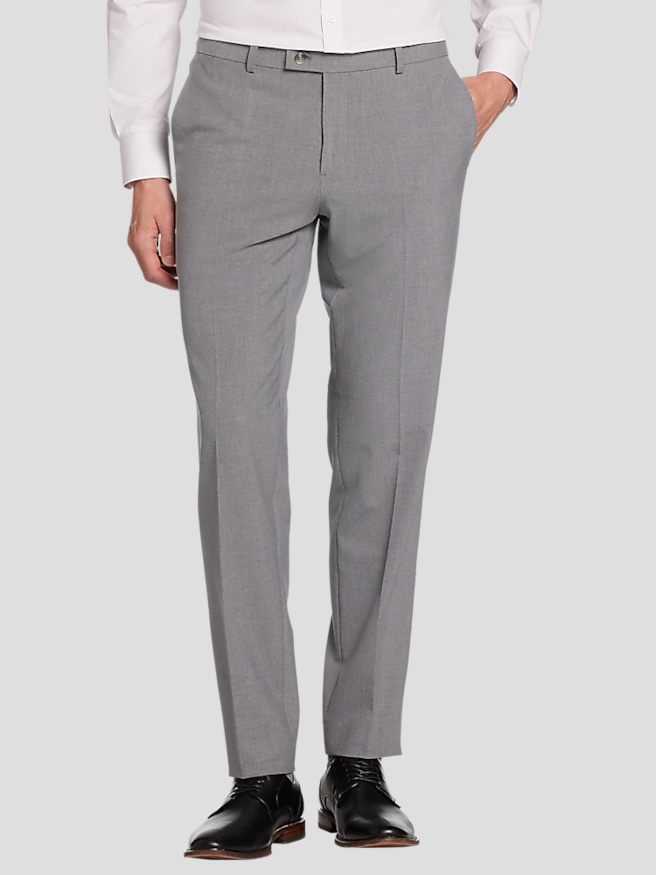
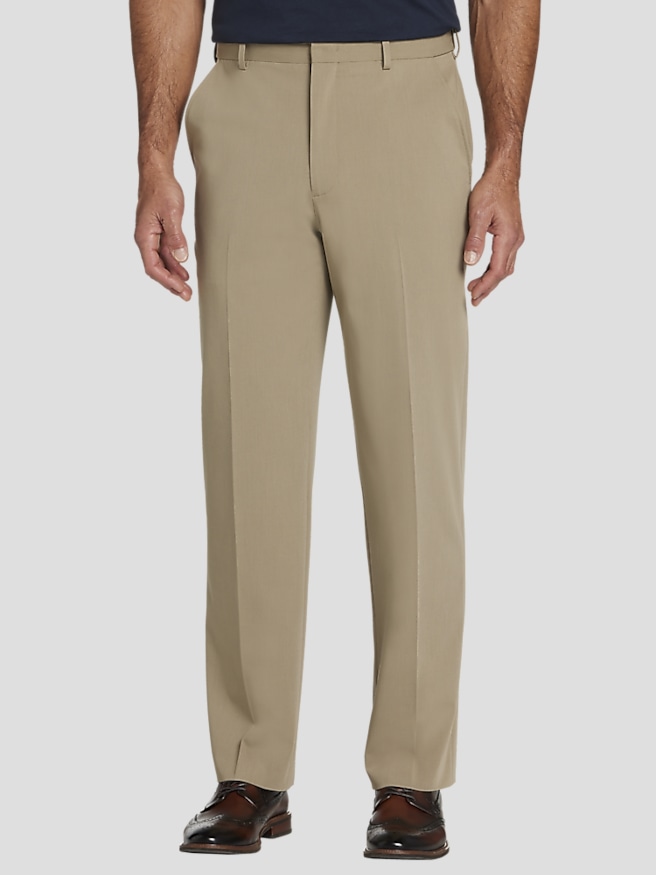
52W dress pants are men's dress trousers labeled for a nominal 52-inch waist, with inseam length and cut determining the rest of the fit. The “W” identifies the waist measurement, not the leg length, so a designation such as 52W x 32L describes a 52-inch waist size paired with a 32-inch inseam. Actual garment measurements can vary by cut and construction, making the size chart and the fit of a well-fitting pair useful reference points. A balanced fit gives the waistband enough room to sit comfortably without digging in, while the seat and thighs allow movement without pulling at the pockets or creating tight horizontal lines. Comfort matters just as much seated at a desk or in a car as it does standing in front of a mirror. Rise—the distance between the crotch seam and the top of the waistband—also affects where trousers sit and how they feel through the torso. A higher or lower rise can change the relationship between the waistband, tucked shirt, and jacket, even when the labeled waist size stays the same. Classic, straight, and more tapered silhouettes describe shape rather than waist size alone; a neat appearance does not require a close fit through every part of the leg. Flat-front trousers create a clean surface beneath a shirt or jacket, while pleats can provide additional room through the upper leg when they lie smoothly rather than spreading open. Length finishes the silhouette. A slight break creates a small fold where the hem meets the shoe, while a shorter finish gives the lower leg a cleaner line. Excess fabric pooling at the ankle can make otherwise well-fitting trousers look unfinished. For someone wearing a 52-inch waist, the goal is proportion: a comfortable waistband, sufficient room through the seat and thigh, and a leg opening that works with the intended shoes. These details distinguish dress pants that simply fasten from trousers that feel considered throughout a full day.
Fabric gives 52W dress pants much of their character, influencing how they drape, recover after sitting, and hold a pressed appearance. Wool is valued for its smooth fall and ability to take a defined crease, making it a familiar choice for business and dressier settings. Wool blends can combine that tailored appearance with other fibers that affect texture, resilience, and ease of care. Polyester can contribute durability and wrinkle resistance, while rayon often adds softness and fluidity to a blend. A small amount of spandex or elastane can provide stretch, although stretch content alone does not determine how much room a garment has or whether the waistband expands. Fabric stretch, an elasticized waistband, and an adjustable waistband are separate features, and none replaces the need for an appropriate starting size. A comfortable pair should accommodate ordinary movement without requiring the material to remain under constant tension. Fabric weight and surface texture matter, too. A smooth, matte finish generally reads more understated than a pronounced sheen, while a subtle weave can add depth without competing with a patterned shirt or jacket. Adequate opacity and a stable drape help trousers maintain a polished appearance across the seat, thighs, and knees. Construction details support that appearance over time: secure pocket openings, neatly finished seams, firm belt loops, and an even hem all contribute to everyday wear. Pocket placement also affects the line of the trousers. Front pockets that remain flat and back pockets that sit smoothly preserve a cleaner silhouette than pockets stretched by a tight fit or weighed down with bulky belongings. Linings, when present, can help the fabric glide over the legs, but their coverage varies. For frequent wear, durable fabric and sound construction are most useful when paired with enough ease through the areas that move and flex repeatedly. Long periods of sitting, walking between appointments, and getting in and out of a car all make those less-visible details meaningful.
The appeal of 52W dress pants extends from a dependable office wardrobe to weddings, dinners, religious services, graduations, and other occasions that call for a finished look. Charcoal, navy, black, and medium gray each offer a useful foundation, but the best color depends on the shirts, jackets, and shoes already in rotation. Charcoal trousers with a pale blue shirt create a restrained business combination; navy with a white shirt feels crisp without requiring a full suit. A textured sport coat can add dimension, while a fine-gauge knit offers a less structured option where the dress code allows it. Separately chosen trousers and jackets do not need to resemble a matching suit, and deliberate contrast often looks more cohesive than two nearly matching fabrics. Footwear helps establish the level of formality, with polished lace-ups providing a traditional finish and streamlined loafers working well in less formal settings. For events with a stated dress code, dress pants belong within the complete outfit rather than serving as a substitute for any required formal attire. Maintaining their appearance begins with the care label: some fabrics require dry cleaning, while others permit machine washing under specified conditions. Excessive heat can affect fibers and stretch components, so washing, drying, pressing, and steaming methods should suit the garment. Hanging trousers neatly after wear, allowing them to air out, and addressing spots promptly can help preserve their finish between cleanings. For a gift, a confirmed waist size is only part of the information that matters; the recipient's preferred inseam, rise, cut, and care routine make the choice more personal and practical. Wedding parties and families coordinating outfits across sizes may also find 36W Dress Pants useful as a separate starting point for someone who wears that waist size. Whether worn regularly or reserved for important occasions, well-proportioned dress trousers provide a versatile foundation that looks composed without getting in the way of the day.