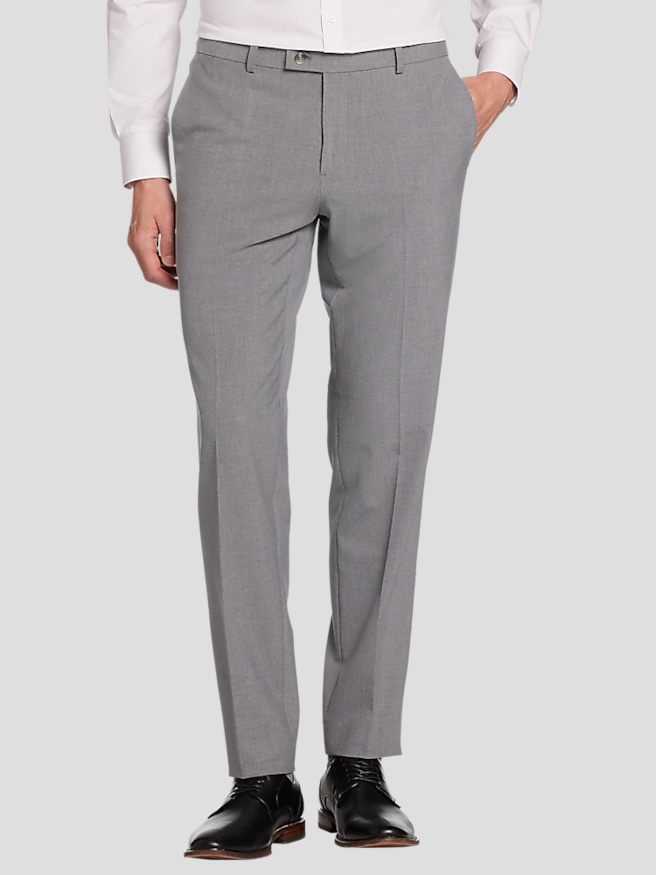
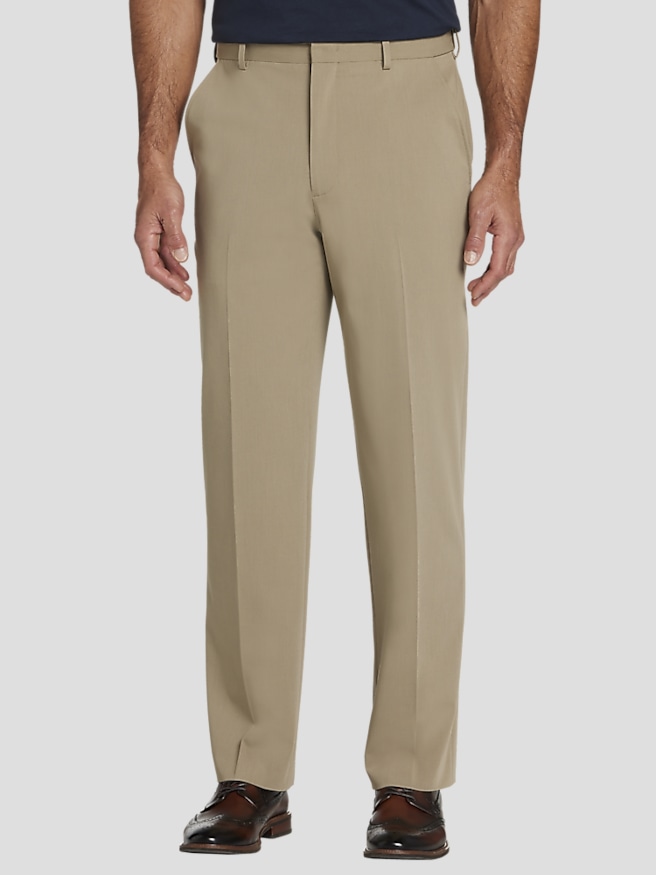
Men’s 48W dress pants are trousers labeled for a nominal 48-inch waist, with inseam length measured separately. That waist designation does not indicate the wearer’s height, and the fit can vary with the rise, cut, and construction. A size 48 waist can suit a range of proportions, including men who need more room through the middle without additional leg length. The most useful measurements reflect where the waistband actually sits, whether that is near the natural waist or slightly below it. An inseam measurement runs from the crotch seam to the hem; it should work with the wearer’s proportions and preferred trouser break rather than simply follow height. Beyond those measurements, well-fitting dress pants have enough space through the seat and thighs to sit comfortably, climb stairs, and move without pulling across the front pockets. A waistband should rest securely without digging in or relying on a tightly cinched belt to hold excess fabric in place. Rise matters just as much: too little length between the waistband and crotch can create tension, while too much can leave fabric hanging below the body. Flat-front trousers create a smooth appearance across the front, while pleated styles can provide additional room that opens with movement. Neither detail determines the entire fit; a flat-front cut can be roomy, and pleats should still lie neatly when standing. Straight-leg silhouettes generally allow a consistent line through the leg, while tapered cuts narrow toward the ankle. The better choice depends on thigh and calf proportions as well as the desired appearance. Stretch waistbands or flexible panels can add ease, but they work best when the underlying size already fits. For men comparing adjacent waist measurements, 46W Dress Pants provide another size reference, though a smaller waist label should never come at the expense of comfortable room through the seat and thighs. The goal is a balanced silhouette that remains comfortable both standing at a reception and sitting through a full meeting.
Fabric influences how 48W dress pants drape, feel, and hold their shape throughout the day. Wool is a traditional choice for tailored trousers because it can fall cleanly over the body and recover from modest creasing. A fine, smooth weave creates a refined surface, while a more textured weave adds visual depth without requiring a bold pattern. Polyester blends can offer durability and wrinkle resistance, although the performance depends on the full fabric composition and construction. Blends that include viscose may have a softer hand and fluid drape, while a small amount of elastane can add give when bending or sitting. Stretch does not necessarily mean a close fit; it can be useful in a classic silhouette simply by making movement less restrictive. Cotton dress trousers tend to have a more structured, less fluid appearance, with the level of formality shaped by the weave, finish, and tailoring. Fabric weight also affects the outline of the pants. A substantial cloth may skim over the body more smoothly, while a very lightweight fabric can reveal pocket bags or cling where the cut is too narrow. Interior details deserve attention as well. Smooth pocket bags, neatly finished seams, a secure closure, and a comfortable waistband all contribute to how trousers feel over several hours. Durability comes from the combination of fabric, fit, construction, and care, not fiber content alone. Excessive strain at the seat or pockets can shorten the life of otherwise sturdy cloth. Care should follow the sewn-in label: some dress pants require dry cleaning, while others permit machine washing under specified conditions. For washable fabrics, the recommended water temperature and drying method help protect dimensions and finish. Emptying pockets, brushing away surface dust, and hanging trousers neatly after wear can reduce unnecessary cleaning. Pressing at the appropriate setting, with a pressing cloth when needed, helps maintain a defined crease without leaving shiny marks on the fabric.
Dress pants in a 48W waist belong in wardrobes built around professional settings, celebrations, and everyday occasions that call for a more polished appearance than casual pants provide. An office presentation may call for charcoal trousers, a crisp shirt, and a tailored jacket, while a wedding reception may suit navy pants with a coordinating sport coat and leather shoes. Interviews, religious services, graduation ceremonies, and milestone dinners each bring different expectations, but clean drape and appropriate fit remain consistent priorities. Charcoal and navy offer broad versatility because they work with many shirt and jacket colors. Black creates a sharper contrast with light shirts, while medium gray can soften an outfit without making it look casual. Subtle stripes, checks, or textured weaves add interest, especially when paired with a solid shirt that keeps the overall combination composed. Separate dress pants do not need to imitate a matching suit. A deliberate contrast between trousers and jacket usually looks more cohesive than two nearly matching fabrics with slightly different colors or textures. The finishing details make a noticeable difference. A hem that lightly meets the shoe creates a restrained break, while a fuller break adds a more traditional line; excess length that piles around the ankle can obscure an otherwise good fit. The hem opening also needs enough room to fall over the shoes without catching. A tailor can assess length, waistband adjustments, and leg shape, though alteration possibilities depend on seam allowances and construction. For men who spend much of the day seated, comfort at the waistband and behind the knees deserves as much consideration as the standing view in a mirror. For frequent walking or occasions with long periods on foot, unrestricted movement through the thigh becomes especially important. Thoughtfully fitted 48W dress pants bring these practical needs together, creating a dependable foundation for outfits that feel considered without demanding constant adjustment.