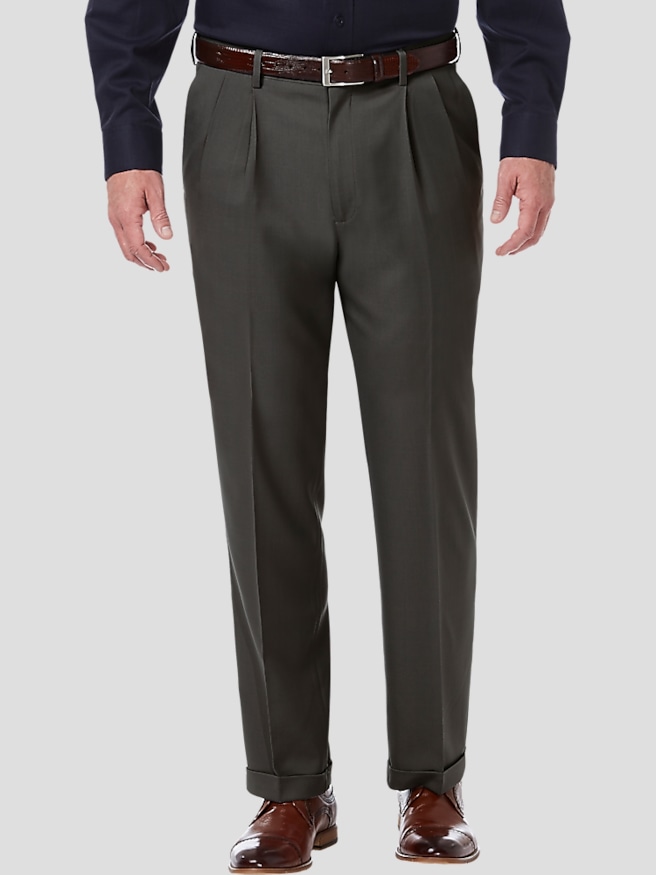
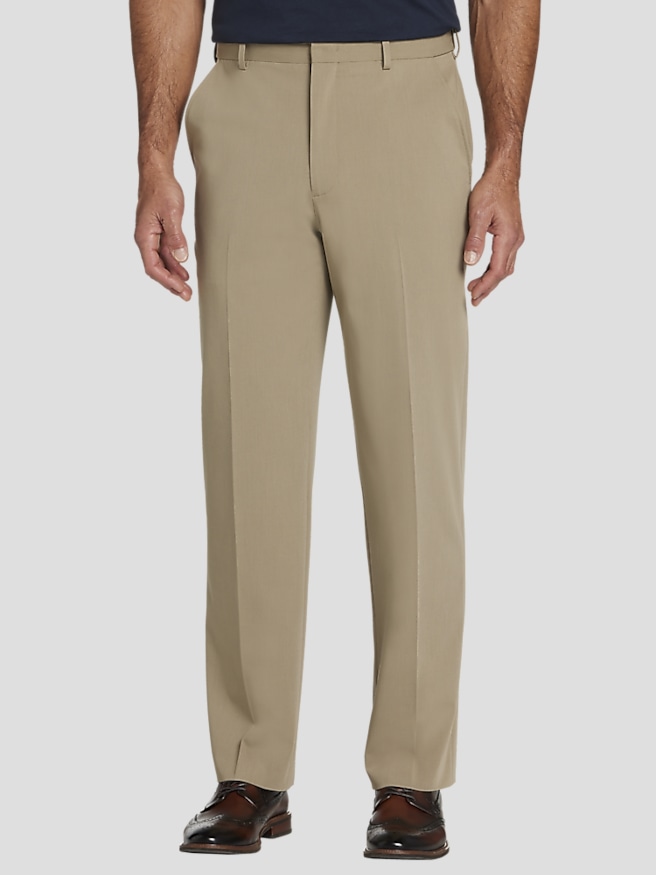
46W dress pants are men’s dress trousers with a nominal 46-inch waist size, designed for polished outfits at work, weddings, dinners, and other occasions that call for more structure than casual pants. The W refers to the waist designation, not the inseam, so length remains a separate measurement. A 46W label also does not determine height, leg shape, or how much room the trousers provide through the seat and thighs. Classic, modern, and slim fits describe the silhouette, with the exact proportions varying by style and maker. A classic cut generally allows more room, while a slimmer cut follows the leg more closely; neither should pull across the pockets or restrict a comfortable seated position. The distinction between waist size and cut matters when comparing categories: 38W Dress Pants refers to a smaller waist designation, not simply a narrower leg. For a comfortable fit in 46W trousers, the waistband should sit securely at the intended position without relying on a tightly cinched belt. Rise affects that position and the space between the waistband and crotch, making it especially important for anyone who finds that pants fit at the waist but feel tight when sitting. Smooth fabric across the front, pockets that lie flat, and enough room to bend or climb stairs are useful signs of balanced proportions. Length completes the shape: a slight break creates a small fold where the hem meets the shoe, while a cleaner, shorter finish leaves less fabric at the ankle. Excess fabric bunching over the shoe can make otherwise well-fitting trousers look unfinished. Hem length is best assessed with the shoes intended for the outfit, since a low-profile loafer and a substantial dress shoe meet the trouser leg differently. Waist size, rise, leg shape, and inseam work together rather than substituting for one another, giving a 46W pair its overall comfort and appearance.
Fabric influences how 46W dress pants hang, move, and hold their shape through a full day. Wool is valued for its natural resilience and smooth drape, helping trousers fall cleanly from the hip instead of clinging to the leg. Wool blends combine those qualities with other fibers that can affect softness, strength, wrinkle recovery, or ease of care. Polyester blends often emphasize shape retention and resistance to creasing, while a small amount of elastane or spandex can add useful give. Stretch is particularly noticeable when sitting through a long meeting, stepping into a car, or moving between a ceremony and dinner, but it should support a good fit rather than compensate for a waistband that is too tight. Fabric weight and weave also influence the finished look. A finer, smoother surface tends to read as dressier, while subtle texture adds depth without requiring a bold pattern. Cotton-based dress trousers can create a less formal impression, although their tendency to crease depends on the fabric and finish. Color makes a practical difference in how often a pair fits into an existing wardrobe. Charcoal works naturally with white, pale blue, and muted patterned shirts, while navy pairs easily with brown leather shoes and a range of jacket colors. Black creates a sharper contrast with a light shirt and can suit dressier settings. Medium gray offers flexibility when a wardrobe includes both dark and light jackets. Flat-front styling keeps the front visually clean, while pleats can provide additional room and a more traditional shape when properly fitted. For everyday office wear, an understated fabric and a comfortable cut often matter more than decorative details. For an event with a specified dress code, the complete outfit matters: dress pants with a blazer do not automatically replace a matching suit when one is expected. A tucked-in shirt, coordinated belt, and well-kept shoes help the trousers look intentional without making the outfit overly elaborate.
Construction and care help determine how well dress trousers maintain that polished appearance over repeated wear. Secure stitching, neatly finished seams, a dependable closure, and a waistband that lies smoothly all contribute to comfort and durability. Pocket openings should stay close to the body rather than flare outward, and pocket bags should accommodate small essentials without creating unnecessary bulk. A phone, thick wallet, and crowded key ring can interrupt the drape even when the pants fit correctly, so carrying fewer objects in trouser pockets helps preserve a clean line. Reinforced areas around pockets and other stress points can be useful for pants worn frequently, while lining may improve how the fabric moves against the body. Care requirements depend on the full fiber blend, lining, and construction, making the sewn-in care label the most reliable reference. Machine-washable trousers should be cleaned and dried according to those directions; wool and tailored blends may require professional cleaning. Excessive heat can affect stretch fibers and leave unwanted shine on some fabrics, so pressing calls for an appropriate setting and, when recommended, a pressing cloth. Hanging trousers neatly after wear helps reduce avoidable wrinkles, and prompt attention to spots can prevent a small mark from becoming harder to address. Rotating between pairs also gives fabric time to recover between wears. For someone who wears dress pants several days a week, consistent fit across the wardrobe makes getting dressed simpler: shirts tuck in smoothly, jackets sit cleanly over the waistband, and familiar proportions reduce last-minute adjustments. Dress pants can also be a thoughtful practical gift when the recipient’s waist size, preferred rise, inseam, and care preferences are known. A 46W label is a starting point, not a complete description of fit. The most useful pair combines the right measurements with fabric suited to the wearer’s routine, whether that means hours at a desk, regular client meetings, or occasional celebrations that deserve a carefully put-together outfit.