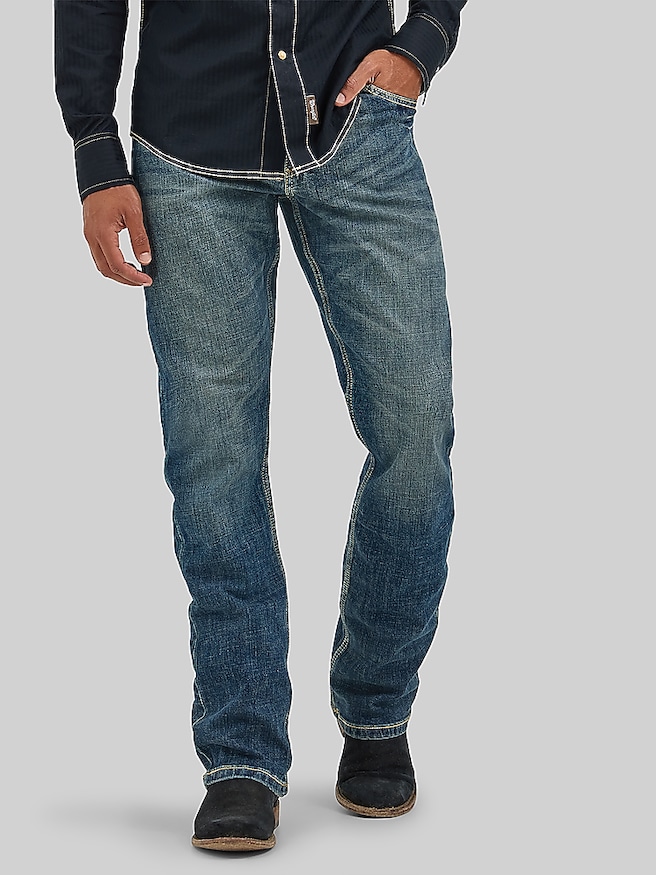
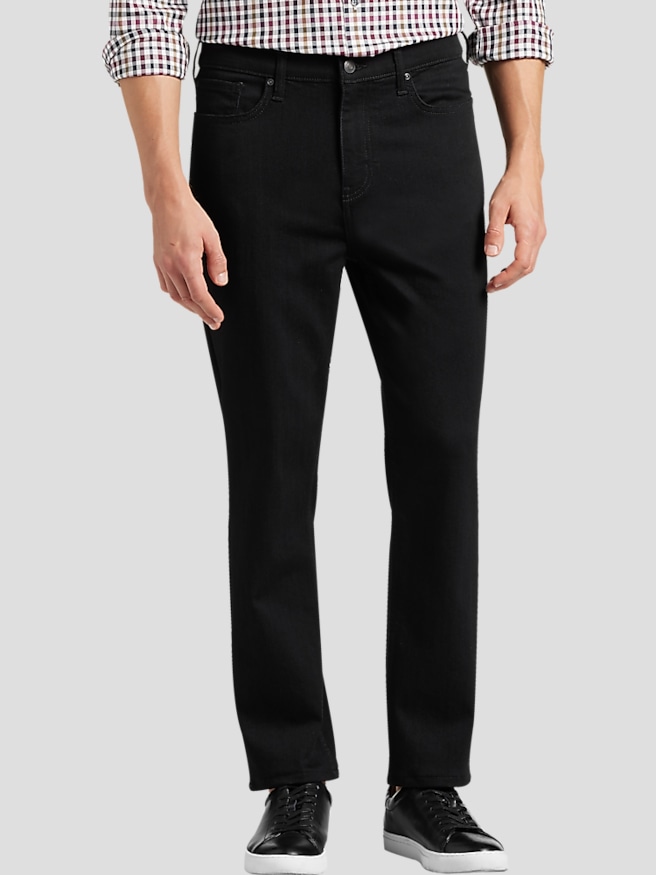
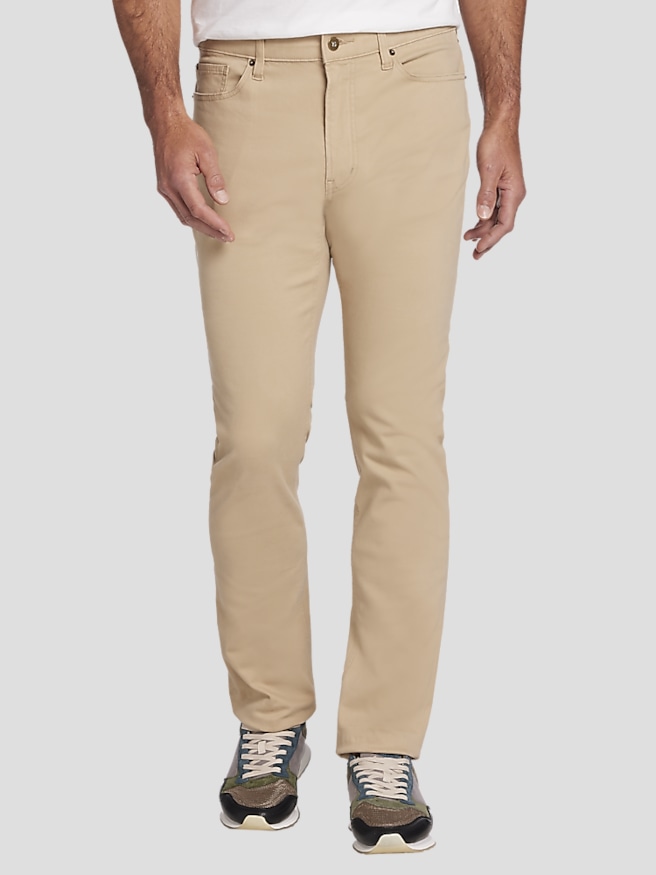
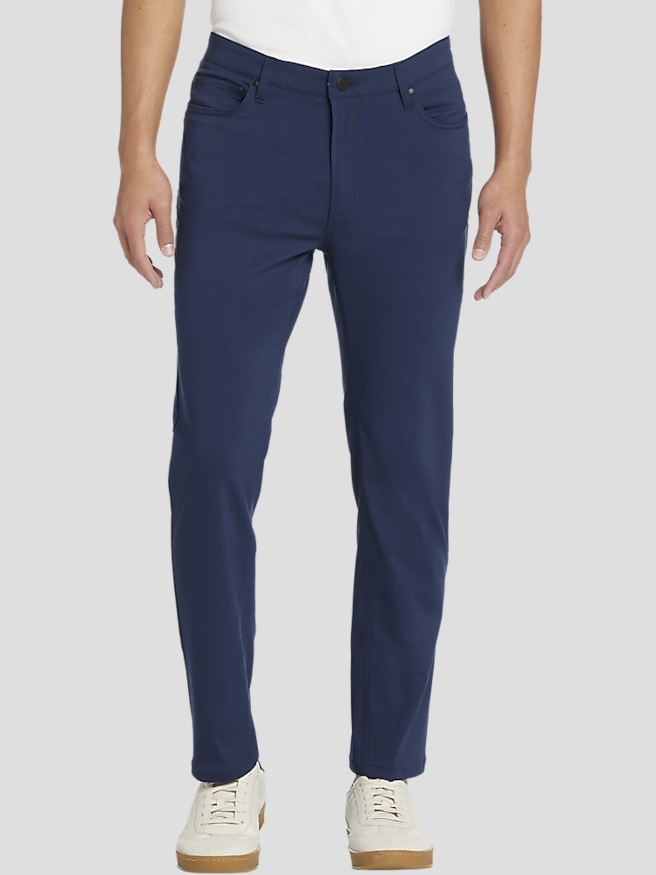
Five-pocket jeans are denim trousers with two main front pockets, a small coin pocket tucked inside one front pocket, and two patch pockets on the back. This familiar arrangement gives men’s 5 pocket jeans their name and helps distinguish their casual look from trousers with slanted side pockets and inset back pockets. The small pocket traces its roots to carrying a pocket watch, while the larger pockets offer practical space for everyday essentials. Today, the appeal extends well beyond the pocket layout: denim has a textured surface, a substantial feel, and a character that develops with wear. These jeans can anchor an everyday wardrobe, pairing as naturally with a cotton T-shirt and sneakers as with an Oxford shirt and leather boots. Fabric composition plays a large part in how they feel. All-cotton denim often starts firmer and gradually softens, molding to the wearer through repeated use. Denim blended with a small amount of elastane or spandex adds give, which can make sitting through a commute, climbing stairs, or bending to tie a shoe more comfortable. Stretch content alone does not determine softness, weight, or how well the fabric holds its shape; the weave, yarns, and finishing also matter. Heavier denim generally feels more substantial and can be comfortable during cooler weather, while lighter denim may suit heated indoor spaces or days spent moving between errands. Neither fabric weight nor stiffness, by itself, guarantees a longer lifespan. Sound construction, an appropriate fit, and thoughtful care all contribute to durability. Reinforcement at pocket corners, even stitching, and securely finished seams are useful details to consider. For everyday wear, the best balance is denim that feels comfortable against the skin without seeming strained across the seat or knees. A pair that allows natural movement is easier to wear from a morning coffee stop through an informal evening out, without making comfort depend entirely on the fabric stretching.
Fit determines both the silhouette of five-pocket jeans and how comfortably they work through a full day. Slim jeans follow the leg more closely, giving untucked shirts, lightweight sweaters, and simple jackets a neat foundation. Straight-leg jeans maintain a more consistent line from the knee to the hem and offer a classic profile that works with many casual shoes. Relaxed fits provide additional room, often through the seat and thigh, for anyone who prefers a less close-fitting feel. Fit names are useful starting points, but the measurements and the way denim sits on the body deserve more attention than the label alone. The waistband should sit securely without digging in when seated, and the front pockets should lie reasonably flat rather than pull open. Horizontal strain across the upper thighs or a fly that pulls noticeably can signal a need for more room. A little ease is especially helpful for someone who spends hours at a desk or behind the wheel. Rise matters, too: it affects where the waistband rests and how much coverage the jeans provide when bending or sitting. Inseam length changes the overall impression. A modest break over the shoe creates a familiar everyday finish, while excess fabric pooled at the ankle can make the lower leg look bulky. Consider the shoes most likely to accompany the jeans, since a narrow hem may catch on a substantial boot shaft. Wash and color further shape their intended use. Dark indigo and black denim generally create a cleaner, more understated appearance for casual offices that permit jeans, dinner gatherings, or evenings at a neighborhood restaurant. Faded blue denim feels more laid-back alongside sweatshirts, flannel shirts, and worn-in sneakers. Minimal distressing makes it easier to build polished casual outfits, although jeans remain distinct from formal trousers. For a similar pocket arrangement beyond denim, 5 Pocket Stretch Pants offer another category to consider when building a versatile casual wardrobe.
The usefulness of five-pocket jeans comes from how easily they adapt to ordinary routines. A dark pair with a knit polo can look put together for a casual lunch, while a straight-leg silhouette with a crewneck sweater and boots feels at home on a brisk afternoon. During the cooler months, denim’s texture complements brushed cotton, wool knits, and quilted outerwear without requiring an elaborate outfit. Keeping layers proportionate helps: a closer-fitting jean balances a substantial overshirt, while a roomier cut pairs well with a sweater that ends near the hips rather than hanging far below them. Jeans can also make a practical gift for a college student, a frequent traveler, or someone refreshing an everyday wardrobe, provided the recipient’s preferred waist size, inseam, rise, and fit are known. Matching the measurements of a well-fitting pair is more reliable than guessing from appearance. Once jeans become part of the weekly rotation, care helps preserve their comfort and structure. Follow the garment’s care label, since fabric blends, dyes, and finishes may call for specific handling. Turning jeans inside out before washing can help reduce surface abrasion, and washing with similar colors helps limit unwanted dye transfer. Dark denim may release color, especially early in its life, so take care around pale upholstery and light-colored footwear. When the care label permits, cool water and a mild detergent are sensible choices; avoid adding more detergent than needed. Spot-cleaning a small mark and airing jeans between wears can reduce unnecessary washing, but visible soil, perspiration, and odor still call for cleaning. Excessive dryer heat can contribute to shrinkage and shorten the useful life of stretch fibers, making air-drying or an approved low-heat setting worth considering. Empty pockets before laundering, and avoid repeatedly stuffing them with bulky objects that can distort their shape. Over time, gentle fading and softened creases can become part of denim’s appeal. Thoughtful care and a comfortable fit help five-pocket jeans retain the easy, dependable character that makes them a casual wardrobe staple.