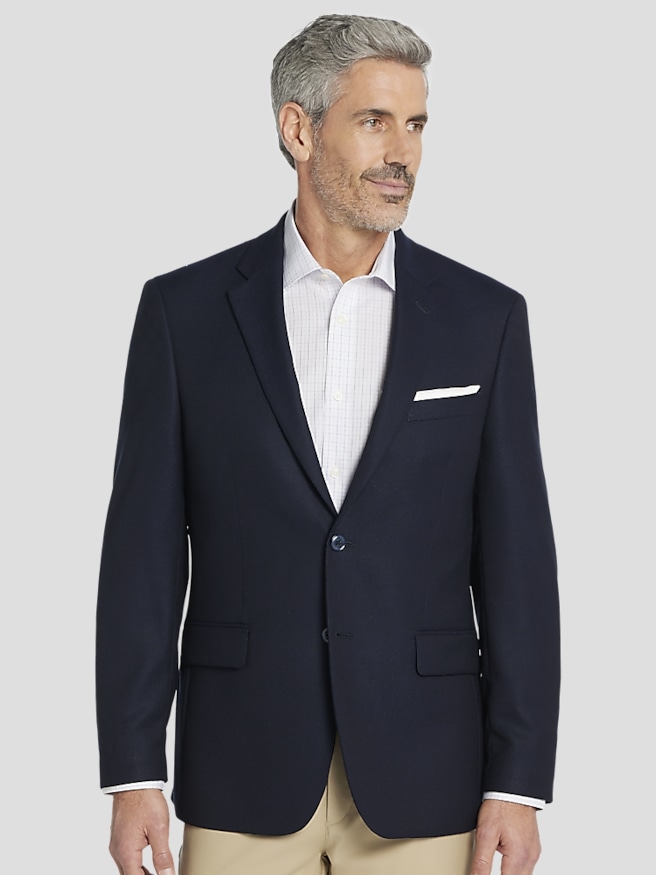
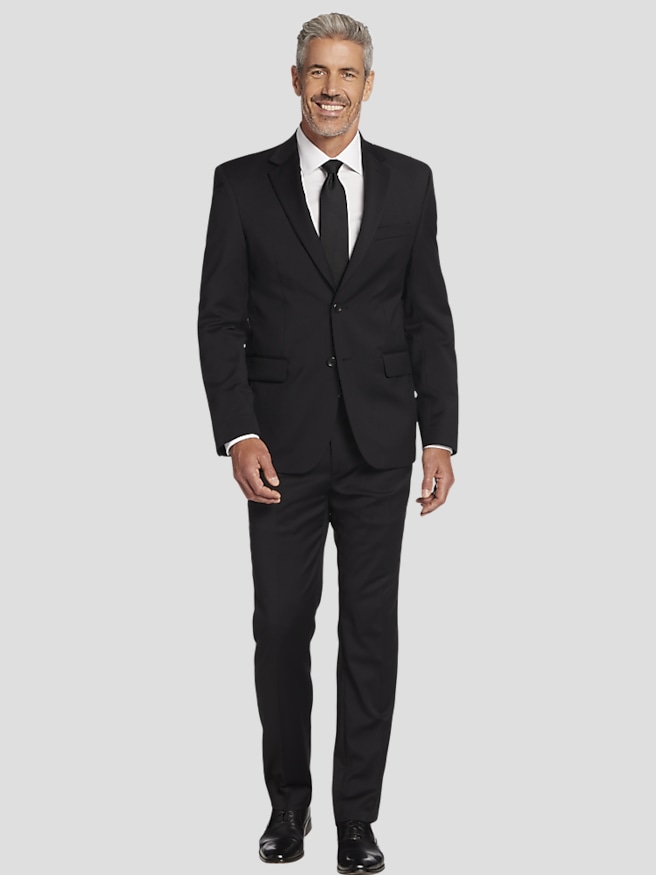
100% wool jackets bring natural texture, a balanced drape, and lasting versatility to a tailored wardrobe. In this category, “100% wool” generally describes the main outer fabric, not every component of the garment; linings, sleeve linings, buttons, and internal structure may use other materials. The fiber-content label provides the clearest distinction between pure wool and a wool blend. Wool’s natural crimp gives the fabric resilience, helping it recover from ordinary creasing while supporting the clean lines of a well-cut jacket. Its appearance varies considerably with the yarn and construction. Worsted wool uses combed fibers to create a smoother, more defined surface that works especially well for business dressing and polished occasions. Woolen fabrics have a softer, fuller texture, giving a jacket a more relaxed visual character without sacrificing a tailored shape. A fine twill can add subtle diagonal detail, while an open basket weave creates visible texture and a less formal impression. Fabric weight, weave, and finishing all influence how a jacket hangs, so two jackets made entirely from wool can feel quite distinct. Fiber content alone does not establish softness, durability, or suitability for a particular occasion. Even a fine wool fabric benefits from sound construction, balanced seams, and a shape that suits its intended use. Solid navy and charcoal provide an understated foundation for dress shirts and tailored trousers, while brown, gray, and restrained checks introduce depth alongside chinos or dark denim. A textured jacket can make a simple shirt and trousers look deliberate rather than dressed up for the sake of it. For someone who moves between presentations, dinners, and family gatherings, that flexibility is part of wool’s appeal: the same general fabric category can support both crisp business tailoring and an easygoing sport coat. The most useful distinction is not simply formal versus casual, but how the fabric’s surface, pattern, and structure work together.
The fit of a wool jacket determines how convincingly those fabric qualities come through. Shoulder seams should sit close to the natural shoulder line, without a pronounced overhang or a tight ridge across the upper arm. A collar that rests against the shirt collar creates a clean transition at the neck; a visible gap can interrupt the line even when the rest of the jacket appears comfortable. Through the chest and waist, enough ease allows the jacket to close without pulling the front into an X-shaped crease. The lapels should lie smoothly rather than bowing away from the body. Sleeve length depends partly on personal preference and shirt fit, though a small amount of shirt cuff often gives tailored dressing a finished appearance. Jacket length should balance the torso and legs, with adequate coverage through the seat for a traditional tailored silhouette. Trying a jacket while seated, reaching forward, and bending the elbows reveals more than standing still in front of a mirror. Someone who spends much of the day at a desk may value room through the upper back and sleeves, while a jacket intended mainly for dinners or ceremonies may be chosen for a more defined shape. Neither use requires a restrictive fit. Construction also affects the experience: a softer shoulder and lighter internal structure produce an easier outline, while a more structured chest creates a sharper profile. Lining can help sleeves slide over a shirt and protect the fabric’s interior from friction. For everyday combinations, the contrast between pieces matters as much as their individual formality. A navy wool jacket with gray trousers reads clearly as separates, while nearly matching fabrics can look like an incomplete suit. Fine-gauge knitwear, an Oxford shirt, or a neatly finished polo can soften the effect without making it careless. Weddings, professional events, graduation celebrations, and restaurant dinners each allow a different balance of texture and polish. For a longer outer layer rather than a tailored sport coat, Quality Wool Coats provides a related category with a distinct purpose and silhouette.
Good care helps a 100% wool jacket retain its shape and surface over repeated wear. The care label should take priority, since fabric finish, lining, and internal construction can make a jacket unsuitable for home washing even when wool itself seems familiar to handle. A broad, contoured hanger supports the shoulders better than a thin wire hanger, and sufficient space in the closet keeps lapels and sleeves from being pressed against neighboring garments. After wear, a gentle pass with a suitable clothing brush can lift surface dust before it becomes embedded in the fabric. Resting the jacket between uses allows creases to relax and gives any absorbed moisture time to dissipate. Professional cleaning is appropriate when the label requires it or when soil and odors cannot be addressed through routine care, but cleaning after every brief wear is not automatically necessary. Spills are best blotted promptly rather than rubbed, with further treatment guided by the fabric’s care instructions. Excessive heat or pressure can flatten texture or create shine, so pressing deserves particular care around lapels, seams, and pockets. Durability also depends on everyday habits. Heavy objects in the pockets can stretch the front, repeated friction from a loaded shoulder bag can wear the same area, and tightly packed storage can distort the shape. Pilling may occur where fibers rub together; its presence is not, by itself, a complete measure of fabric quality. Clean storage and appropriate protection from clothes moths matter when a jacket will go unworn for an extended period. These practical considerations make wool jackets especially useful for someone building a considered wardrobe rather than assembling a single outfit. As a gift for a partner, father, graduate, or someone starting a new professional role, a wool jacket can have lasting relevance when the recipient’s measurements, preferred fit, and usual dress habits are known. A person who wears tailored trousers most days may appreciate a smooth, understated fabric, while someone who favors chinos may get more use from visible texture and a softer shape. The strongest choice connects the fabric, fit, and level of formality to the way the jacket will actually be worn.