
Business casual for men typically means a collared shirt or fine knit sweater with chinos or dress pants and polished leather shoes. A blazer is optional, and a tie is usually not required.
The challenge is that business casual can vary from one office to the next. Some workplaces allow pieces that normally fall outside typical business attire.
This guide explains what counts as business casual, what pieces are worth owning to fit the various dress codes, and six outfits you can copy on any workday.
What Business Casual Means for Men
Business casual for men is the middle ground of dress codes for professionals. It keeps the structure of workwear with collars and tailored trousers. But it removes the formal elements of a matching suit and tie.
Business casual is about balancing comfort and polish, and that interpretation can vary. Some workplaces allow dark jeans and leather sneakers, while a more conservative office may expect trousers, a button-down, and loafers or derbies. If the policy is vague, start one step dressier because it is always easier to remove a blazer than wishing you’d brought one.
Business Casual vs. Business Professional vs. Smart Casual
The easiest way to understand business casual vs. business professional and smart casual is to compare the pieces each dress code typically includes:
| Wardrobe Piece | Business Professional | Business Casual | Smart Casual |
| Jacket | Matching suit jacket | Blazer or sport coat is optional | Not required; unstructured blazer or casual jacket is optional |
| Shirt | Dress shirt | Button-down shirt, dress shirt, or refined polo | Polo, knit, casual button-down, or neat tee |
| Pants | Matching suit trousers | Chinos or dress trousers; dark jeans where permitted | Chinos, dark jeans, or tailored casual pants |
| Shoes | Oxfords, derbies, or other dress shoes | Loafers, derbies, chukkas, or minimal leather sneakers | Loafers, boots, or clean sneakers |
| Tie | Usually expected | Usually optional | Not expected |
Business professional is the most formal and structured. Business casual allows separates and softer layers while staying workplace-ready. Smart casual offers more room for personal expression while remaining neat.
Dress Code Do’s and Don’ts
While business casual can be more relaxed, there are some things that are expected when preparing an outfit for the dress code:
- Do check the policy: Some employers include denim, sneakers, or short sleeves as acceptable while others do not.
- Do prioritize fit: Neat proportions make even simple pieces look more professional.
- Do build around neutrals: Navy, gray, tan, white, and light blue are easy to coordinate and look polished.
- Don’t wear gym clothes: Athletic shorts, sweatpants, and workout shirts aren’t business casual.
- Don’t wear distressed pieces: Rips, heavy fading, large graphics, and prominent logos are too casual.
Business Casual Wardrobe Essentials for Men
The most useful business casual attire for men consists of versatile pieces that work together. A handful of shirts, pants, layers, and shoes will cover most of your workweek. When most items coordinate, you can rotate outfits without repeating the same look.
Shirts and Polos That Stay Sharp All Day
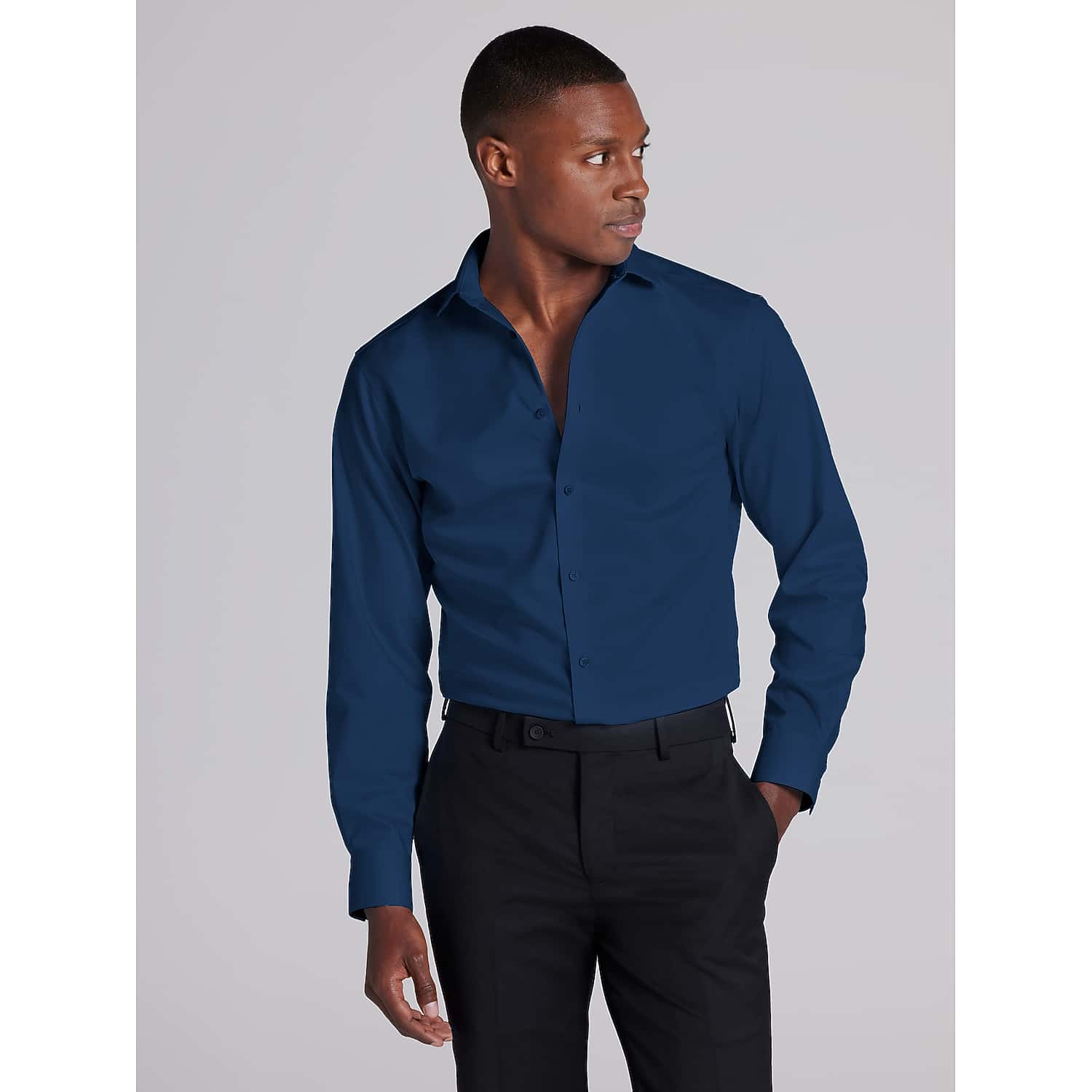
Start with a few button-down shirts in white, light blue, and even a subtle pattern like a fine stripe or gingham. Oxford shirts are especially useful because they work under a blazer or on their own. Add two or three solid polos in navy, gray, or black for relaxed offices.
For long commutes or busy days, performance fabrics with stretch, wrinkle resistance, or moisture management can improve comfort without sacrificing structure. Choose performance shirts that look polished rather than athletic.
Business Casual Pants (and When Jeans Work)
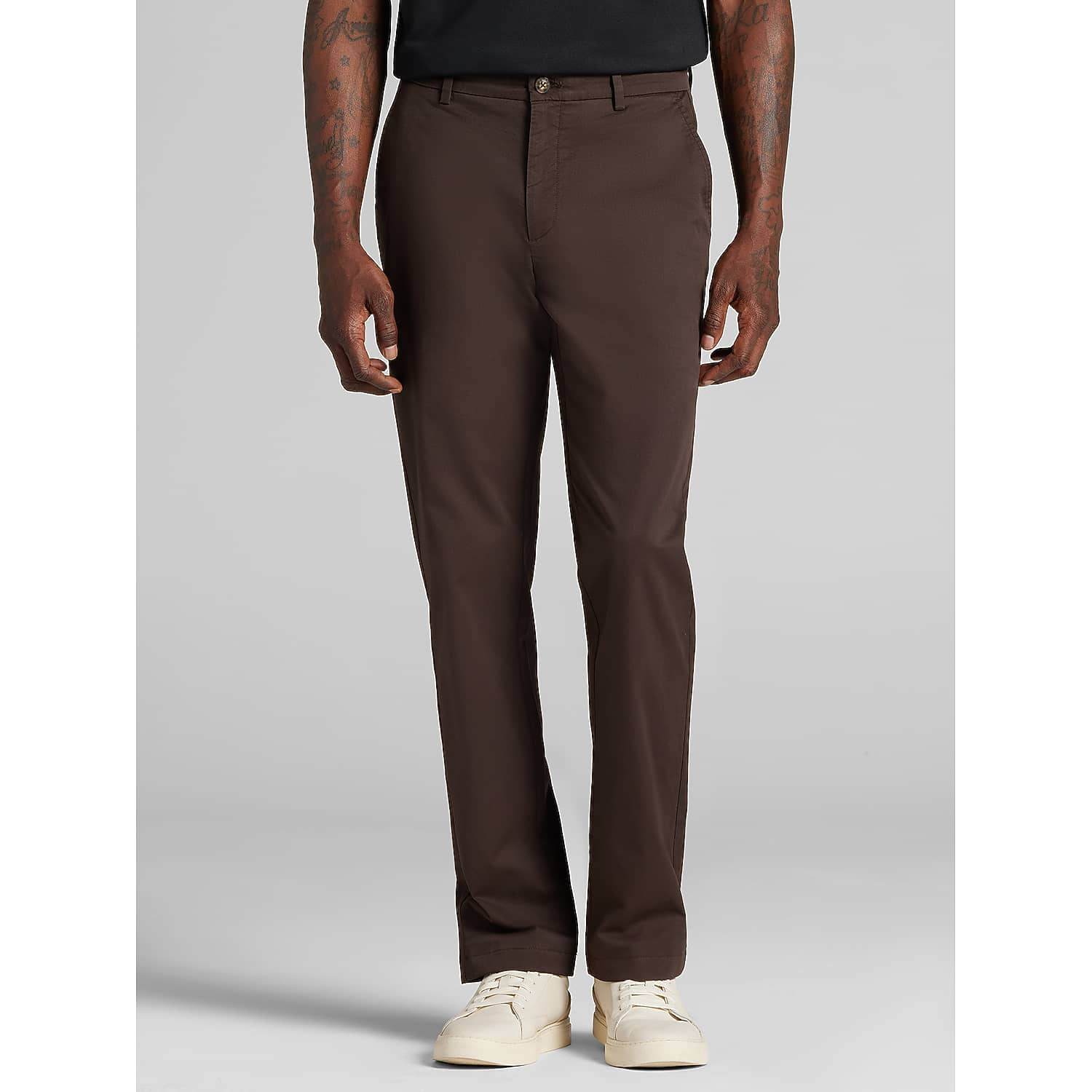
When it comes to business casual pants men can rely on, chinos are the foundation. Khaki, navy, olive, and gray can coordinate with almost every shirt you own, and they are always office ready. Wool dress pants are a dressier option and work well for client meetings or presentations.
A common question for this dress code is, “Are jeans business casual?” In many offices, yes, with a few conditions. Choose a dark wash with no fading or distressing, and treat them like dress pants by pairing them with a collared shirt and leather shoes. That combination keeps the outfit polished and in business casual territory even with the jeans.
Blazers, Sweaters, and Lightweight Layers
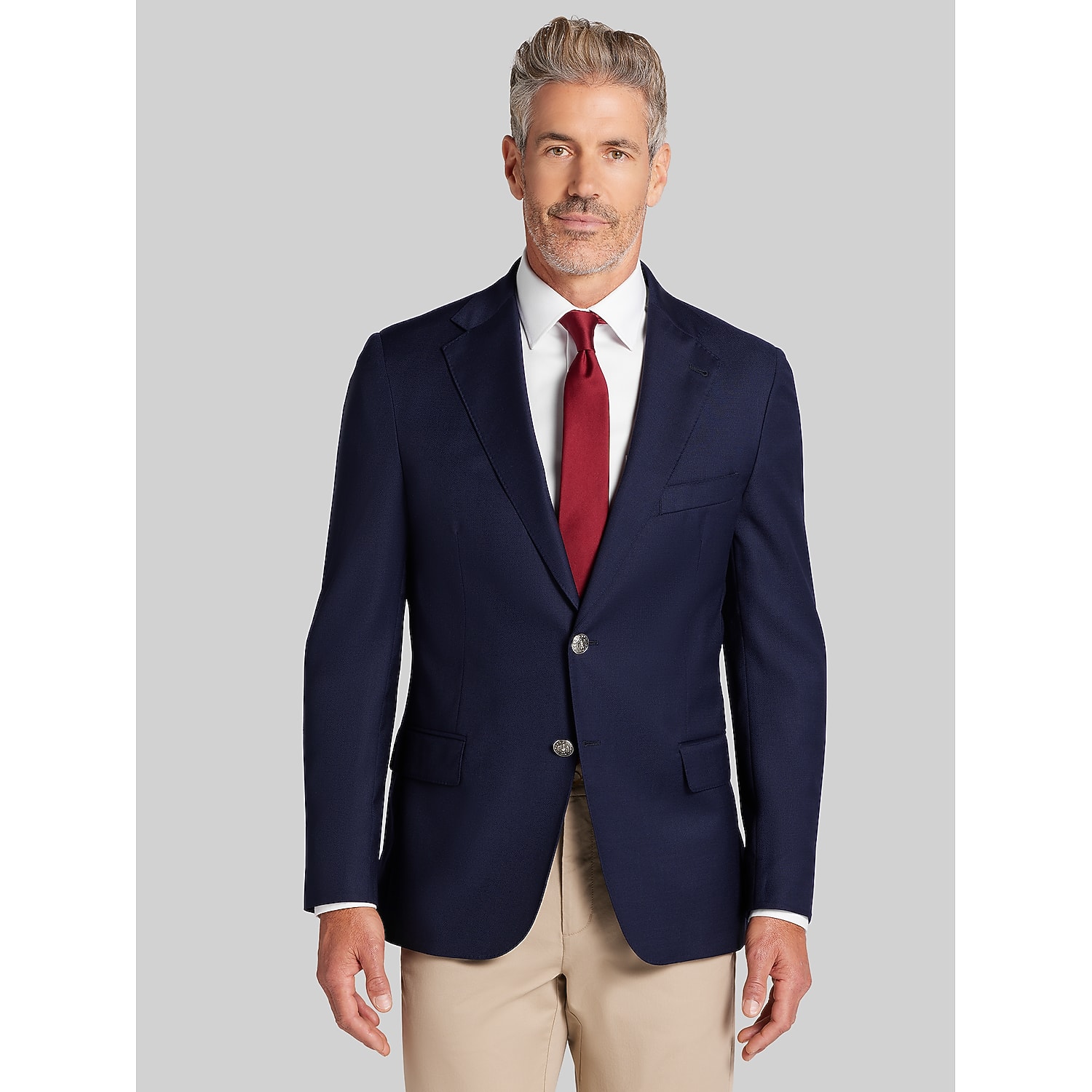
A blazer is optional in most business casual settings, but it’s an easy way to dress up an outfit. Throw a navy blazer over a polo and pair it with chinos, and you’re ready for a client meeting.
For cooler days, fine-gauge sweaters are a great option. A merino crewneck or quarter-zip layers nicely over a button-down without adding bulk.
Business Casual Shoes for Men
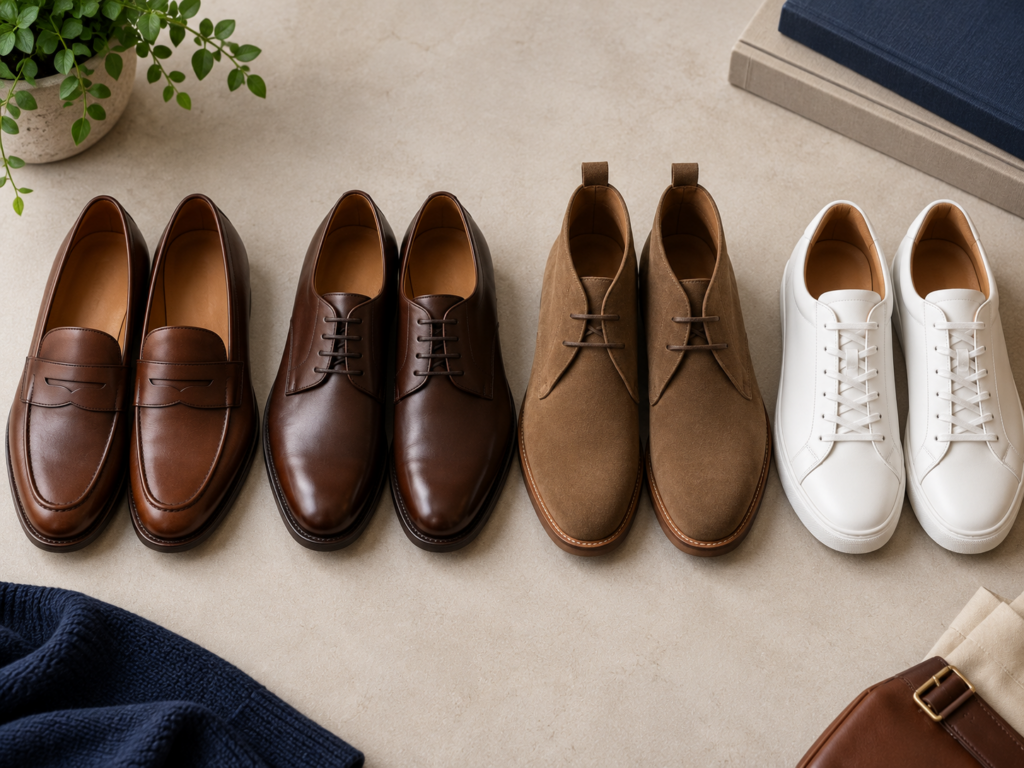
The right business casual shoes for men depend on how dressy your office tends to be. Here are some ideas from most to least formal:
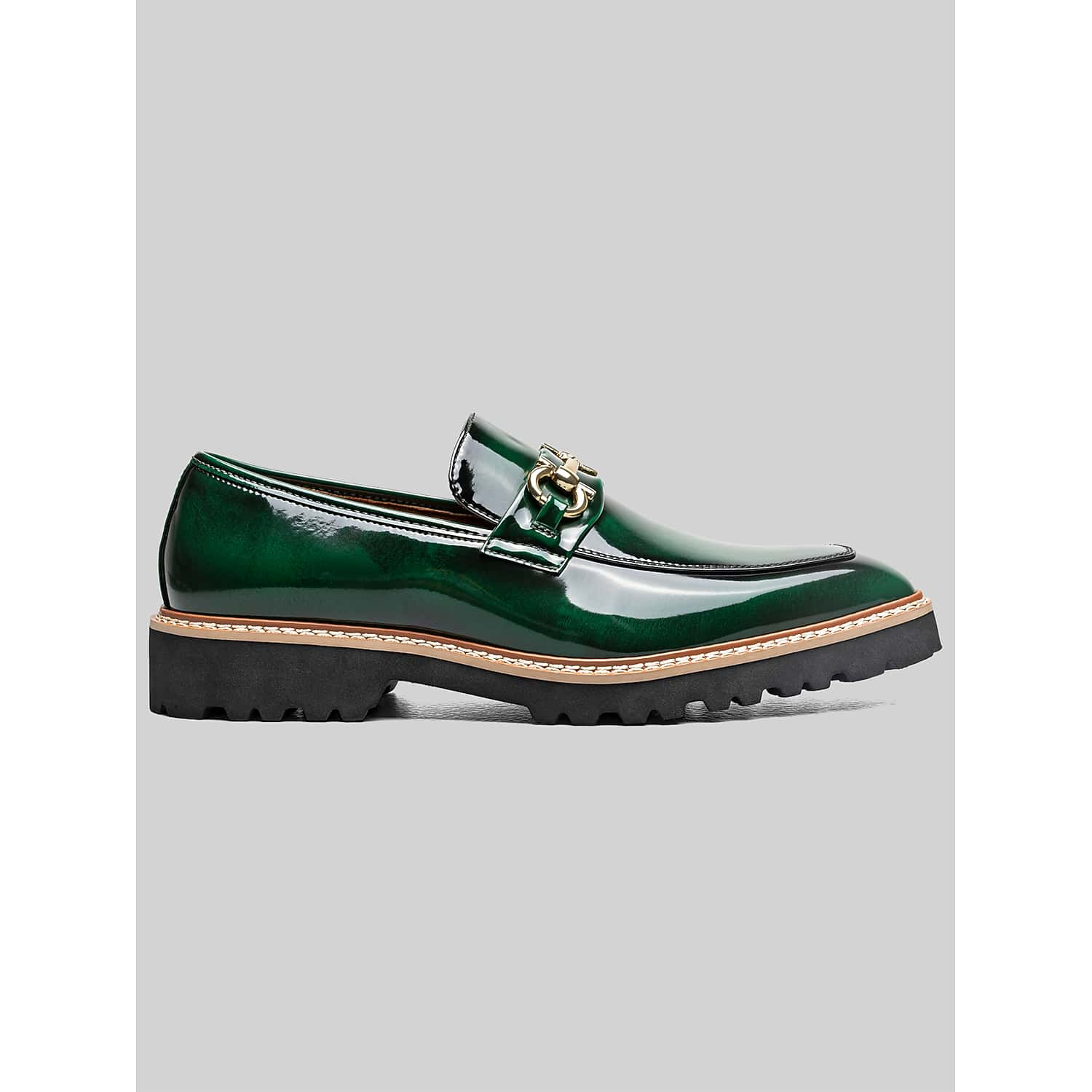
- Loafers: Polished and easy to slip on, loafers work with chinos, wool trousers, and even dark jeans.
- Derbies: This lace-up dress shoe with a relaxed build is great for everyday wear.
- Chukkas: Ankle-high boots in leather or suede suit casual Fridays or cooler weather.
- Clean leather sneakers: Minimal, low-profile sneakers in white, black, or brown work in more relaxed offices.
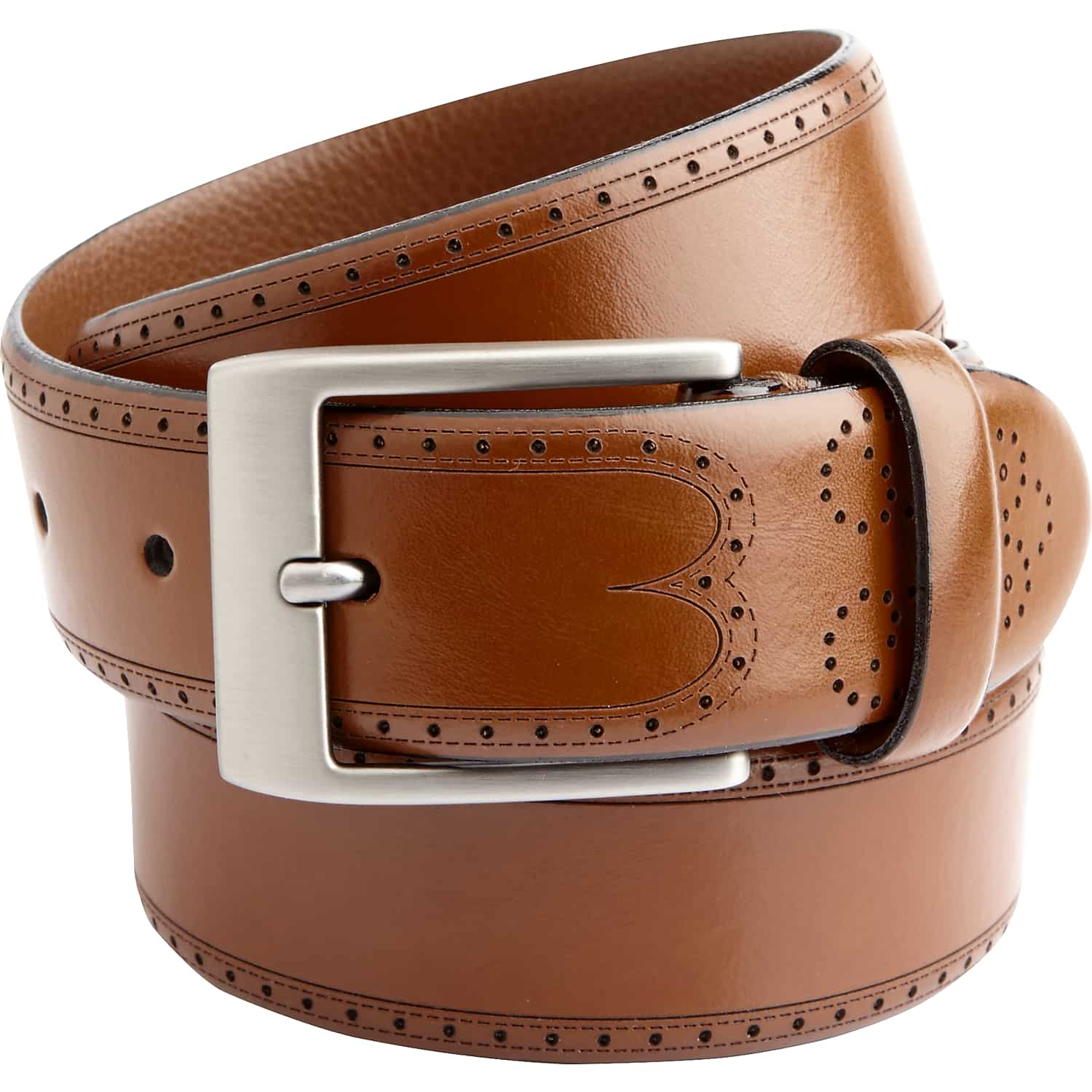
Coordinate your belt with the general color of your shoes. Brown leather works with brown footwear, while black pairs with black, but the shades don’t have to match perfectly.
Business Casual Outfit Examples for Men
Building the right business casual outfit for men comes down to the setting and the pieces in your closet. These examples of business casual for men take the guesswork out of getting dressed from dressier combinations to the most relaxed:
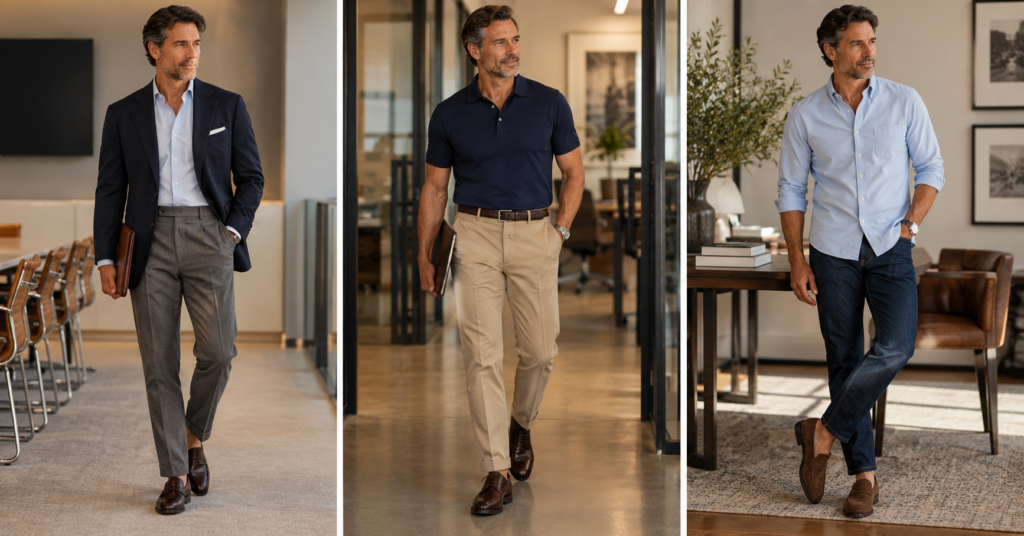
- Client-ready: A white dress shirt, gray wool dress pants, and a navy blazer with brown leather loafers
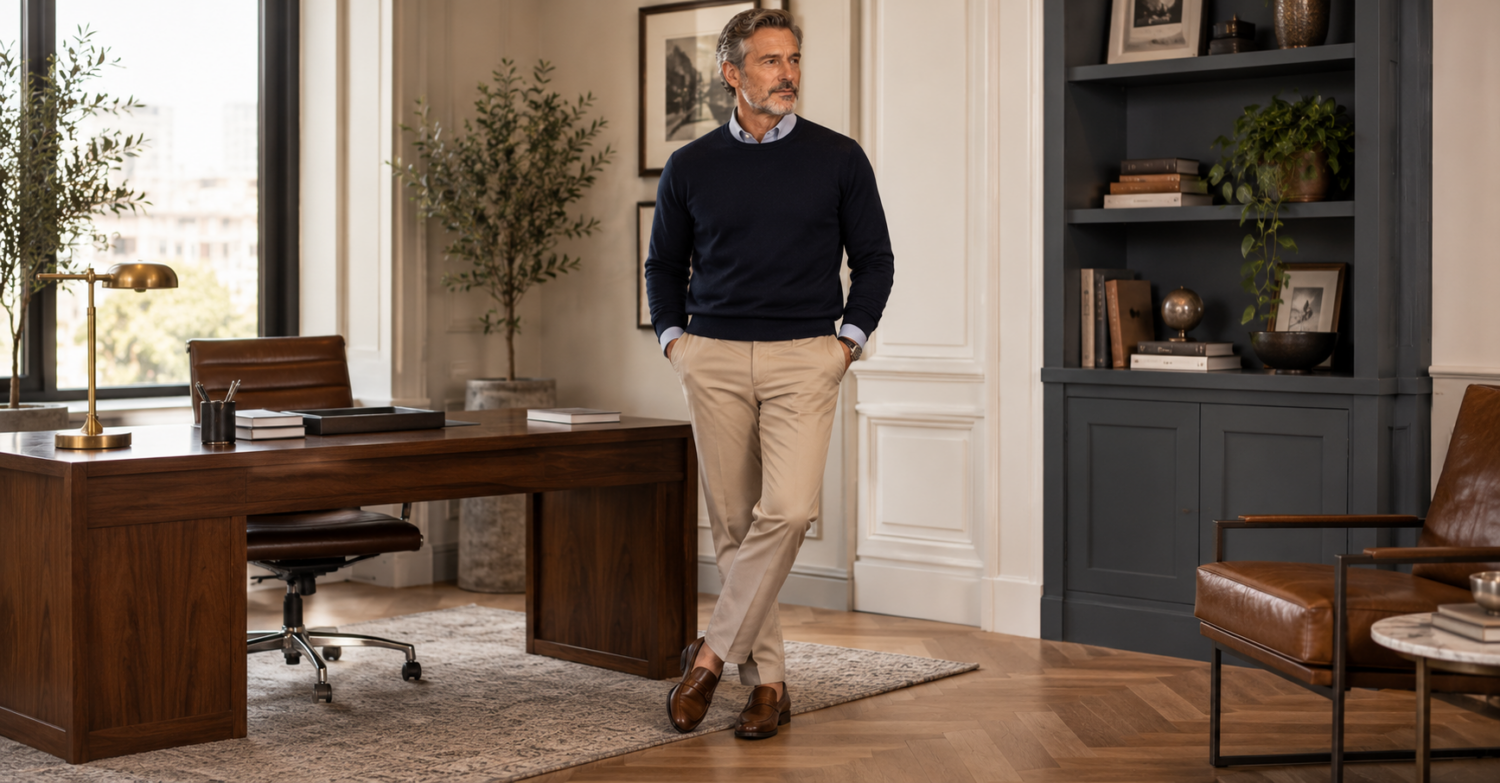
- Classic office day: A light blue Oxford shirt, khaki chinos, and a navy merino sweater with brown derbies
- No-tie meeting: A navy polo tucked into gray chinos, with an unstructured tan blazer and suede loafers
- Cold-weather ready: A gingham shirt under a quarter-zip, olive chinos, and dark brown chukka boots
- Casual Friday: Dark jeans, pale blue button-down shirt, and leather loafers
- Relaxed modern office: Black knit polo, tapered chinos, and low-profile white leather sneakers
These business casual outfit ideas share colors and layers, so you can rotate individual pieces without repeating the exact same look.
How To Style Business Casual
To style men’s business casual outfits successfully, focus on coordination and context. You don’t need a huge wardrobe, you just need one with a reliable color palette where your pieces work together and adapt to office, weather, or travel expectations.
Building a Versatile Color Palette
The 70/20/10 rule keeps your wardrobe pieces easy to mix and match. About 70% should be neutral foundations like navy, gray, white, and khaki. Around 20% can be muted supporting colors, such as light blue or burgundy. Save the last 10% for accent pieces like a patterned shirt or tie.
This approach keeps most tops, pants, and layers coordinated and gives business casual work attire for men variety without requiring a large closet.
Seasonal Strategies for Heat, Cold, and Travel
Summer business casual outfits take a little more planning so you can remain cool while also staying structured. A few pieces worth adding include:
- Linen-blend shirts that breathe without looking wrinkled
- Lighter chinos in stone, tan, or light gray
- Unlined blazers that give you polish without trapping heat
In colder months, switch to merino sweaters that layer under a blazer. Pair them with wool trousers and darker shoe colors that hide salt and slush. For business trips, pack wrinkle-resistant pieces in a tight color palette so a few items create a week’s worth of outfits.
Shop Business Casual at Men’s Wearhouse
Men’s Wearhouse makes it easy to build a business casual work wardrobe that fits both your office and your build. Explore casual work attire for men from collections like Awearness Kenneth Cole and Joseph Abboud. Our team is ready to help you find the right pieces, and we provide professional tailoring to make sure every fit is ready for any work day.
FAQ
Are Sneakers Acceptable in Business Casual Offices?
They can be. Clean, neutral sneakers work when the dress code permits them. Athletic and heavily branded styles are usually too casual. When unsure, choose loafers or derbies.
What Fit Tips Work Best for Athletic or Big-And-Tall Builds?
Athletic fits provide more space through the chest, seat, and thighs while maintaining a tapered shape. Big-and-tall options offer proportionate lengths, rises, and sleeves. Start with the shoulders and the widest part of your body, then tailor adjustable areas for a cleaner fit.
What Colors Work Best for a Business Casual Wardrobe?
Navy, gray, khaki, and light blue are the easiest foundation colors. Add muted burgundy, olive, or green through shirts and sweaters. A neutral base helps every new piece work with more of what you already own.
How Many Outfits Do I Need To Rotate Through a Work Week?
Five tops and three pairs of pants in versatile colors can create up to 15 combinations, which is enough to get through several weeks without repeating an exact outfit.
How Do Performance Fabrics Benefit Business Casual Wear?
Performance fabrics add stretch for comfort, wick moisture to keep you cool and dry, and resist wrinkles so your outfit keeps its structure.
What Should I Wear to a Business Casual Interview?
Dress at the more formal end of business casual. A blazer, pressed dress shirt, wool dress pants or chinos, and leather loafers or derbies make a strong impression. A tie is optional but doesn’t hurt if the company leans traditional.
Is a Polo Shirt Business Casual?
Yes, in most offices. Choose a solid, well-fitted polo with a structured collar and no large logos. Tuck it into chinos for a cleaner look, and add a blazer when you need to dress it up.
Shop Related Products