

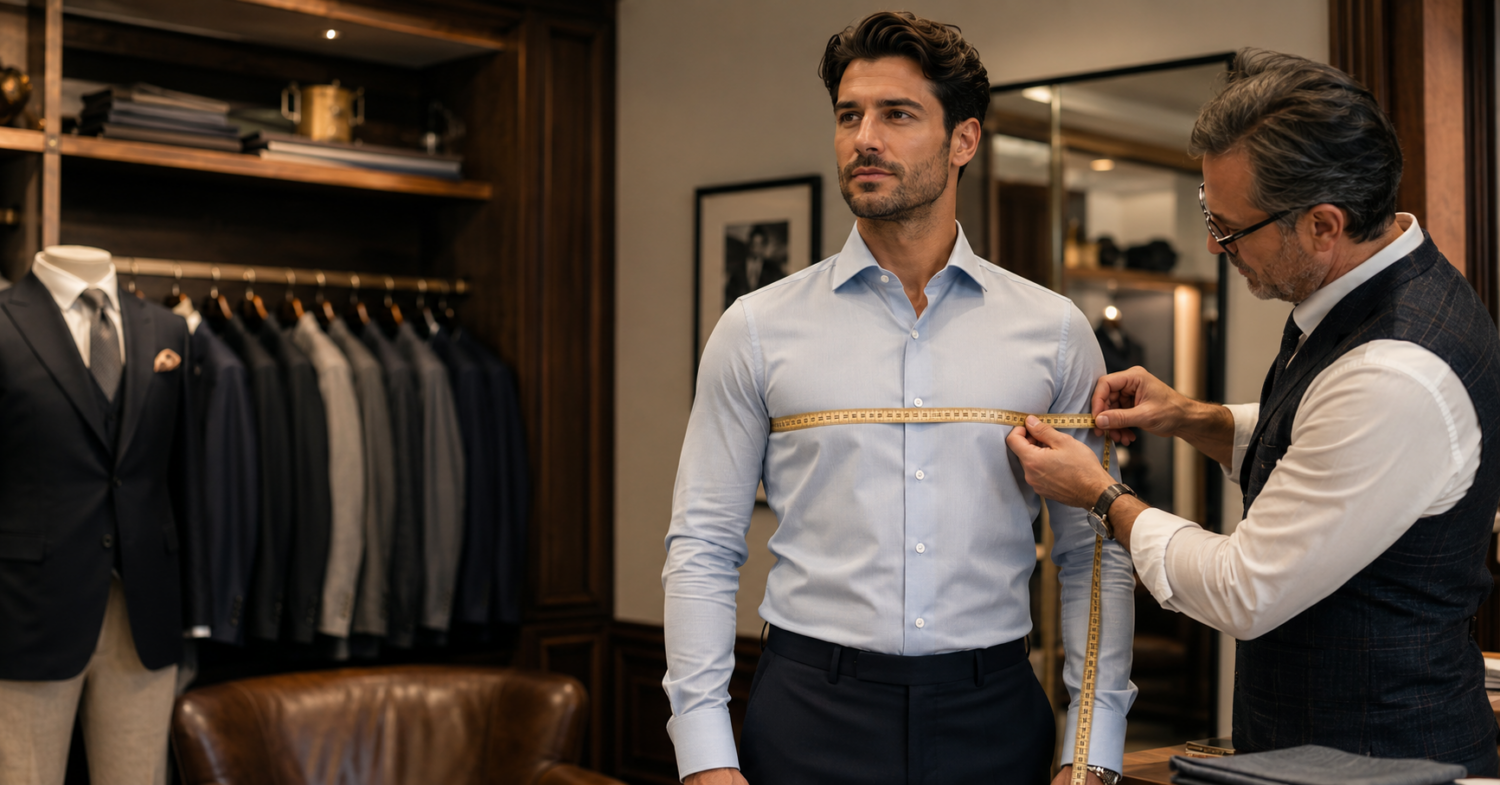

Whether you’re shopping for a wedding, job interview, or special event, getting the perfect suit for you starts with accurate measurements. And while a professional fitting is the gold standard for suit or tux sizing, you can do it at home with just a few tools. This guide explains how to measure yourself for a suit and what each number means, so you can shop with confidence.
What You Need Before Measuring
Using the right supplies can make your measurements more accurate. Grab a flexible measuring tape (often called tailor’s tape) and clear some space in front of a full-length mirror. It’s important to wear clothing that sits close to your body, like a slim-fit T-shirt or dress shirt and boxer briefs. (If you end up getting professional measurements, throw on a pair of flat-front trousers or chinos.) If you already have a pair of dress shoes, wear them.
If possible, ask a roommate or loved one to help you. It’s hard to get tricky measurements like your inseam or sleeve length by yourself.
How To Measure for a Suit: A Step-by-Step Guide
There are five numbers in this suit measurements guide:
- Overarm and shoulders
- Chest
- Sleeve length
- Waist
- Inseam
Write each measurement down before you start the next one. And remember to keep the measuring tape flat against your body and parallel to the floor — even the slightest angle can throw off your results.
Overarm and Shoulders
The overarm measurement (along with your chest measurement) guides your jacket size. Stand with your arms relaxed at your sides and have your helper wrap the tape around the fullest part of your arms and chest. Standard suit jackets assume your overarm is about seven inches larger than your chest, but if you have a broader or more athletic build, you may need a different size.
Your shoulder measurement dictates the seams and shoulder pads of your suit jacket, which impacts how it looks hanging off your body. Stand straight and have your helper place one end of the measuring tape on the bony tip of your shoulder, where your arm begins. They should pull the tape along the natural curve of your body to the same point on your other shoulder.
Don’t round your shoulders forward or shrug while measuring; this is a common mistake that inflates your measurement and leads to a baggy jacket. Making your jacket shoulders narrower is the most difficult, expensive adjustment a tailor can make, and it’s rarely possible to make them larger, so take your time and get these measurements right.
Chest
For most men, the size of your chest becomes the size of your jacket. For example, a U.S. 40 jacket is cut for a 40-inch chest. To measure your chest, wrap the tape around the fullest part of your torso, across the shoulder blades, then drop your arms and read the number. The measuring tape should feel snug but not tight.
To get an accurate measurement, breathe normally and don’t puff out your chest. A tailor can only adjust the chest of your jacket by about half an inch in either direction; anything beyond that costs more than buying a new suit.
Off-the-rack suit jackets typically come in even numbers, such as 38, 40, and 42. So if your chest measures 39 inches, you should try on a 38 and a 40 to see what fits better.
Sleeve Length
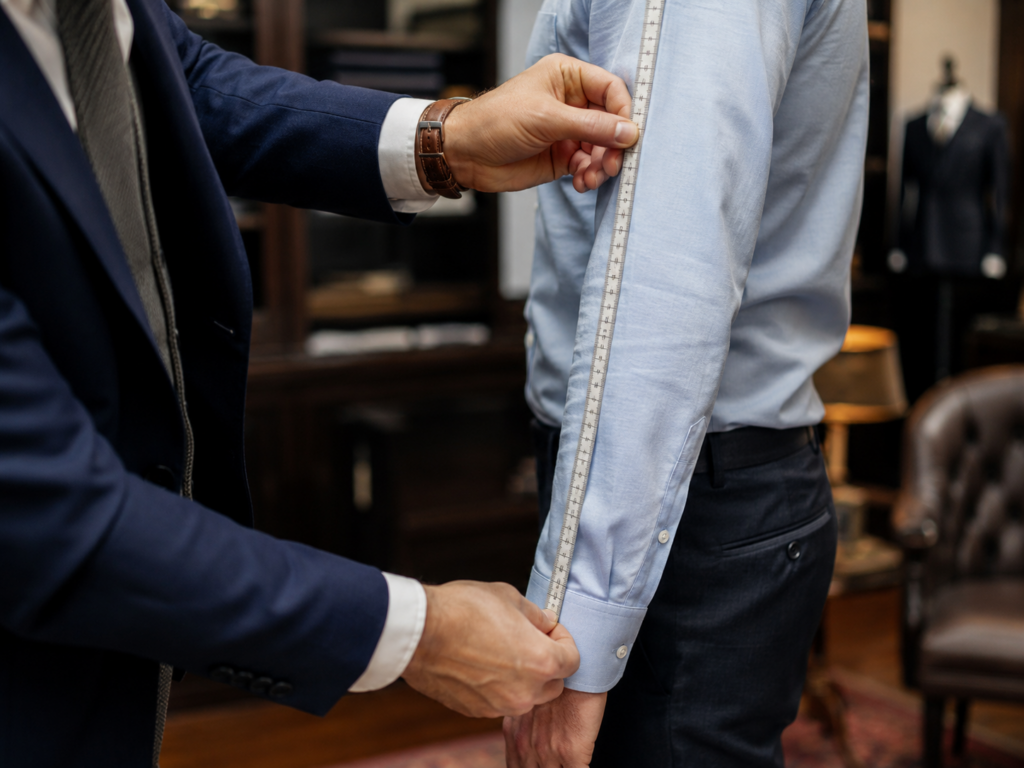
A jacket can fit your shoulders and chest perfectly, but if the sleeve length is wrong, the whole garment looks wrong. To get the correct measurement, place the tape on the top vertebrae at the center of your neck. Run the tape along the top of your shoulders, down your outer arm. The tape should end just above your wrist bone. Remember that a properly fitting suit jacket allows about half an inch of your shirt cuff to be visible.
Keep your arm relaxed with a slight bend while measuring, or else you might end up with a short jacket sleeve.
Waist
Wrap the tape around your natural waistline, just above your belly button. It should feel snug, but you should be able to comfortably slide one finger underneath. That little bit of room helps keep trousers comfortable throughout the day.
Don’t make the mistake of measuring too low on your torso. Remember that suit trousers sit higher on the waist than most jeans, which rest on the hips.
Inseam
If you have someone helping you, place the top of your measuring tape at the highest point of your inner thigh, where the crotch seam rests. Your helper should run the tape down the inside of your leg. The tape should end at the top of your dress shoes, if you’re wearing them. If you don’t have a pair, stop the tape at your ankle bone. Whatever you do, don’t bring the tape all the way down to the floor — your pants will end up bunched and pooling around your shoes.
If you have to take your measurements solo, grab a pair of suit pants or nice trousers that fit you well. Lay them flat on a hard surface, smooth out the fabric, and then run the tape along the inside seam from the crotch to the hem. That measurement is your inseam.
How Should a Suit Fit? Quick Fit Checkpoints
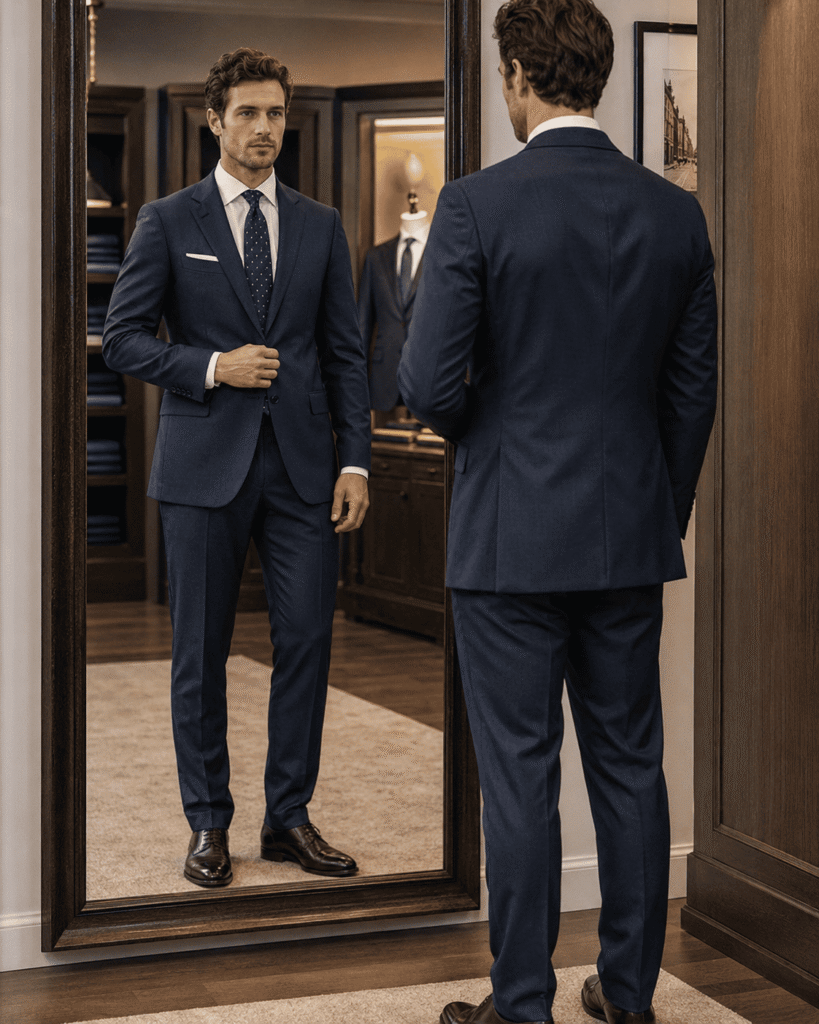
When you try on a suit, check these five points in the mirror:
- Shoulders: The seam should end where your shoulder does, with no dent or overhang. Check this first, as the shoulders are the hardest portion to alter.
- Chest: With the jacket buttoned, you should be able to fit a flat hand under the lapel. Any pulling or wrinkling means it’s too tight.
- Sleeves: A well-fitted jacket cuff should touch your wrist bone and leave approximately a half inch of shirt visible. If it covers your hand or climbs up your forearm, get it adjusted.
- Pant length: Most suit trousers look best with a slight break, where the pant has only a small crease or fold as it lays against the top of your shoe.
- Seat: Your trousers should skim your rear without pulling or sagging. If you see wrinkles or folds, try a different size.
How To Find Your Suit Size With Measurements
Use the following chart as a starting point for U.S. sizing. Cuts do vary between brands, so check the maker’s own chart before you commit to your suit. If you fall between sizes, pick the one that best fits your shoulders and chest.
| Suit Size (Jacket) | Chest (in) | Waist (in) |
| 36 S/R/L | 35–36.5 | 29–30 |
| 38 S/R/L | 37–38.5 | 31–32 |
| 40 S/R/L | 39–40.5 | 33–34 |
| 42 S/R/L | 41–42.5 | 35–36 |
| 44 S/R/L | 43–44.5 | 37–38 |
| 46 S/R/L | 45–46.5 | 40–42 |
Note: This is a general guide. Sizes can vary by brand and fit. The letter (S, R, L) corresponds to height: short (S) for 5’4″–5’7″, regular (R) for 5’8″–6’0″, and long (L) for 6’1″–6’4″. Minor deviations can often be corrected by a professional tailor at a place like Men’s Wearhouse.
How To Read Suit Sizes on Labels
Suit sizing for men corresponds directly to your measurements. Suit jacket labels typically have a number and a letter that corresponds to your chest size and height. If you see a suit labeled 40R, it fits someone with a 40-inch chest and regular height (approximately 5’8”–6’0”). S stands for “short,” and L stands for “long.”
Trouser labels correspond to your waist size and inseam. So a 34-by-32 is for someone with a 34-inch waist and a 32-inch inseam.
Get Measured the Right Way at Men’s Wearhouse
If you don’t have someone to help you measure yourself at home, or if you just want to be positive your numbers are correct, come to Men’s Wearhouse. Our skilled associates can take your measurements and find the right sizes for you to try on right away. Once you find a suit you like, our in-store tailors can perfect it with a few adjustments.
Visit your local Men’s Wearhouse for a professional fitting so you can rock your suit with confidence.