
Even the finest designer suit can look bad if the measurements are off. Little details like the proper pants length bring your whole look together and can help you look taller and leaner. If you’re wondering how long suit pants should be, this guide can help.
What Is a Pant Break?
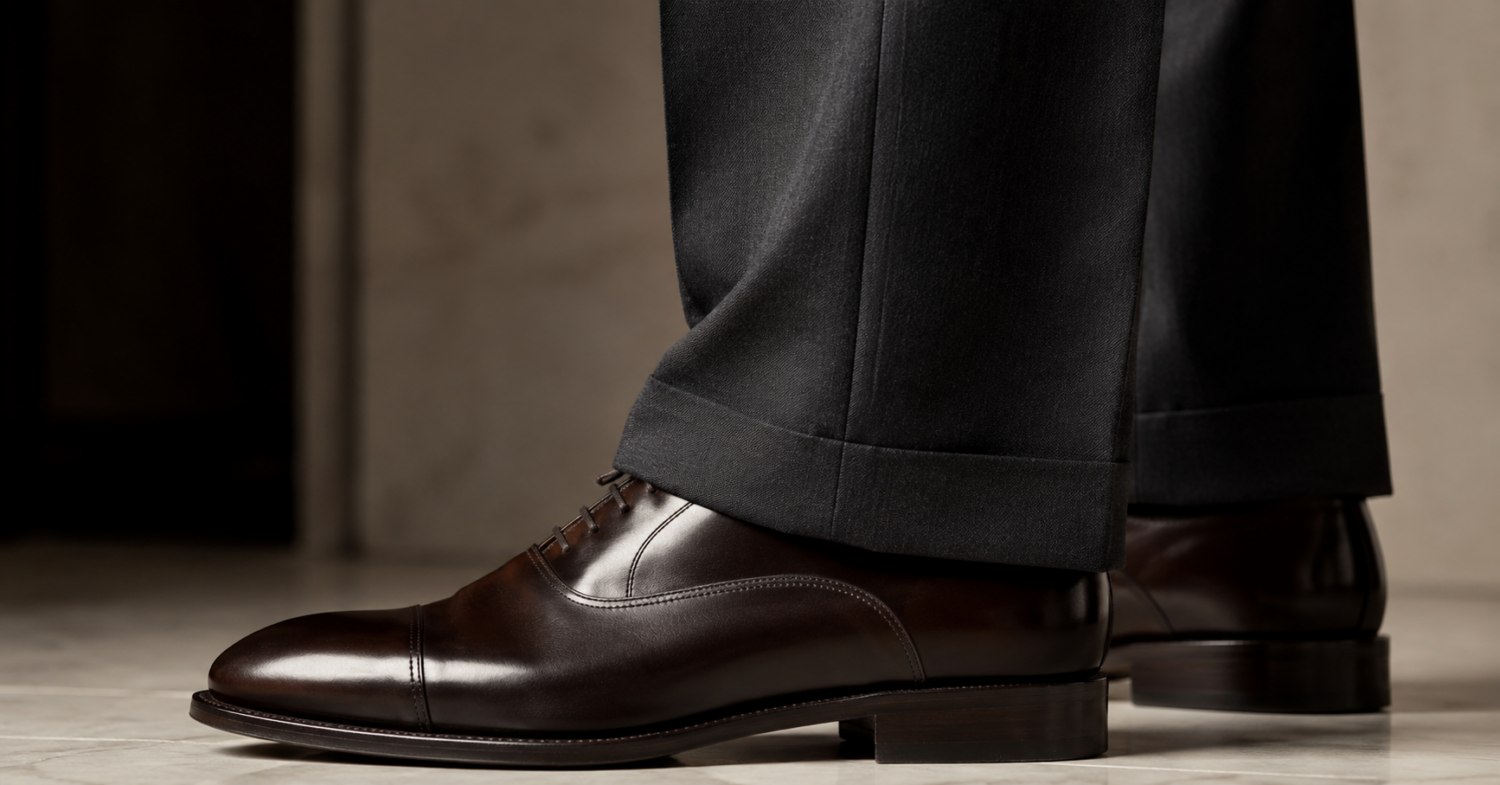
The finished edge at the bottom of the pant leg, called the hem, should rest against your shoe. The fold or crease that forms along the hem is called the break. Shortening or lengthening a pair of trousers by as little as a quarter inch can subtly change the amount of break, while larger adjustments create a more dramatic effect.
As the pant leg gets longer, more fabric gathers at the front of the trouser and creates a larger break. More noticeable folds, such as a half break or medium break, can create a vintage or classic look. A slight break — or no break at all — can make your outfit look sleek and modern.
The Different Types of Suit Pant Breaks
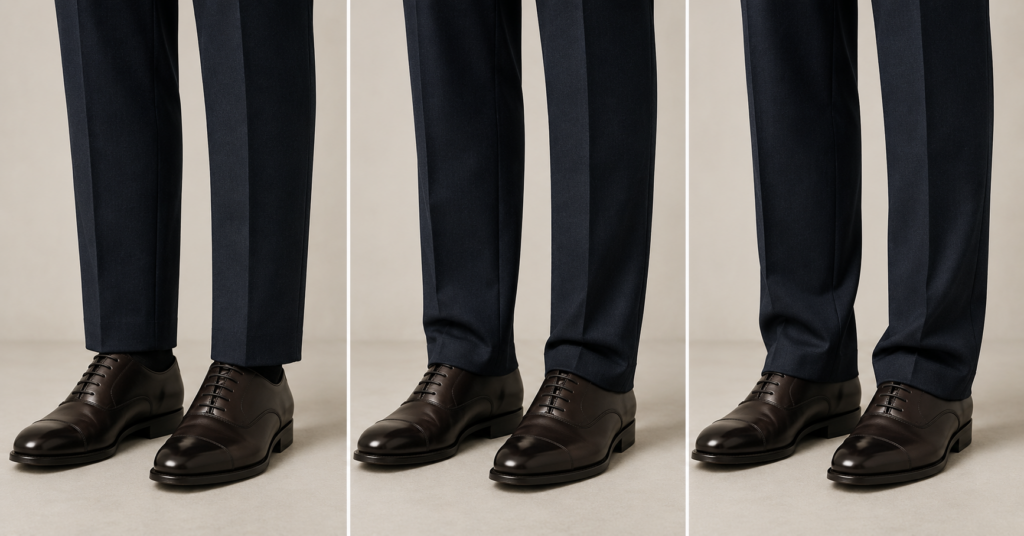
There are three major pant breaks, each suited to a different outfit and setting.
No Break
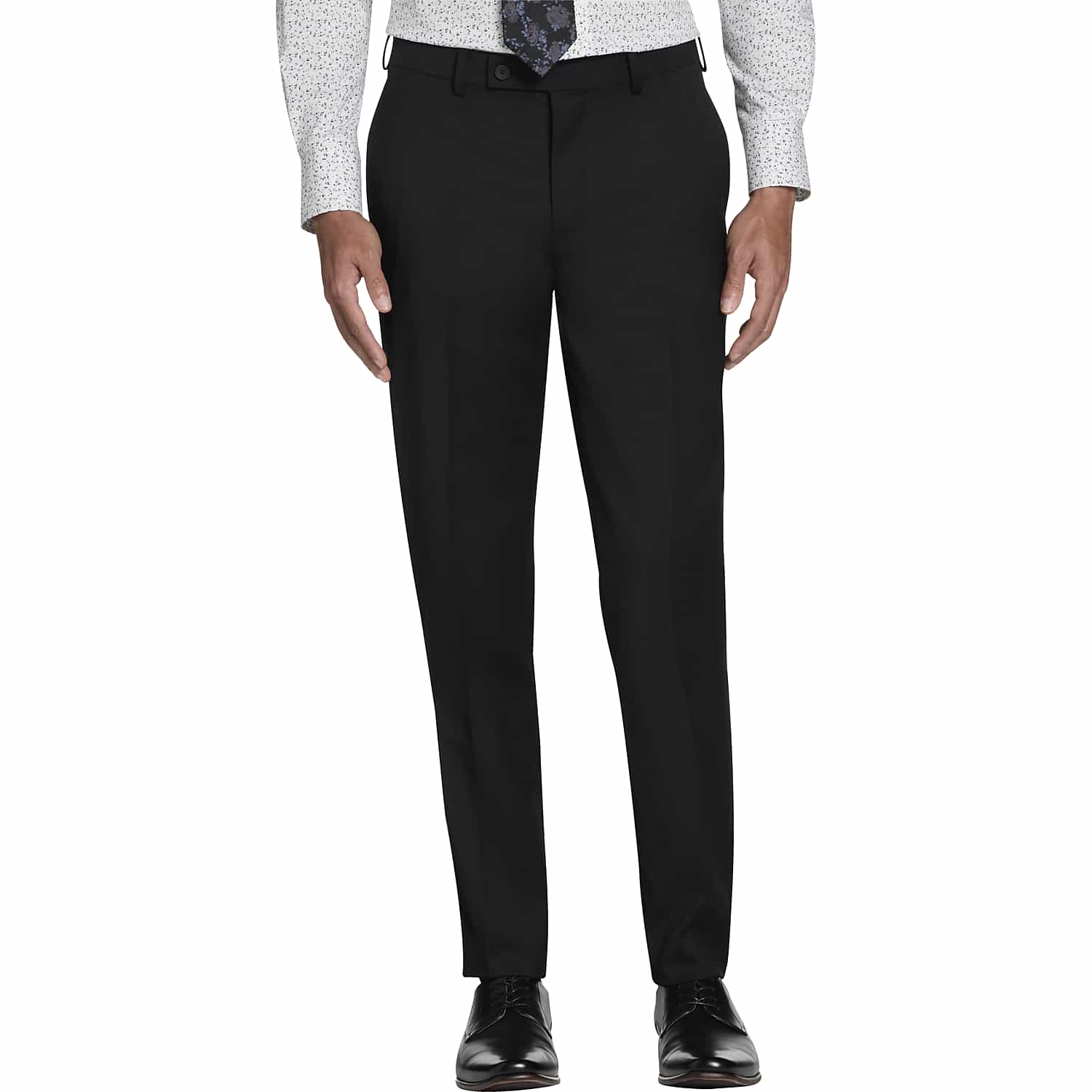
A no-break pant ends just above the shoe, with little to no fabric resting on top. It pairs well with a slim-fit suit, and the result is a sleek, elongated silhouette that can make you look leaner and taller.
Fashion-forward men may opt for no break if they have a pair of interesting shoes they want to show off. Pants with no break tend to look well-tailored and youthful, which makes them a popular choice for city weddings or formal events. But their trendy appeal may make them inappropriate for more conservative environments like board meetings or charity galas.
Slight Break
A slight break is a versatile option for your suit pants. The trousers rest gently on the shoe, creating a single, subtle crease at the front. It looks polished and works well with slim and classic-fit suits.
Because it complements a wide range of body types and occasions, a slight break is a safe choice for everything from job interviews to awards shows. But if you want to highlight part of your body or make a fashion statement, they may feel too safe.
Medium Break
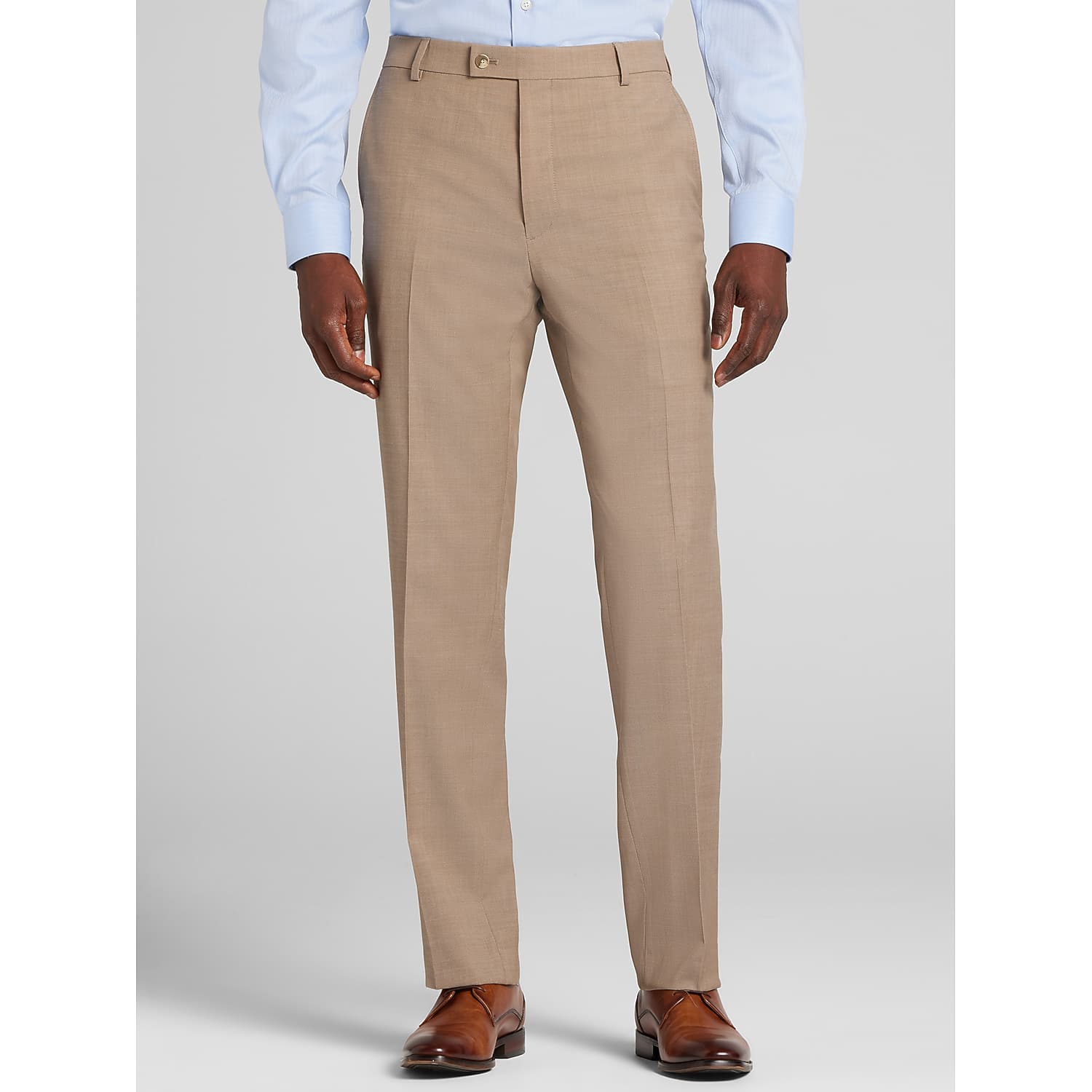
A medium break creates a more noticeable fold along the shoe. The extra coverage creates a more traditional appearance and pairs naturally with classic-fit suits and pleated trousers.
In professional settings, a medium break can project a conservative, polished image. It’s also a great choice for larger, broader men who want to show off their athletic build. Make sure you work with a tailor if you want a medium break — even a quarter inch of excess fabric pooled around the ankle can take your suit from classy to sloppy.
How Suit Pants Should Fit Beyond Length
The right break won’t save trousers that fit poorly above the knee. Before you touch the hem and adjust your suit pants length, check three key areas:
- Waist: Suit pants sit higher on the waist than jeans. They should sit securely without a belt, but if you wear one, there should be no fabric bunching under the buckle.
- Seat: The pants fabric should drape cleanly over the seat. When horizontal lines pull across the rear, the trouser cut is too tight.
- Leg line: The pant leg should narrow gradually from the thigh to the hem, in what’s known as a taper. A clean taper can balance the proportions of your shoulders, chest, and legs, while excess fabric through the calf can make you look shorter and wider.
To check the fit of your pants, slide a flat hand between the waistband and your side; it should feel snug without pinching. Then, sit down. Gaps at the waist or strain across the seat could mean you need to find a different size or visit the tailor.
How Shoes Affect Pant Length
When determining the right dress pants length for men, footwear plays an important role. Wear your regular dress shoes whenever you try on suit pants. Different shoe styles can change how much break appears, even when the pant length stays exactly the same. Shoes with thicker soles or bulkier uppers, such as brogues and derby shoes, naturally lift the fabric and create a more pronounced break. Sleeker styles, such as oxfords and loafers, sit lower on the foot and often complement shorter pant lengths with less break.
Should suit pants touch your shoes? If you choose a slight or medium break, yes. If you prefer the no-break look, the hem of your pants should float just above the top of your shoe when you stand still.
Slim Fit vs. Classic Fit: Does Pant Length Change?
The pant length should complement the overall fit of the trousers. A slimmer cut typically looks best with less break, while fuller-cut trousers can accommodate a slightly longer length without looking out of proportion.
Slim and Tailored Fits
Slim and tailored trousers taper near the leg, so a short hem suits them fine. You can opt for a slight break or no break. These fits have a narrow leg opening, so excess length has fewer places to go when the fabric meets the shoe. As a result, a longer break can create visible bunching around the ankle that interrupts the clean lines of the suit.
Classic and Traditional Fits
Classic and traditional trousers like chinos are cut with more space through the leg, which allows the fabric to drape naturally and accommodate a slightly longer break. A slight to medium break helps pants with wider openings look proportionate to your shoes.
What a Tailor Can Adjust
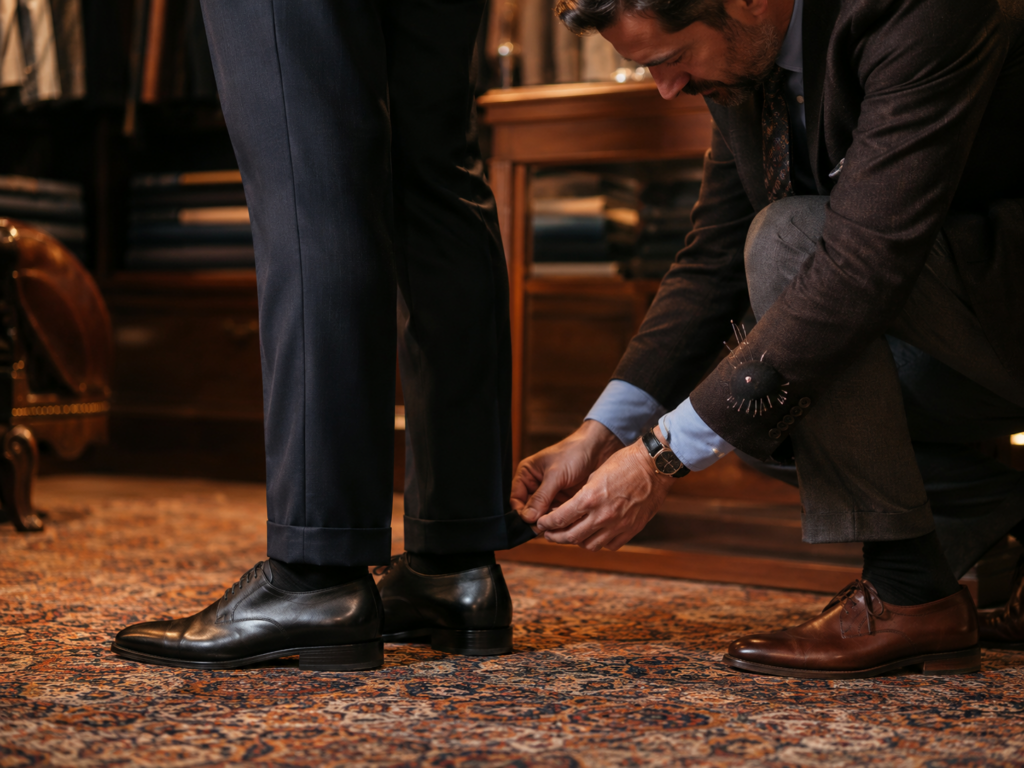
A skilled tailor can take an off-the-rack suit and refine it until it fits you perfectly. The following alterations address problems in how your pants fit.
Hemming Pants
Hemming adjusts the length of your trousers to create the amount of break you want. It’s one of the quickest and most affordable suit alterations, yet it can have a significant impact on the overall appearance of your pants. Even a small adjustment can help trousers drape more cleanly, complement your shoes, and create a more polished appearance.
Tapering and Pant Proportions
Pant length isn’t the only factor that affects how trousers look. The shape of the leg matters, too. Tapered trousers narrow below the knee, creating a sharp, modern silhouette that typically works best with little to no break. Fuller-cut trousers drape more naturally through the leg and often pair well with a slightly longer break. If your pants fit comfortably through the waist and seat but feel too loose below the knee, a tailor can taper the leg to create a more refined look.
What To Ask a Tailor
If you’re having suit pants altered, don’t be afraid to ask for guidance. Questions such as “What break would you recommend for these trousers?” and “Would tapering the leg improve the fit?” can help ensure you leave with a result that matches your style and proportions.
Realistic Expectations
Some alterations finish in a day; others take longer. Tapering and proportion changes run up to a week or more because the tailor must open the seam and rebuild the leg. Budget extra time if your alterations are for a special event like a wedding or interview. Bring the suit in about two weeks out from your event so you have time for a second fitting, if necessary.
Get the Right Fit With Men’s Wearhouse
If you have an event coming up and worry that your suit pants don’t fit properly, Men’s Wearhouse can help. During the fitting process, a trained associate will evaluate the length, break, and overall fit of your trousers. If you need adjustments, on-site tailoring services can help ensure your suit looks polished and feels comfortable before the big day.
Men’s Wearhouse helps ensure your suit pants fit well and complement the rest of your outfit, so you can look your best.
Shop Related Products