
Choosing a suit isn’t always as simple as picking a color or fabric. Suit styles for men are designed for specific settings, seasons, and levels of formality. When you know the types of suits available, you can dress appropriately for any occasion.
Style is only part of the equation, though. The way a suit fits plays a large role in your appearance. By learning how suit types and tailoring work together, it’s a lot easier to find a suit that flatters your frame and leaves a lasting impression.
How To Choose the Right Type of Suit
Choosing the right suit starts with understanding the following factors.
Consider the Occasion
Dressing for the occasion helps you draw attention for the right reasons. In office environments, navy, charcoal, and gray suits are reliable options that project professionalism but aren’t overly formal. Weddings offer more flexibility, giving you an opportunity to experiment with lighter colors, seasonal fabrics, and modern cuts.
Black-tie events typically require a tuxedo rather than a standard suit. Semi-formal and casual occasions, like date nights and cocktail parties, pair well with separates that let you express your personal style.
Factor in Versatility
Versatility matters, whether you’re buying your first suit or building a capsule wardrobe. Some suits transition between occasions and give you more mileage from a single look. For example, a well-fitted navy suit works for both business meetings and formal dinners. Just make minor changes to the shirt or accessories, and you can wear the same suit to all sorts of events.
Prioritize Fit Over Trends
Fit has a stronger impact on your appearance than any trend. Notice how the jacket sits across your shoulders, where the sleeves and trousers fall, and how the cut complements your frame. In many cases, a few alterations will do more for your appearance than the latest trend, as even a simple suit looks sophisticated when tailored correctly.
Different Types of Suits for Men
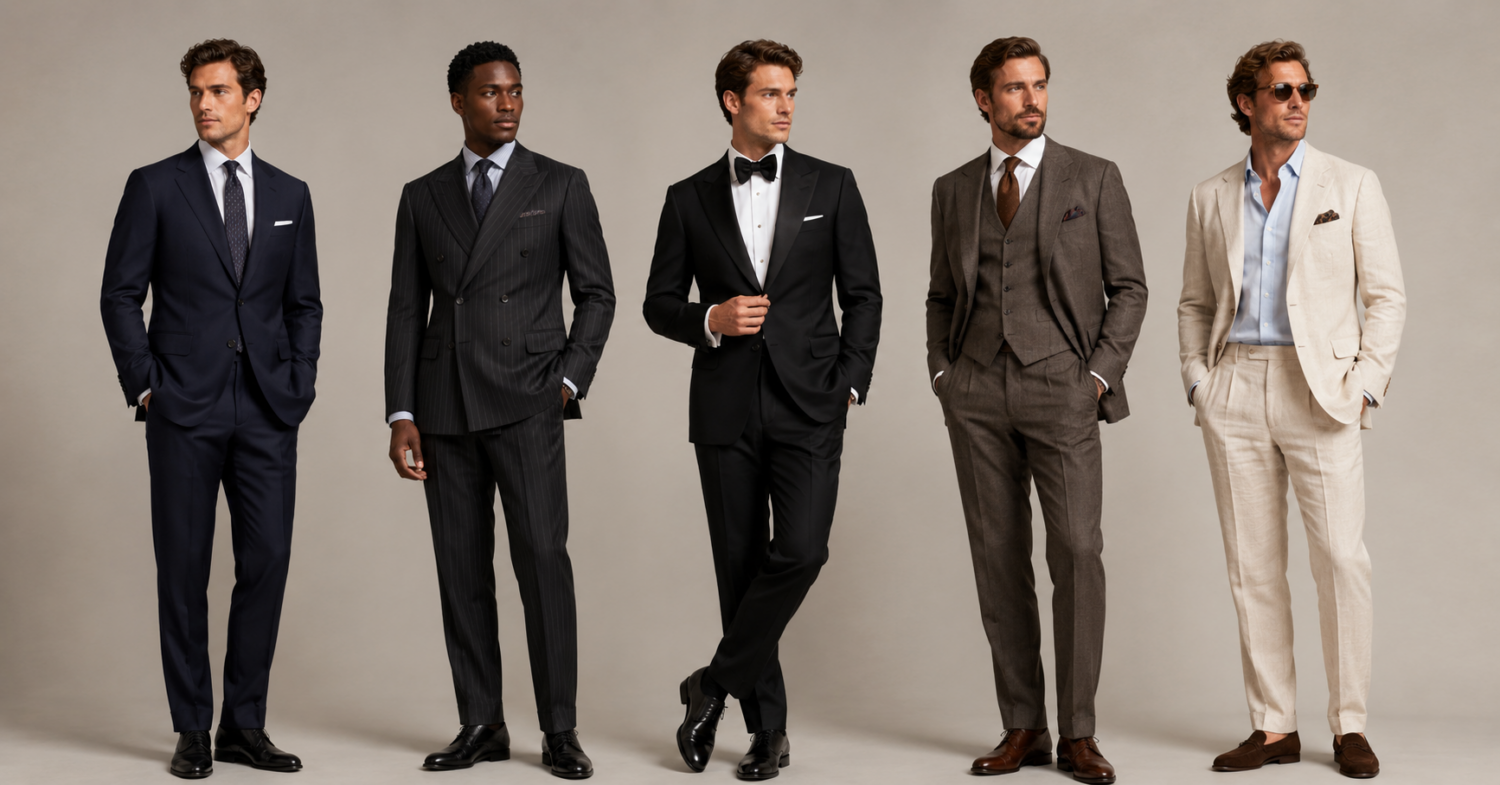
Here are the main types of suits for men available today.
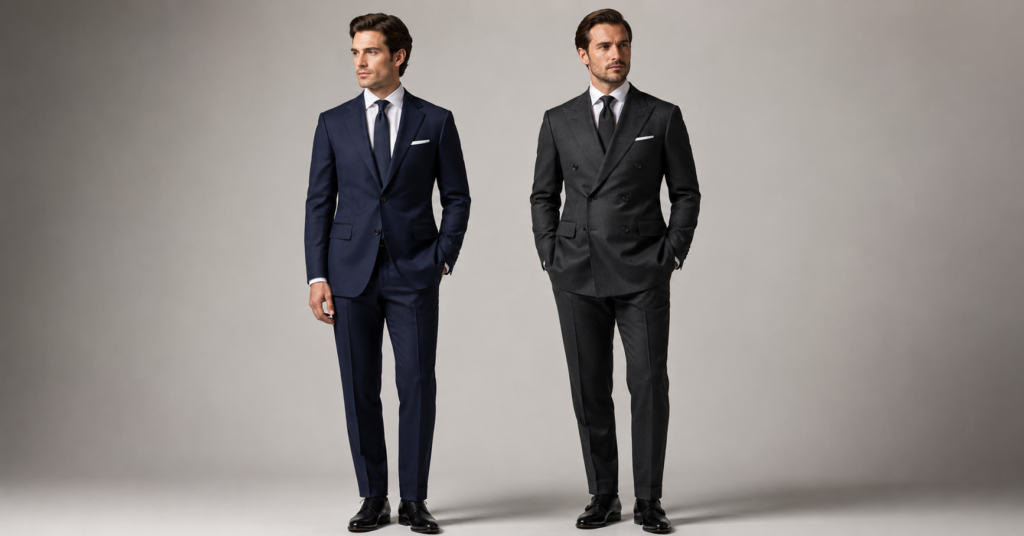
Single-Breasted Suit
A single-breasted suit has a column of buttons and a narrow overlap of fabric at the front of the jacket. It’s designed with one, two, or three buttons, though the two-button version is the modern suit standard. When buttoned, a single-breasted suit has a deep V-shape that elongates the torso and flatters most body types.
- When to wear it: This is your go-to for nearly any occasion, including proms, weddings, and professional events, because it adapts across dress codes and always looks polished.
- Why it works: The V-shape creates a slimming effect that makes the torso appear longer and leaner. Plus, the sharp silhouette encourages you to stand taller and walk with purpose.
- Styling tip: Stick with navy or charcoal for maximum versatility. Choose a classic notch lapel for everyday wear or a peak lapel single-breasted suit if you want a stylish upgrade.
Double-Breasted Suit
A double-breasted suit features a wide, overlapping front panel and two parallel columns of buttons. The left side wraps across the torso and fastens at the right, giving the suit jacket an architectural silhouette. Most styles use a 6 by 2 button configuration (six buttons total, with two functional), though there’s also 4 by 2 and 4 by 1 variations.
- When to wear it: Wear a double-breasted suit to parties and events where you want to exude confidence and command attention. It’s a step above the standard business suit in formality.
- Why it works: The double-breasted design naturally broadens the chest, sharpens the shoulders, and subtly cinches the waist so you look your best from every angle.
- Styling tip: Let the jacket do the talking by keeping your shirt and tie understated. Or fasten only the lowest button on a 4 by 1 jacket for a truly sprezzatura (studied carelessness) look.
Tuxedo
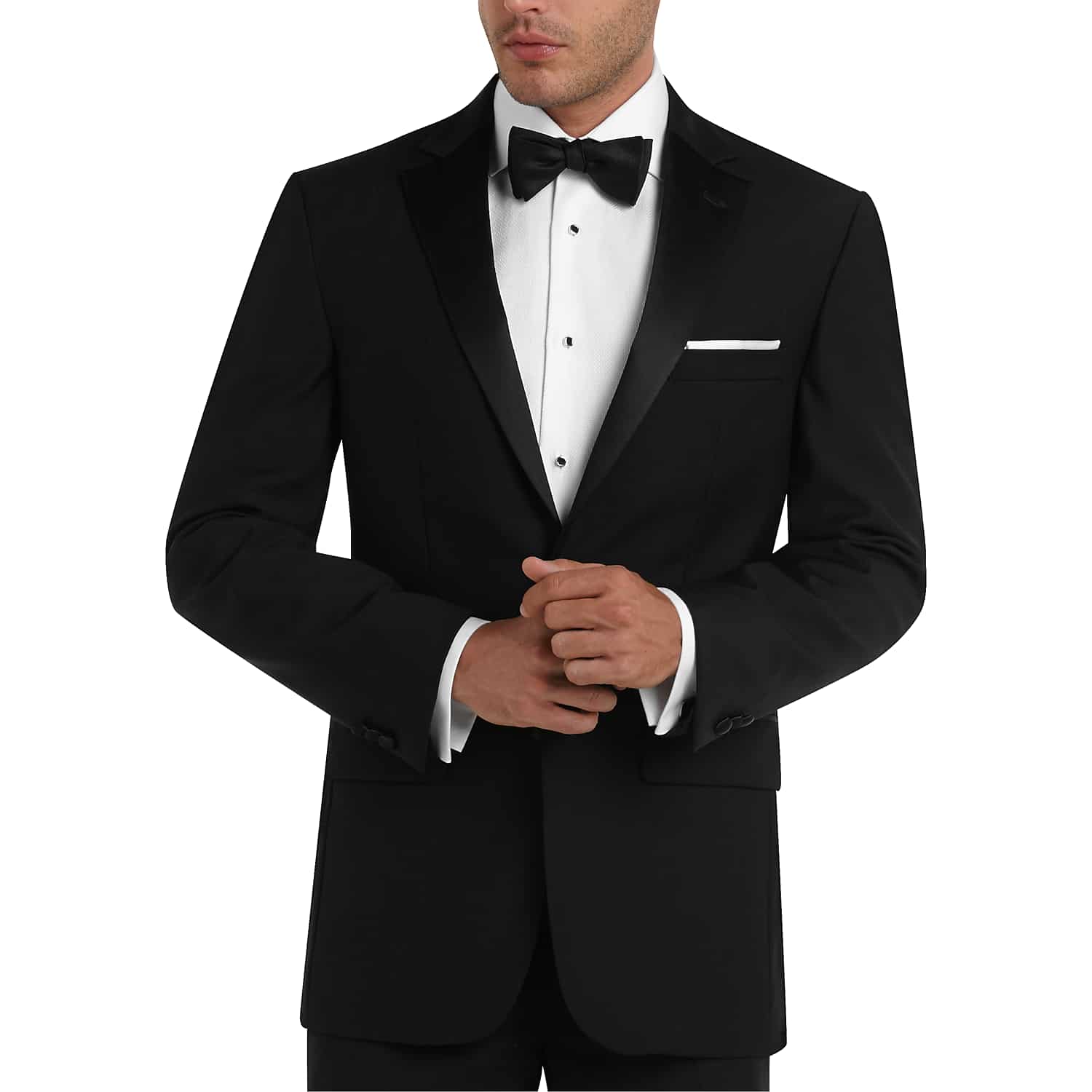
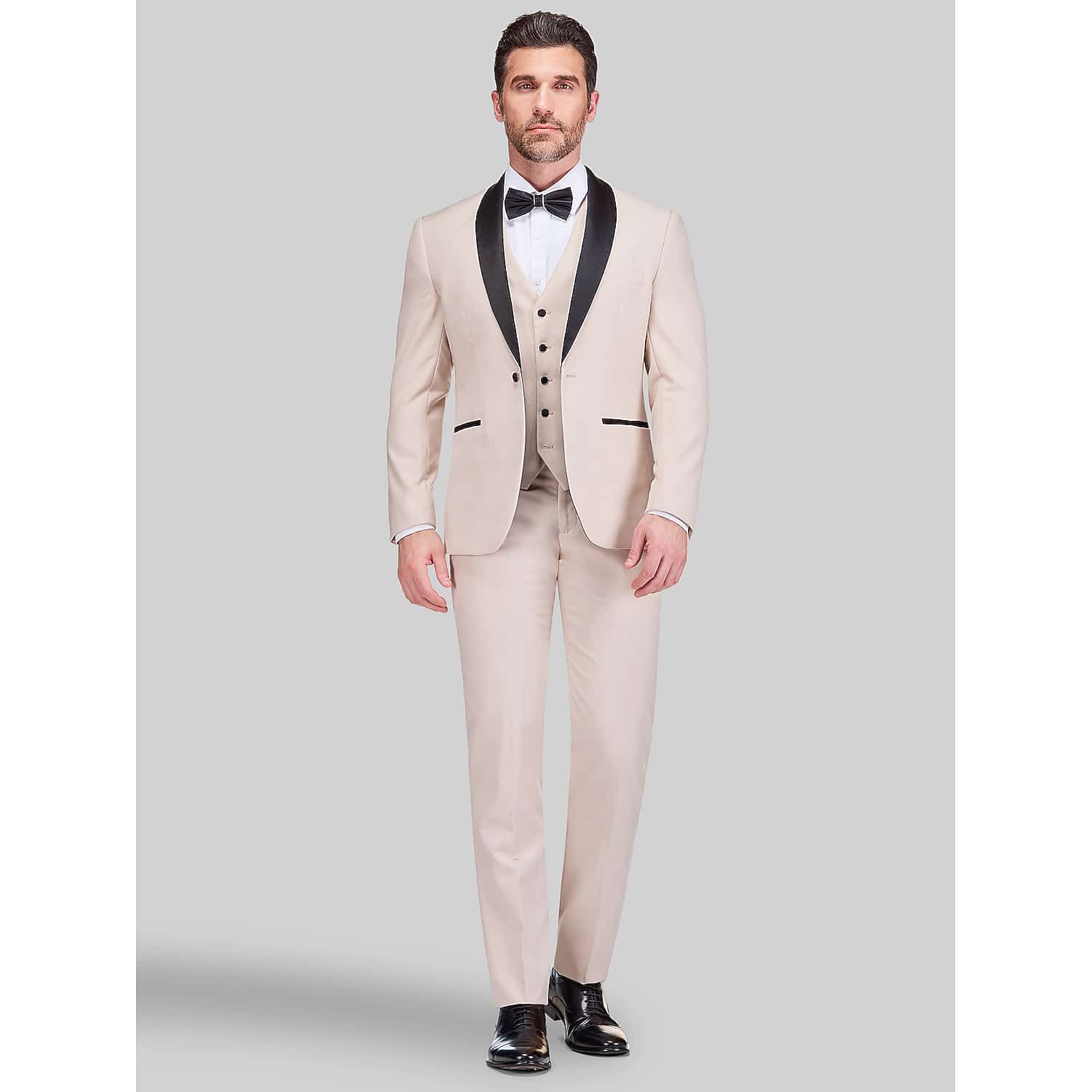
A tuxedo is a formal suit that features satin detailing on the lapels, buttons, and stripe running down the outer seams of the trousers. You usually wear a tuxedo with suspenders and pair it with a cummerbund or waistcoat instead of a belt to maintain formality.
- When to wear it: Men reserve tuxedos for black- and white-tie events, galas, and weddings. They signal the highest level of formalwear and follow long-established rules of evening wear.
- Why it works: Tuxedos have more polish than a regular suit. Their satin accents and structured design signal formality and elevate the ensemble, even at a glance.
- Styling tip: Follow the classic formula: a crisp white dress shirt, black silk bow tie, and patent leather shoes. You can’t go wrong with this combo and you’ll meet the dress code perfectly.
Three-Piece Suit
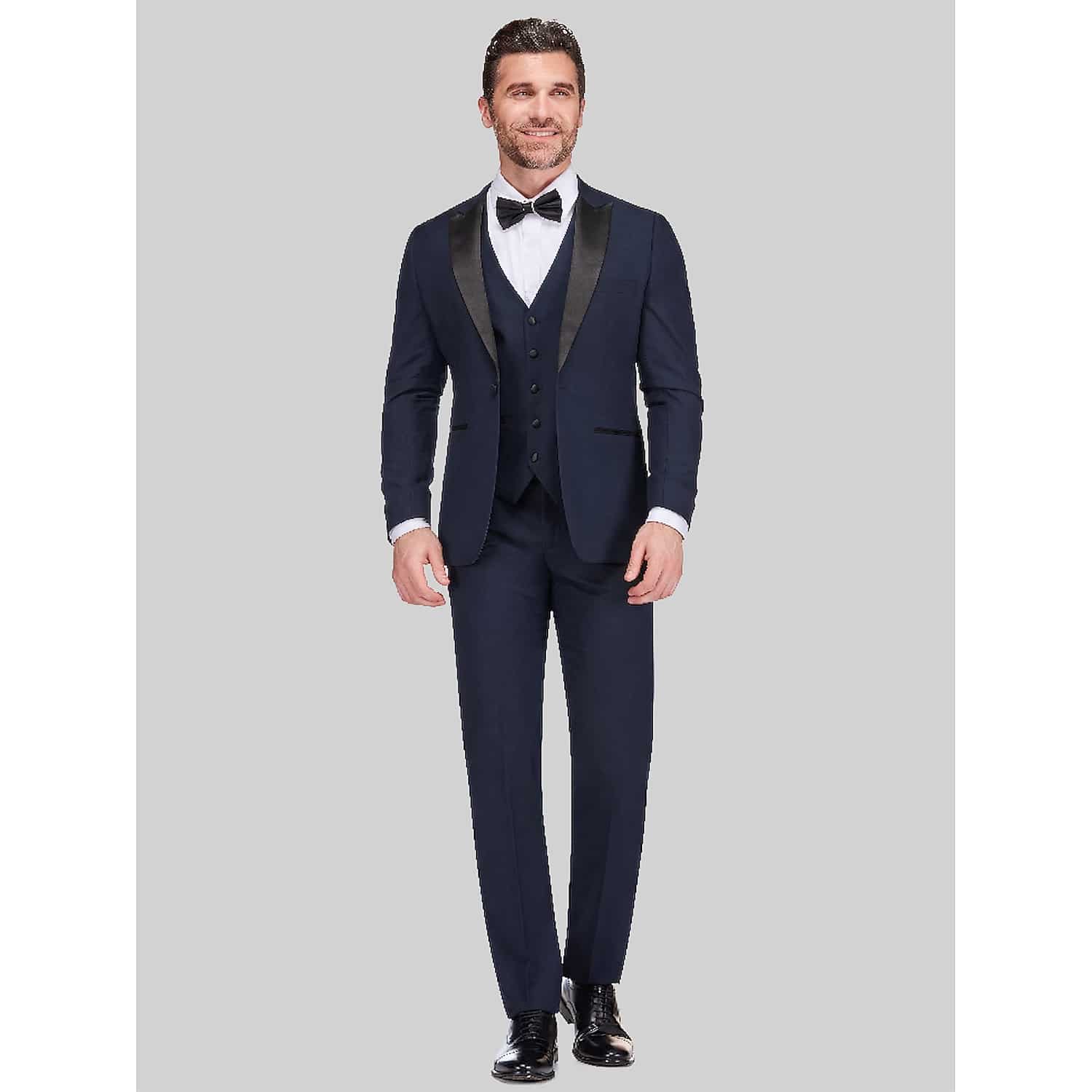
A three-piece suit has three matching garments — a jacket, trousers, and waistcoat (vest) — all cut from the same fabric. The vest sits under the jacket and covers the waistband of the trousers, creating a uniform look from head to toe.
- When to wear it: A three-piece suit works well for luxury weddings, high-level networking events, and any occasion where you need more formality than a two-piece suit.
- Why it works: Even without the jacket, the vest keeps you looking refined and ready for formal settings. It’s also a cleaner style that conceals the shirt buttons and trouser waistband.
- Styling tip: Choose a vest that fits snugly through the torso to define your shape. Keep each piece in the same fabric for a textbook three-piece suit.
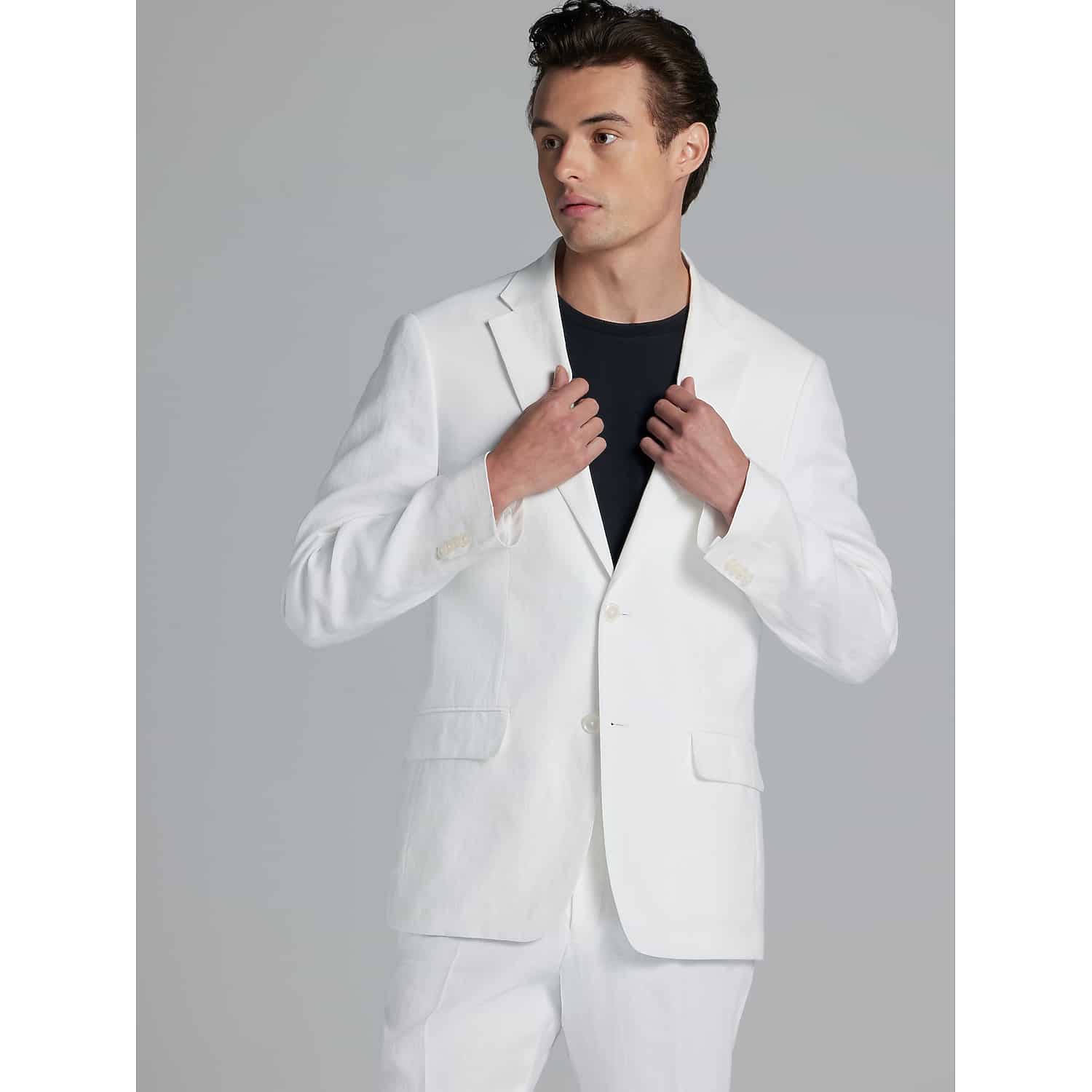
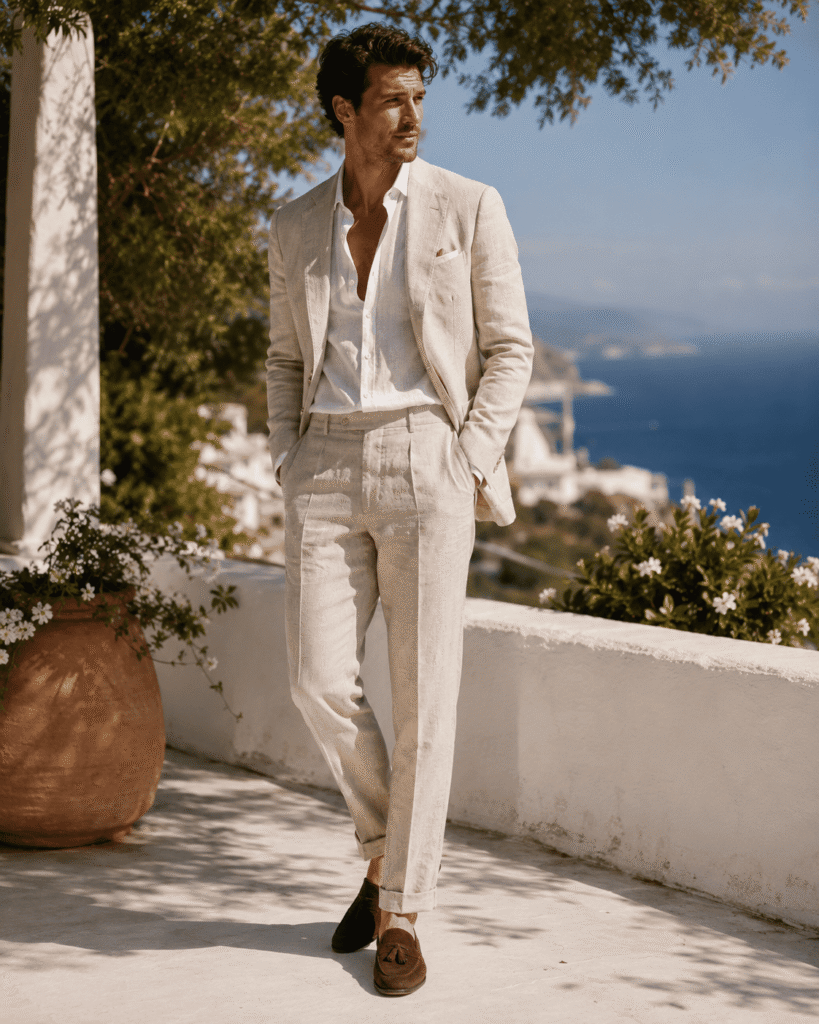
Linen Suit
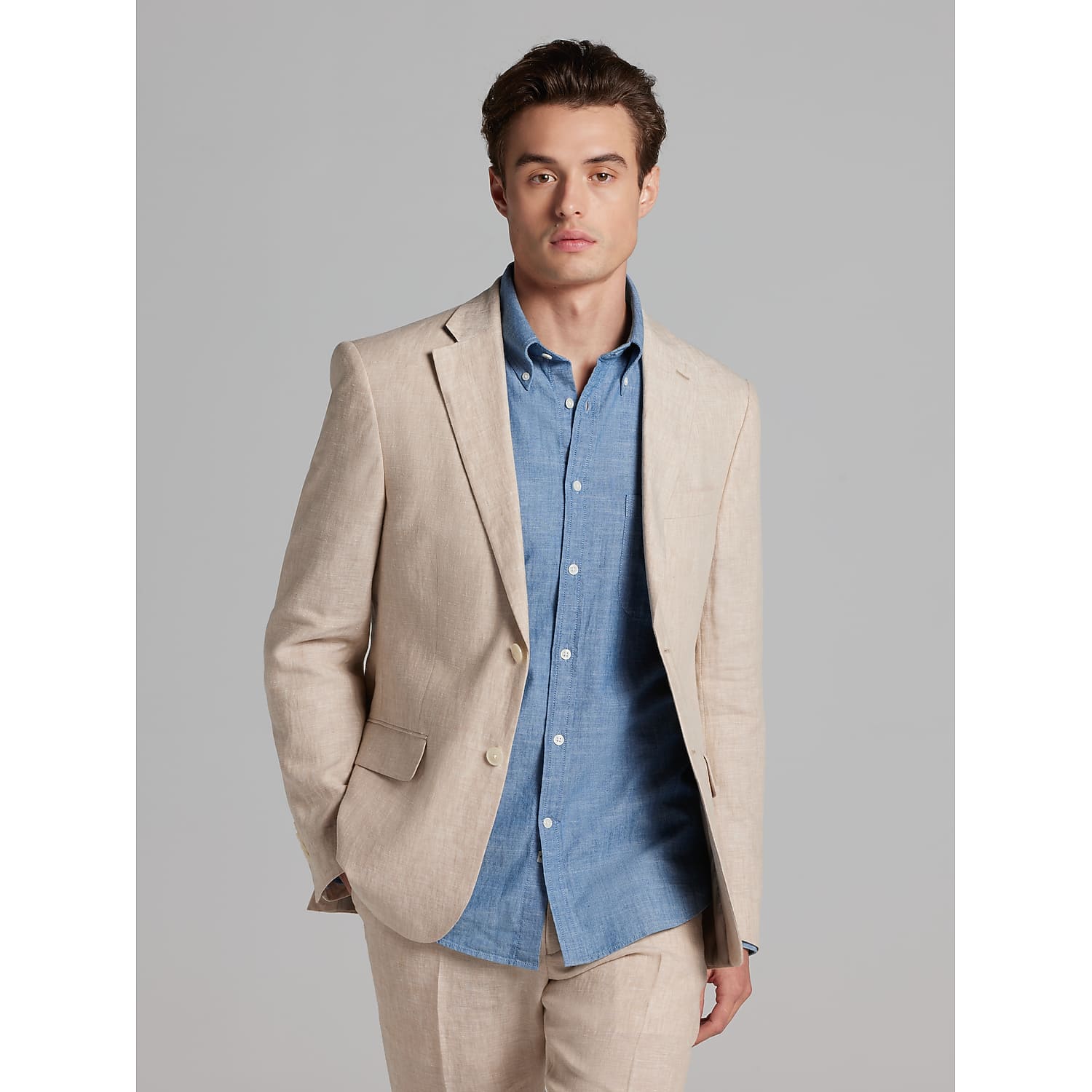
Linen suits use woven flax fibers to produce a lightweight, breathable fabric. They usually include a jacket and matching trousers, and the open weave makes them one of the most comfortable options for warm-weather events.
- When to wear it: Linen keeps you cool and looking stylish, which is why it’s a solid choice for spring and summer weddings, garden parties, and beachside events.
- Why it works: The signature weave helps air circulate so you stay comfortable in the heat. Meanwhile, the fabric’s matte finish and subtle creasing create a relaxed, yet refined look.
- Styling tip: Embrace linen’s gentle creases and style the suit with lightweight shirts and open collars. Finish the ensemble with loafers or minimalist sneakers for an easygoing vibe.
Slim-Fit Suit
A slim-fit suit follows the lines of the body for a close, tailored fit. It’s a contemporary look that creates a streamlined silhouette by defining the chest and shoulders while tapering through the waist and legs.
- When to wear it: Slim-fit suits work well for creative workspaces and social outings like happy hours or rooftop parties. You’ll look fashionable and fit right in with the environment.
- Why it works: These suits have a modern appeal that’s fresh and fashion-forward. Along with that, the closer cut accentuates your shape without feeling too restrictive.
- Styling tip: Opt for a cut that contours the body and allows for comfortable movement. The suit should feel fitted through the chest and waist without pulling or bunching.
Tuxedo vs. Suit: What’s the Difference?
If you’re deciding between a tuxedo or a suit, the suit is definitely the more versatile option. You can wear it to the office or social events because it works in a wider range of settings. A tuxedo, however, is for formal occasions. As a rule of thumb, if the invitation says “black tie,” reach for a tuxedo. That’s your sign the event requires peak formalwear.
How Fit Changes the Look of Any Suit
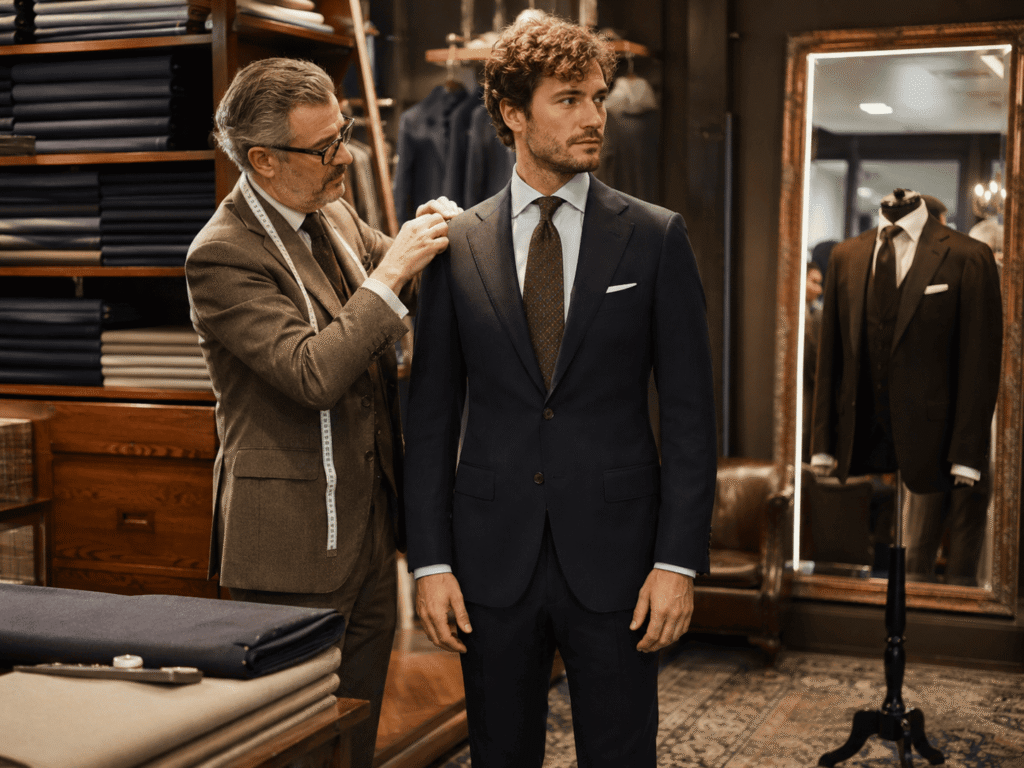
When a suit fits well, it balances your proportions and flatters your body, which shows in how confidently you carry yourself. A tailor makes a big difference here, shortening sleeves so the right amount of shirt cuff shows or adjusting pant hems so they graze the top of your shoes. Tailors can also taper trousers or bring in your jacket at the waist.
It helps to have realistic expectations. Some changes are simple, like hemming pants, but alterations like shoulder adjustments are much more complex. It’s best to start with a jacket that already fits well in the shoulders since that area is the hardest to alter.
Common Suit Mistakes To Avoid
A few styling mistakes can throw off your whole look, but they’re easy to fix once you know what to watch out for:
- Choosing trend over fit: Trends change, but a poor fit is always an issue. Make sure the suit fits you in the shoulders and chest, and don’t worry so much about color or patterns.
- Wrong suit for the dress code: A suit that doesn’t match the dress code can make you stand out in the wrong way. Go with a double-breasted suit for formal events and a slim-fit suit for business casual settings.
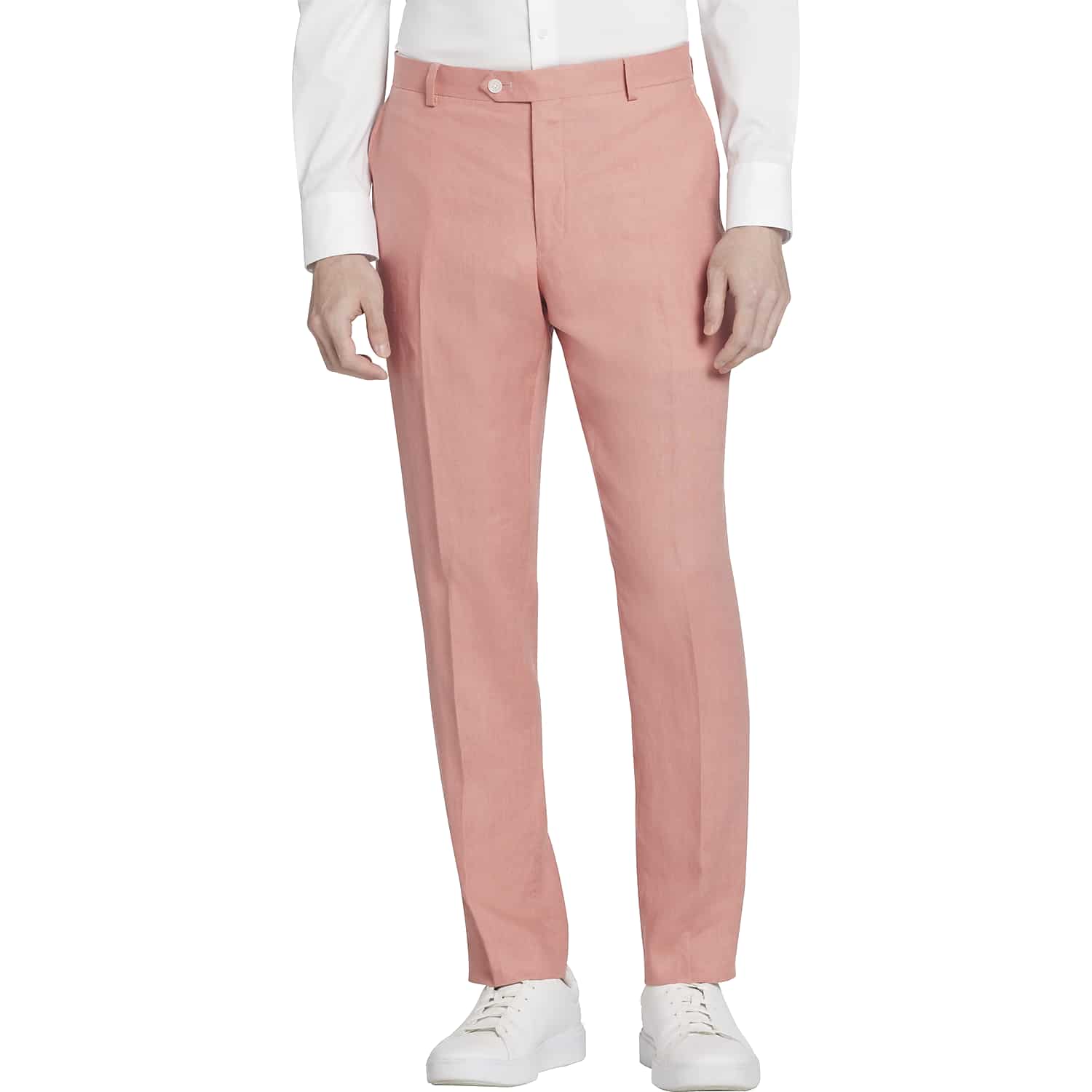
- Poor pant break: Too much break at the ankle can look sloppy, while no break can feel unfinished. Aim for a clean, slight break that just touches the top of your shoes for a modern take that’s still polished.
- Oversized jackets: A jacket that’s too big hides your shape and makes the outfit look messy. Look for a suit jacket that fits close through the chest without pulling and allows enough room to move comfortably.
Men’s Wearhouse Helps You Find the Right Suit
Finding the right suit gets easier when you have guidance and a range of options all in one place. Men’s Wearhouse offers a wide selection of different suit styles, from everyday business looks to more formal attire. In-store experts help you compare fits and figure out the styles that work best for your body and the occasion. After you’ve picked out a suit, tailoring services fine-tune the details for a personalized fit.
Whether you need a wedding suit or you’re updating your work wardrobe, Men’s Wearhouse has you covered from the first fitting to the final alterations.
Shop Related Products