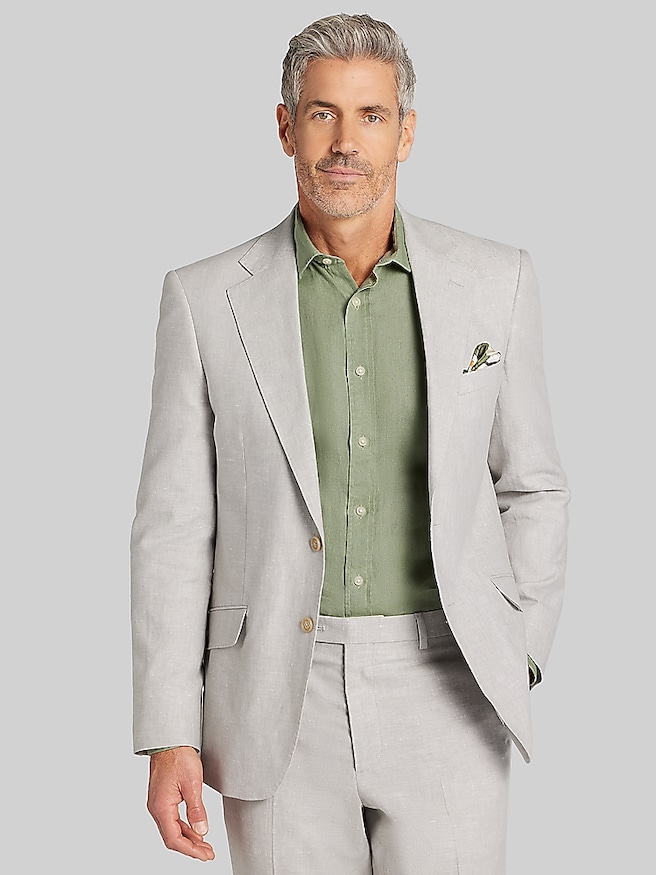
Wool and polyester suits bring distinct qualities to tailored dressing, from the way a jacket settles across the shoulders to how trousers hold their shape through a full day. The main distinction between a wool or polyester suit starts with the fiber: wool is natural, while polyester is synthetic. Wool generally offers greater breathability, moisture absorption, and a supple drape; polyester generally offers strong wrinkle resistance and consistent shape retention. The finished result also depends on the weave, lining, fabric weight, and construction, so fiber content alone does not determine comfort or quality. Wool fibers have natural crimp and resilience, helping the cloth recover from light creases after time on a hanger. That resilience gives many wool suits a clean line without a rigid look, particularly across the chest and through the trouser leg. Smooth worsted wool is a familiar choice for business tailoring because its tightly spun yarns create a refined surface that pairs easily with crisp shirts and understated ties. Polyester can provide a smooth, consistent finish and resist many everyday wrinkles, making it a practical option for occasional formal dressing or days that involve extended sitting. However, polyester typically absorbs less moisture than wool and may retain odors more readily, which can affect comfort during prolonged wear. Neither fiber has one fixed look: a textured weave, a dense lining, or a structured jacket can change how a suit feels and moves. Wool-polyester blends combine fibers in varying proportions, often balancing wool’s drape with polyester’s wrinkle resistance and strength. A blend with a higher wool content may retain more of wool’s characteristic softness, although the yarn and finishing also influence the feel. Fabric composition provides a clearer picture than a broad material name, especially when stretch fibers are included. For meetings, interviews, ceremonies, and formal celebrations, these material differences become noticeable in small details: the softness at a bent elbow, the fall of a lapel, and the creases left after a long drive.
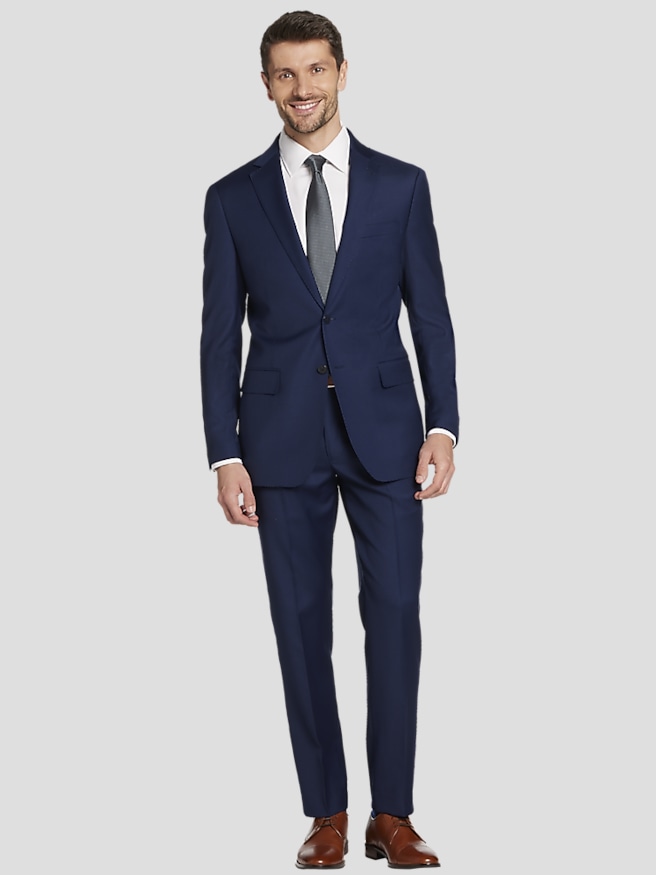
Fit gives either material its finished appearance. A well-fitting suit jacket rests neatly at the shoulders, lies smoothly across the upper back, and closes without pulling the front into an X-shaped crease. The lapels should sit against the chest rather than bow outward, while the collar should remain close to the shirt collar. Through the trousers, a clean line leaves enough room to sit comfortably without excess fabric collecting beneath the seat. These details matter whether the silhouette is slim, tailored, or more generously cut. A close fit does not need to feel restrictive, and a relaxed fit can still look precise when the shoulders, sleeves, and trouser length are properly proportioned. Wool’s natural give can support comfortable movement, but it does not replace adequate room through the body. Polyester fabric may include stretch fibers for added flexibility, though the fiber label and garment construction determine how much movement to expect. For someone who wears a suit several days a week, comfort at a desk, freedom through the upper arms, and the way the trousers recover after sitting all deserve attention. An occasional wearer may place more emphasis on a versatile silhouette that feels appropriate at a wedding, graduation, or important presentation. Color and texture help establish that versatility. Navy and charcoal work with a broad range of shirt and tie combinations, while a subtle weave adds depth without a bold pattern. A blue wool suit can provide a polished foundation for business settings and celebrations, with the shade and accessories shaping the level of formality. A white shirt and dark tie create a crisp, traditional combination; a pale blue shirt and textured tie soften the contrast. For a milestone gift, a suit becomes more personal when the recipient’s measurements, preferred cut, and usual occasions are part of the decision. Final alterations can then refine sleeve length and trouser break without relying on fabric alone to create the right proportions.
Long-term performance depends on both the cloth and the care it receives. Wool can maintain its shape and appearance through repeated wear when it has time to rest, but finer, more delicate fabrics may show abrasion sooner than sturdier weaves. Polyester is a strong fiber with good resistance to many everyday wrinkles, although some fabrics can pill or develop a noticeable sheen in areas exposed to friction. Wool can also pill, and either material can look worn when subjected to repeated rubbing or improper pressing. A fabric’s weave, yarn quality, and finishing all affect how it ages, making sweeping durability claims less useful than attention to construction and care. After wearing, a suit benefits from a broad, supportive hanger that holds the jacket’s shoulders without stretching them. Trousers should hang neatly to preserve their line rather than remain folded over a chair. Emptying pockets helps prevent distorted jacket fronts and stretched trouser fabric, while a gentle pass with a suitable clothing brush can lift surface dust from wool. Both wool and polyester suits need care based on the garment label, not assumptions about the fiber. A polyester suit is not automatically machine-washable: linings, shoulder structure, interfacing, and finishes may require professional cleaning. Wool tailoring also commonly calls for professional cleaning, with light surface care and airing between wears helping maintain freshness. Excessive heat can damage either material, and polyester is particularly sensitive to high ironing temperatures. Pressing according to the care instructions, with appropriate protection for the cloth, helps avoid flattened texture and unwanted shine. Minor spills deserve prompt attention with gentle blotting rather than vigorous rubbing, followed by cleaning appropriate to the fabric. For someone alternating between office days, travel, and special occasions, allowing a suit to rest between wears reduces constant stress on the same areas. Careful handling preserves the qualities that make each material appealing: wool’s natural drape and resilience, polyester’s wrinkle resistance, and the balanced characteristics of blended fabrics.