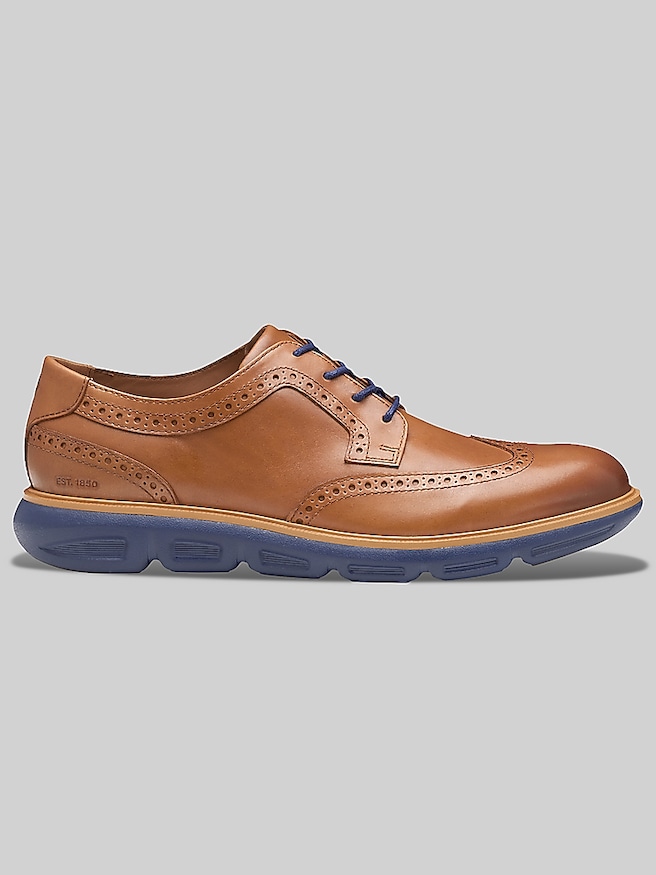
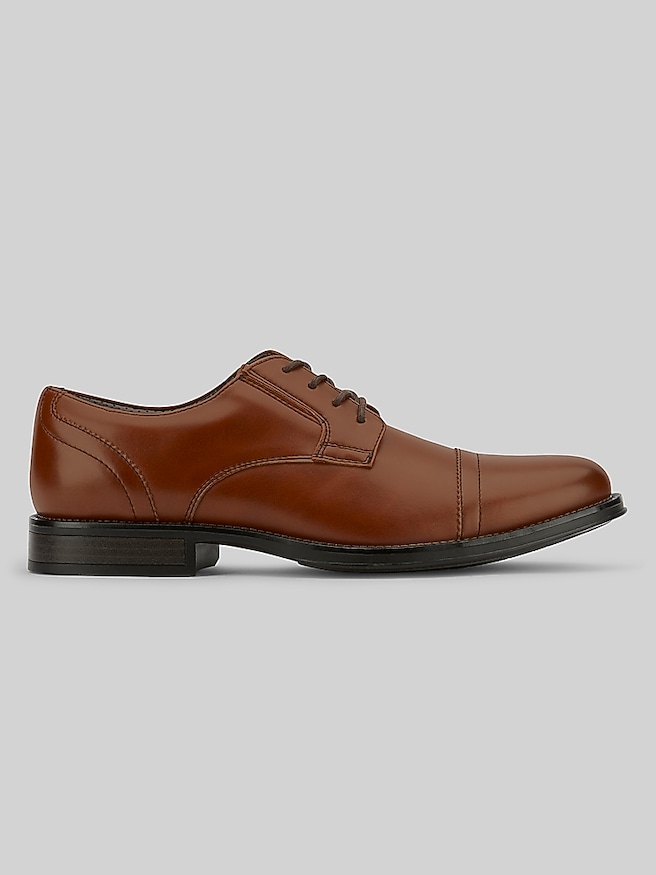
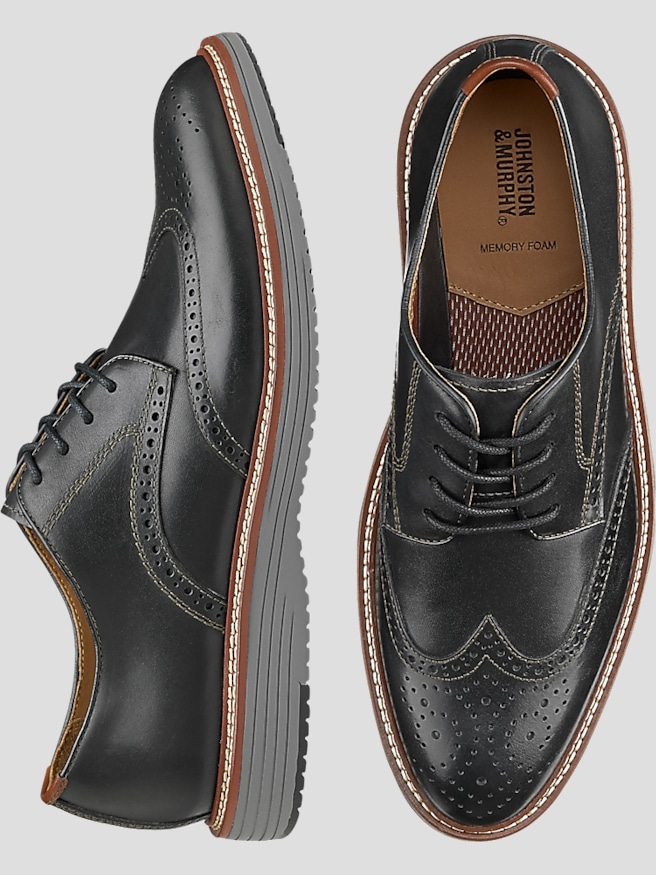
Wingtip shoes for men are defined by a pointed toe cap that extends along both sides of the shoe, creating a winglike outline often described as a W shape when viewed from above. Decorative perforations, called broguing, typically follow the cap’s edges and other seams, giving these dress shoes their distinctive texture. The wingtip describes the toe design rather than the lacing system: an Oxford wingtip has closed lacing for a streamlined appearance, while a derby wingtip has open lacing with a more adjustable opening across the instep. A longwing carries the pointed cap’s extensions back toward the heel, creating an uninterrupted line along each side. These distinctions affect the overall look, but the shape of the toe, thickness of the sole, and amount of decoration matter just as much. A sleek black leather wingtip can complement a charcoal suit for a business presentation, while a brown pair brings depth to navy tailoring or gray dress pants. Cognac shades make the perforated detailing more noticeable and work especially well with chinos, textured trousers, and less formal jackets. Burgundy offers another option for adding color without making the shoes the loudest part of an outfit. Dark denim can also work with wingtips when the jeans have a clean finish and the shoes have a slightly more substantial profile. The appeal of Cool Wingtip Shoes lies in this balance of recognizable craftsmanship and individual style. For office attire, wedding guest outfits, graduation celebrations, or a dinner that calls for something sharper than sneakers, the right silhouette can connect the rest of the clothing without looking overly coordinated. Wingtips generally feel more decorative than plain-toe dress shoes, so the occasion’s dress code still matters. A restrained pair suits many business and dressy settings, while traditional black-tie attire usually calls for a less embellished formal shoe. Matching the shoes’ level of detail to the clothing helps the finished outfit feel intentional rather than busy.
Materials and construction influence how wingtip shoes look, feel, and hold up with repeated wear. Smooth leather gives the perforations crisp definition and can be polished to a subtle glow or a more pronounced shine, depending on its finish. Full-grain leather retains the hide’s natural surface and can develop character through creasing and regular care; corrected-grain leather has a more uniform surface, with performance depending on the finish and overall quality. Suede softens the visual effect of broguing and pairs naturally with less structured tailoring, chinos, and denim. Its raised nap needs different care from smooth leather, making material choice as practical as it is stylistic. Leather linings can contribute to moisture management and a comfortable interior, while cushioned footbeds may soften the sensation underfoot. Neither feature replaces a good fit. A wingtip should hold the heel securely without persistent slipping, give the toes room to rest naturally, and feel supportive across the widest part of the foot without pinching. An elongated toe can leave extra space at the front by design, so fit is better judged by heel security, forefoot comfort, and where the shoe bends than by the empty space alone. Trying dress shoes with the socks intended for them gives a more useful sense of fit, especially when comparing widths or lacing styles. Open-laced derby construction may offer more adjustment over a higher instep, though the shape of the shoe still determines comfort. For a day involving a commute, several meetings, and an evening event, sole flexibility and stable footing deserve attention alongside appearance. Leather soles have a traditional dress-shoe profile; rubber soles can add cushioning and traction, depending on their design. Welted construction can make resoling possible when the shoe is designed for it, while cemented construction bonds the sole to the upper and may create a lighter, more flexible feel. Construction alone does not establish quality: leather, stitching, lining, fit, and workmanship all contribute to durability. A shoe that presses sharply at the toes or causes discomfort across the instep should not be expected to become comfortable simply through wear.
Consistent care keeps the defining details of men’s wingtip shoes looking sharp. On smooth leather, removing surface dust with a soft brush or cloth prevents buildup around the perforations and seams. A leather-appropriate conditioner helps maintain suppleness, and a compatible cream polish can refresh color and soften the appearance of light scuffs. Wax polish can add shine where desired, but heavy layers around the broguing may obscure the detail that makes the shoe distinctive. Suede benefits from a dedicated suede brush and material-specific cleaning products rather than leather creams or waxes. Any unfamiliar treatment is best tested on a discreet area because finishes can react differently. Cedar shoe trees help maintain the shape between wears and absorb some interior moisture; they should support the upper without stretching it. Allowing shoes to air out before wearing them again, using a shoehorn to protect the heel counter, and storing pairs away from direct heat all help preserve their structure. Regular attention to worn heel edges, loose stitching, and thinning soles can reveal when a professional repair is worth considering, particularly on shoes built to be resoled. These habits matter for someone who wears wingtips throughout the workweek as well as someone who saves them for important occasions. A thoughtfully chosen pair can also make a useful gift for a graduate beginning a professional wardrobe, a partner who enjoys tailored clothing, or a family member marking a career milestone. Reliable sizing information and a clear sense of the recipient’s usual clothing are more useful than choosing by appearance alone. Someone who mostly wears navy suits may get more use from a versatile brown wingtip than from an especially ornate style, while a wardrobe centered on dark business attire may favor black. Belt and shoe colors need not be identical, but keeping them in a similar color family creates a cohesive finish. The most useful pair is one that feels comfortable, complements familiar outfits, and brings enough character to stand apart without competing with everything else.