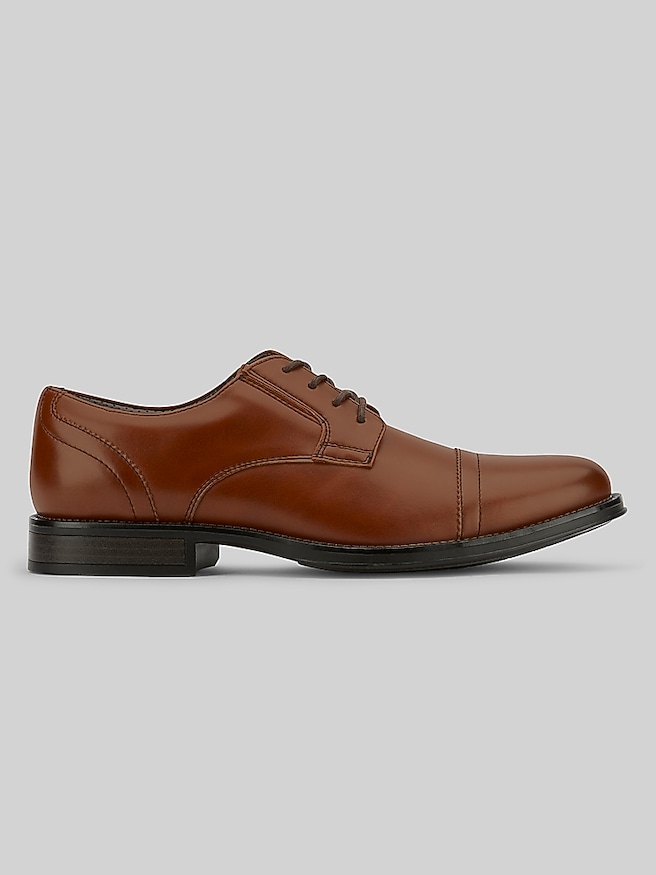
Wingtip monk straps are dress shoes that combine a wing-shaped toe cap, decorative brogue perforations, and a buckle-and-strap closure instead of laces. The pointed center of the toe cap extends back along both sides of the shoe, creating the sweeping outline that gives the wingtip its name. Perforations trace that outline and may continue along other seams, while some designs add a decorative medallion across the toe. The buckle introduces another focal point, giving these shoes a distinctive balance of traditional detailing and clean, structured shape. Single monk straps have one buckle and a relatively uncluttered profile; double monk straps use two buckles for a more pronounced look across the instep. Neither configuration is automatically more comfortable or more formal—the shape, finish, sole, and amount of decoration all contribute to the overall effect. Compared with a plain-toe oxford, a wingtip monk strap generally feels more expressive and less restrained, making it a natural companion for tailored business clothing, wedding guest attire, and polished everyday outfits. A smooth black pair can anchor charcoal trousers and a crisp dress shirt, while rich brown tones bring depth to navy tailoring, gray wool pants, or cream chinos. For a closer look at that color family, Brown Leather Monk Strap Shoes offer a related expression of the buckle-front style. Dark brown tends to blend quietly into an outfit, whereas cognac and lighter brown shades make the perforations and toe shape easier to see. Buckle finishes also affect the impression: subdued hardware keeps attention on the leather, while brighter hardware gives the closure more presence. The result is footwear with enough character to stand on its own without requiring a bold suit or elaborate accessories. A simple trouser hem and a coordinated leather belt usually provide all the supporting detail the shoes need, especially when the wingtip pattern is intricate.
Materials and construction influence how wingtip monk strap shoes feel from the first fitting and how they hold their shape over repeated wear. Full-grain leather retains its natural grain surface and can develop a distinctive patina with proper care, although the label alone does not guarantee softness or comfort. Smooth leather emphasizes the precision of the perforations and takes polish well when the finish permits it. Pebbled leather adds texture and can make small surface marks less noticeable, while suede gives the same buckle-and-wingtip design a softer, more relaxed appearance. Leather linings can help manage moisture, and neatly finished interior seams matter when shoes will be worn through a full workday or an extended celebration. Underfoot, cushioning may soften the initial feel, but the shoe’s shape and support are just as important for lasting comfort. A substantial-looking sole is not necessarily supportive, and a soft footbed cannot correct a cramped toe box. Leather outsoles often create a slim dress profile; rubber outsoles can add flexibility and traction, depending on their compound and tread. Welted construction may make future resoling possible, though repair options depend on the individual shoe and a cobbler’s assessment. Secure stitching, firmly attached buckles, and clean joins between the upper and sole are useful signs of careful assembly. Fit deserves particular attention across the instep, where the straps hold the foot in place. The closure should feel secure without digging into the top of the foot, and the heel should remain reasonably steady while walking. Toes need space to rest naturally rather than press against the tapered outline of the wingtip. Trying shoes with the dress socks intended for regular wear gives a more useful impression than testing them with unusually thick or thin socks. Walking, turning, and sitting can reveal pressure around the buckle or forefoot that is easy to miss while standing still. Leather may soften with use, but painful pressure or an obviously short fit should not be treated as a normal break-in stage.
The appeal of wingtip monk straps extends beyond a single dress code. For someone moving between client meetings, office presentations, and dinner reservations, they bring visual interest to familiar tailored separates without the informality of sneakers. With a suit, a sleeker toe and restrained sole keep the proportions cohesive; with chinos or dark, un distressed denim, a fuller shape or textured upper can feel more at ease. Trouser length makes a noticeable impact because excess fabric can cover the buckle and bunch across the vamp. A slight break, or a clean hem that rests just above the shoe, lets the closure remain visible without making the outfit look unfinished. Socks that relate to the trousers create a continuous line, while a subtle pattern can echo the personality of the broguing without competing with it. These shoes can suit wedding guests, graduates, professionals building a tailored wardrobe, or anyone who enjoys footwear with a recognizable design history. For strict black-tie occasions, however, the decorative wingtip and buckle are less conventional than the formal footwear typically paired with a tuxedo. As a gift, monk straps are most successful when the recipient’s size, preferred width, and taste in hardware are already known; instep shape can make fit less predictable than the size marking suggests. Regular care helps preserve both appearance and structure. A soft brush removes dust from perforations and seams, while a slightly damp cloth can lift surface dirt from suitable smooth leather. Conditioner and polish should match the leather type and finish, with any unfamiliar treatment tested discreetly first. Suede calls for a suede brush and compatible care products rather than ordinary cream polish. Cedar shoe trees help maintain the shape between wears, and allowing shoes to dry naturally before wearing them again supports the lining and upper. Buckles also benefit from gentle handling: opening the strap rather than forcing the foot through a fastened closure reduces strain on the leather and attachment points. With attentive fit and consistent upkeep, the wingtip pattern, polished toe, and distinctive buckle can remain the defining details of a well-used wardrobe staple.