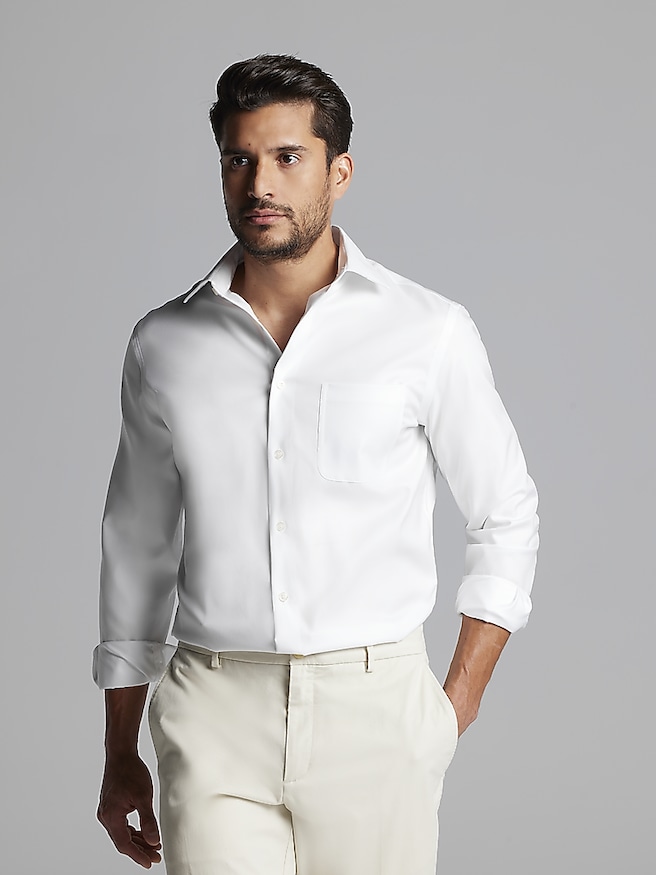
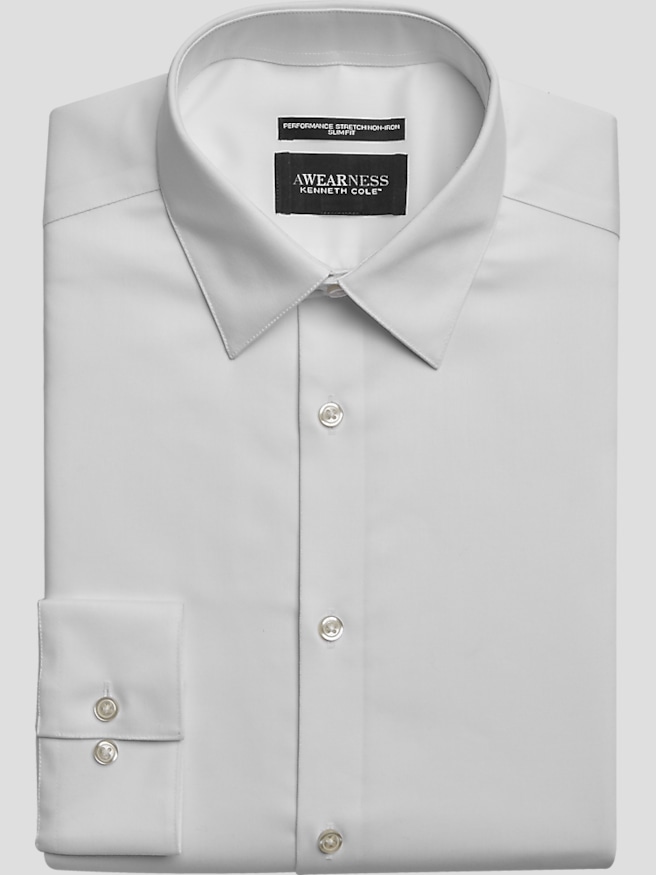
White shirt outfits pair a clean, neutral foundation with everything from dark denim and loafers to tailored trousers, a blazer, and dress shoes. A white shirt brings definition to navy, gray, black, brown, and olive without competing with the rest of the outfit, making it a useful choice for workdays, dinners, celebrations, and everyday plans. The effect depends on the shirt’s construction as much as its color. A smooth dress shirt with a structured collar looks polished beneath a suit jacket, while a textured Oxford button-down feels more relaxed with chinos or straight-leg jeans. With charcoal trousers and black leather shoes, a white shirt creates a crisp combination suited to presentations, interviews, and business dinners. With navy chinos and brown loafers, the same color palette becomes less formal while remaining put together. Dark, evenly finished denim offers another easy pairing, particularly when the shirt has a shorter hem designed to look balanced untucked. For an evening event, a white shirt against a dark suit creates clear contrast and leaves room for a patterned tie or pocket square. At a wedding, the invitation’s dress code helps determine whether that combination needs a full suit, a more relaxed jacket, or formal attire. A tuxedo calls for a compatible formal shirt, with collar, front, and cuff details that work with the jacket and accessories. More casual white shirt outfits can include an open button-front shirt over a simple crew-neck tee, paired with jeans and clean sneakers. That layered combination works best when the outer shirt has enough room to fall smoothly rather than pulling across the chest. Across these settings, the white shirt remains the visual anchor: its bright surface frames the face, sharpens the outline of a jacket, and gives stronger colors or textures space to stand out. The strongest combinations feel coordinated rather than overly matched, with the shirt’s level of formality reflected in the trousers, shoes, and finishing details.
Fabric and fit influence how a white shirt looks after several hours of sitting, walking, or moving between appointments. Cotton is a familiar choice for its soft feel and breathability, although the weave changes its appearance and handling. Poplin generally has a smooth, closely woven surface that works well with tailored clothing. Twill has a subtle diagonal texture and often a slightly fuller drape, while Oxford cloth has a more visible woven texture that lends itself to casual and business-casual outfits. Linen brings a distinctive surface and natural creasing that suit less structured combinations. Cotton blends may include fibers intended to improve wrinkle resistance, flexibility, or ease of care; the fabric information and care label provide a clearer picture than appearance alone. White fabric also makes opacity an important consideration. A lighter weave may reveal an undershirt or waistband more clearly, while a denser cloth can provide greater coverage without necessarily feeling stiff. An undershirt close to the wearer’s skin tone often shows less than a bright white one, especially beneath a smooth dress shirt. Fit should allow the shirt to rest comfortably at the shoulders, lie flat across the chest, and stay comfortable when the arms reach forward. Pulling between the buttons, a collar that presses into the neck, or sleeves that restrict bending can distract from an otherwise polished outfit. A trim cut gives a close silhouette beneath a fitted jacket, while a classic cut leaves more room through the torso. Neither needs excess fabric bunching above the waistband. For tucked-in outfits, sufficient shirt length helps the hem stay in place through a seated meeting or dinner. Untucked styles usually benefit from a shorter, balanced hem rather than the longer tails of a traditional dress shirt. Collar shape matters, too: a spread collar accommodates many tie knots, while a button-down collar has a more relaxed character. Under a jacket, sleeves that allow a small amount of cuff to show create a clean finish without crowding the hands.
The practical appeal of white shirts extends beyond any single outfit, especially for people building a dependable wardrobe for office routines, milestone events, or a new professional role. For combinations centered on tailored trousers, jackets, and business-appropriate details, White Shirts For Work offers a focused point of reference. A white shirt can also make a thoughtful gift for a graduate, someone starting a new job, or a person who regularly dresses for meetings and celebrations, provided the neck size, sleeve length, preferred fit, and care preferences are known. Long-term usefulness depends partly on construction and partly on upkeep. Even stitching, securely attached buttons, neatly finished seams, and a collar that holds its shape are worthwhile details to consider. Care requirements vary by fabric and finish, so laundering and pressing should follow the garment’s label. Separating whites from darker clothing helps reduce color transfer, and treating collar or cuff marks promptly with a fabric-appropriate method can keep buildup from becoming harder to remove. More detergent is not necessarily better; residue can leave fabric looking dull or feeling less comfortable. Excessive dryer heat can also contribute to shrinkage or wear, depending on the material. Hanging a shirt promptly after laundering helps limit deep creases, while pressing at the recommended setting restores a smoother finish when needed. Once dressed, a few restrained accessories keep the outfit cohesive. A textured tie adds depth against smooth white cloth, a dark belt provides definition at the waistband, and shoes establish whether the result feels relaxed or formal. A white shirt with tan chinos and suede loafers has a softer character than one with black trousers and polished lace-ups, even without a jacket. Those small distinctions explain the staying power of white shirt outfits: the foundation stays familiar, while fabric, fit, and surrounding pieces adapt it to the occasion.