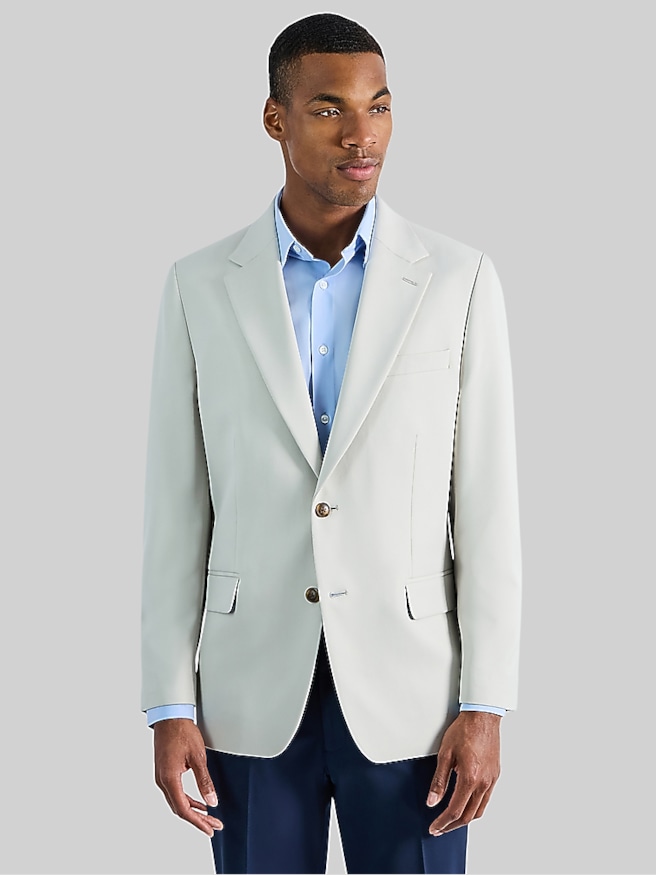
White Dinner Jacket Wedding Attire


Fabric and construction determine how a white dinner jacket feels through the ceremony, photographs, dinner, and dancing. Wool and wool-blend fabrics can provide a smooth drape and good shape recovery, while other blends may add stretch or help limit wrinkling. Linen-containing fabrics bring visible texture and a more relaxed surface, though they generally crease more readily than smoother formal cloths. The right choice depends on the wedding’s level of formality and the wearer’s preference for a structured or softer appearance. Fabric weight, lining, and weave all affect comfort; fiber content alone does not explain how a jacket will wear over several hours. A full lining can create a smooth interior over a formal shirt, while lighter internal construction may allow greater ease of movement. With a pale jacket, fabric opacity and a clean finish matter because interior details or dark layers underneath can sometimes show through. Fit is just as important as fabric. The shoulder line should sit cleanly without extending noticeably beyond the wearer’s natural shoulders, and the collar should rest against the shirt rather than pull away at the back of the neck. A buttoned jacket should follow the torso without pronounced pulling across the front. Slim fits tend to create a closer outline, while more generous cuts allow additional room through the chest and midsection; neither should prevent comfortable sitting or reaching forward. During a wedding, that ease becomes practical when shaking hands, embracing relatives, or taking a seat for dinner. Sleeve length should allow a small amount of shirt cuff to show, and jacket length should remain balanced with the wearer’s proportions. Trouser fit completes the picture: a clean waistband, comfortable seat, and controlled break keep the silhouette intentional. Side adjusters or suspenders can support the smooth waistline associated with tuxedo trousers, avoiding the interruption of a casual belt. Small tailoring adjustments often make the difference between an outfit that merely fits and one that looks settled on the person wearing it.
The finishing pieces work best when they support the jacket rather than compete with it. A white formal shirt with a suitable collar gives the bow tie a clean foundation, while French cuffs provide space for understated cuff links. A pleated or textured shirt front can add depth beneath the jacket without introducing another color. A white pocket square keeps the combination restrained, though its fabric and fold should remain distinct from a boutonniere rather than crowding the same area. Patent leather shoes deliver a traditional formal shine; highly polished black dress shoes can also complement the outfit when their shape and detailing suit the occasion. Wedding-party coordination does not require every person to wear an identical jacket. Shared black trousers, bow ties, and shoe finishes can connect a groom in white with attendants in black, leaving one clear focal point in group photographs. Beyond the wedding itself, a well-chosen dinner jacket can continue to serve at formal anniversary celebrations, gala evenings, and other occasions where the dress code allows it. The same black-and-white contrast carries into Classic White Dinner Jackets for Prom Night Look, connecting wedding formalwear with another milestone occasion. Long-term use depends on thoughtful care as much as initial construction. Pale fabric makes marks easier to notice, so food, beverages, and boutonniere moisture deserve attention throughout the event. Care should follow the garment label, particularly when the jacket combines fabrics or has specialized lapel finishes. Aggressive rubbing or improvised stain treatments can spread a mark or alter the surface; professional assessment is often the safer choice for a noticeable stain on formal cloth. Between occasions, a shaped hanger helps preserve the shoulders, and a breathable garment bag protects the jacket from dust once it is clean and dry. Empty pockets, gentle handling, and appropriate pressing help retain its lines, keeping the jacket ready for another carefully dressed celebration.
FAQs
A white dinner jacket is most appropriate for weddings held in warm weather, such as spring or summer, or at destination locations with tropical or outdoor settings. It is an excellent choice for black-tie or summer formal events, especially when the invitation specifies these dress codes. The white dinner jacket allows the groom or guests to stand out with classic elegance while remaining comfortable in higher temperatures.
A white dinner jacket is traditionally paired with black tuxedo trousers, a crisp white tuxedo shirt, and a black bow tie. To complete the look, consider a black cummerbund or waistcoat, black patent leather shoes or opera pumps, and a white pocket square. These accessories help maintain a polished, classic appearance suitable for formal occasions.
The white dinner jacket is most commonly worn by the groom, especially if he wishes to distinguish himself from the wedding party. However, it is also suitable for groomsmen, fathers of the bride or groom, and guests attending black-tie or summer formal weddings, particularly those held outdoors or in warm climates.
White dinner jackets for weddings are often crafted from lightweight and breathable fabrics such as linen, tropical wool, or silk blends. These materials provide comfort and style, making them ideal for warm-weather events and ensuring the wearer remains cool while looking sharp.
Yes, a white dinner jacket is a versatile formalwear option that can be worn at other black-tie or summer formal events, such as galas, formal dinners, and upscale garden parties. Its light color and elegant silhouette make it especially suitable for occasions held in the spring or summer, or in tropical locations.