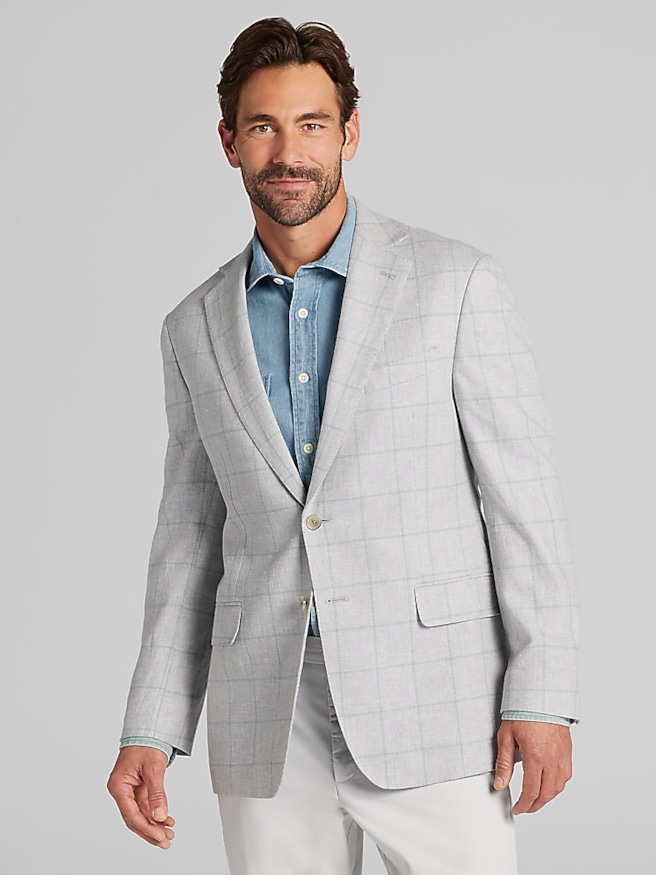
White cotton jackets bring a clean, crisp contrast to a wardrobe built around navy, charcoal, denim, and earth tones. Their appeal comes from the balance between a bright surface and a familiar fabric: white looks polished, while cotton can feel approachable enough for everyday wear. A tailored jacket over a pale blue button-down creates a composed outfit for dinner, while a softly constructed style over a fine-gauge knit feels more relaxed at a gallery opening or a weekend gathering. The shade of white makes a subtle but meaningful distinction. Optic white has a sharp, graphic quality beside black or deep indigo; softer whites sit comfortably with oatmeal, tobacco, and warm gray. Texture matters just as much as color. Smooth cotton can emphasize clean lines, twill can add visible depth, and a textured weave can keep an otherwise simple outfit from looking flat. Construction determines how that fabric behaves on the body. A structured chest and defined shoulder create a more tailored silhouette, while lighter internal construction allows a softer drape. Neither approach is automatically dressier in every setting; the jacket’s cut, pockets, closures, and the clothing worn beneath it all contribute to the overall effect. White cotton jackets also have a place during the cooler months, especially indoors or beneath suitable outerwear. Paired with dark wool trousers and a lightweight charcoal sweater, white provides contrast without depending on a warm-weather setting. Cotton alone does not offer the insulation of a substantial wool layer, so fabric weight and room for layering deserve attention when temperatures drop. For an evening that includes a chilly walk between the car and a restaurant, a coat over the jacket can preserve both comfort and the clean shape of the outfit. The result is a piece that can look distinctive without requiring loud patterns or elaborate accessories.
The feel of a white cotton jacket depends on more than its fiber label. A lightweight weave may allow more airflow, while a dense cotton twill often feels firmer and holds its shape more noticeably. Lining can make a substantial contribution to warmth, ease of movement, and how smoothly the jacket slides over a shirt or sweater. An unlined design may feel lighter, but its interior construction and the opacity of the outer fabric become more important. With white cloth, a dark shirt or strongly patterned layer can sometimes show through, particularly across the back or around seams. Checking the jacket over the clothing it will actually accompany gives a more useful picture than assessing it on a hanger. Pure cotton commonly develops creases at the elbows and waist as it moves with the body; that natural softness can suit an easygoing outfit. Cotton blended with other fibers may offer added stretch, altered texture, or improved crease recovery, though performance depends on the full fabric composition and construction. For a related texture with its own balance of softness and visible weave, Linen Cotton Jackets offer another direction to consider. Fit remains the foundation of a convincing look regardless of fabric. On a tailored silhouette, the shoulder should sit neatly without an obvious overhang, and the collar should rest close to the neck rather than pulling away. The front should close without pronounced strain lines, with enough ease to sit comfortably or reach across a table. A casual cut may be intentionally roomier, but excess fabric at the waist or sleeves can obscure its shape. Trying the jacket over a usual shirt, then over a light sweater if layering is likely, helps reveal whether the proportions work for both uses. Sleeve length should complement the design and the layer beneath it; a tailored jacket often looks clean with a little shirt cuff visible, while a casual jacket may finish nearer the wrist. These small distinctions make white cotton feel considered rather than simply bright.
Keeping white cotton jackets looking fresh is largely a matter of matching care to their construction. Cotton is a familiar washable fiber, but a finished jacket may include lining, shoulder shaping, interfacing, trim, or closures that need another cleaning method. The care label should take priority over assumptions based on the outer fabric alone. Some jackets tolerate machine washing, while others call for professional cleaning to protect their shape. High heat can cause shrinkage in some cotton fabrics, and aggressive washing or unsuitable bleaching products can affect the finish or weaken fibers. A small spill is best addressed promptly according to the label, without vigorous rubbing that could spread the mark or disturb the surface. Collars, cuffs, and pocket edges merit regular attention because they come into frequent contact with skin and hands. Allowing deodorant, lotion, and fragrance to dry before dressing can also help reduce residue on pale cloth. Between wears, airing the jacket and hanging it on a supportive hanger can limit unnecessary cleaning and help preserve the shoulder line. Empty pockets prevent stretching, while a breathable garment cover offers protection from dust during storage. Pressing or steaming should follow the recommended settings, with particular care around lapels and shaped areas. Durability depends on fabric density, seam quality, finishing, and treatment over time—not simply on whether the jacket feels heavy. For repeated use, neatly finished seams and secure buttons are practical details worth examining. The styling can remain straightforward: dark jeans and a knit polo for a relaxed dinner, gray trousers and a button-down for an office gathering, or tonal layers for a more expressive occasion. At celebrations, the stated dress code and the hosts’ expectations should shape the choice, especially when white carries special significance. A white cotton jacket can also make a thoughtful gift for someone who enjoys tailored clothing or already wears light neutrals. Knowing the recipient’s jacket size, preferred fit, and comfort with fabric care helps make that choice personal and useful. Above all, the strongest outfits let the jacket’s texture and fit do the work, with supporting colors and layers that suit the setting.