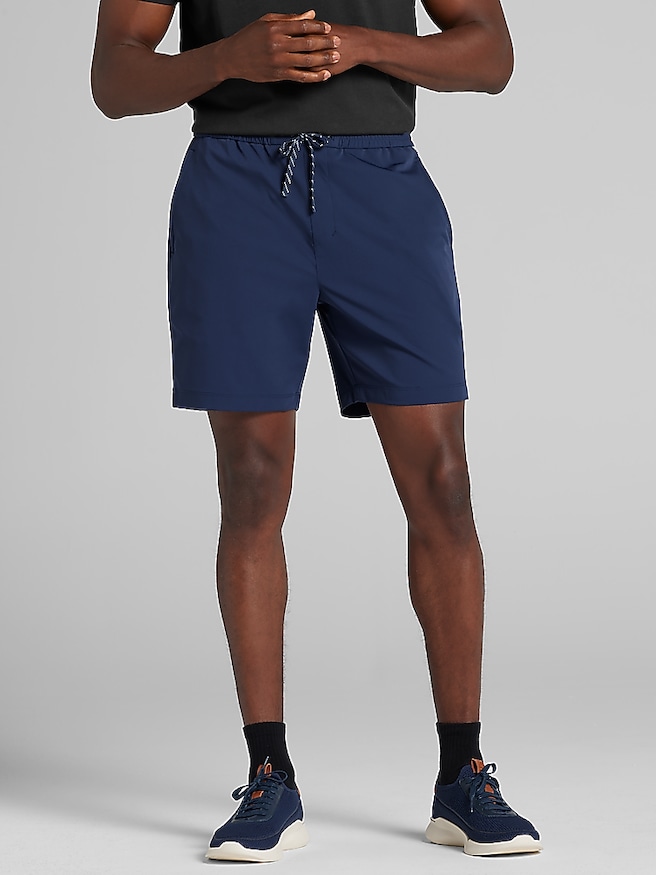
Weekend shorts are casual shorts designed for time away from a dress-code-driven routine, with comfortable fits and practical details suited to errands, casual meals, travel, and downtime. For men, that can mean the clean look of chino shorts, the easy movement of stretch-woven fabrics, or the softer feel of knit styles. The distinction is less about a single fabric or inseam than about how the shorts fit into the day: comfortable enough for a long drive, presentable enough for lunch, and easy to pair with familiar shirts and shoes. Flat-front shorts with restrained pocket detailing have a polished appearance without feeling formal. Cargo-inspired designs bring a more utilitarian look, while drawstring styles lean toward relaxed dressing. A simple outfit of shorts, a well-fitting T-shirt, and clean sneakers works for a coffee run or an afternoon with friends; a polo or casual button-front shirt adds definition for a restaurant patio or family gathering. For a streamlined approach, Men's Modern Shorts pair naturally with unfussy tops and low-profile footwear. Proportion makes the outfit feel intentional. A narrower leg opening creates a closer silhouette, while a straighter cut leaves more room through the thigh. Neither needs to feel restrictive or oversized. Neutral shades such as navy, khaki, gray, and olive are easy to coordinate, and subtle textures add interest without demanding a patterned shirt. Shorts with a smooth waistband and discreet pockets can also work with a tucked polo and casual belt when the setting calls for a neater finish. Weekend dressing often involves several small changes of plan, from picking up groceries to meeting friends for dinner. Shorts that sit comfortably, keep essentials accessible, and coordinate with everyday layers make those transitions feel uncomplicated. The result is clothing that belongs in a relaxed wardrobe without looking like an afterthought.
Fabric and construction shape the feel of weekend shorts as much as their appearance. Cotton twill has a familiar, substantial hand and a diagonal weave that gives casual shorts a defined surface. Cotton-rich blends can retain that character while incorporating fibers chosen for stretch, easier care, or shape retention. Linen and linen blends offer visible texture and a less structured drape, with natural creasing that suits an easygoing outfit. Knit fabrics tend to feel softer and more flexible, making them comfortable for lounging, road trips, and low-key activities. Woven performance fabrics can bring a smooth, lightweight feel, though features such as moisture management or quick drying depend on the fabric and finish rather than the category name alone. A small amount of stretch can make sitting, bending, and stepping easier, but the cut still needs enough room to move naturally. Stretch should support a comfortable fit, not compensate for shorts that pull across the seat or thighs. Waistband construction also changes the experience. A fixed waistband offers a defined outline, an elasticized waist allows more give, and a drawstring provides adjustment without a belt. Belt loops are useful when the outfit calls for a more finished look, especially with a tucked shirt. Pocket design deserves equal attention: deep front pockets help hold daily essentials, while secure closures can be useful when carrying keys or a card case. Overfilled pockets, however, can distort the shape and make even roomy shorts feel cumbersome. Durability comes from several details working together, including fabric suited to the intended use, secure stitching, reinforced stress points, and hems that lie flat. A heavier fabric may feel sturdy, but weight alone does not determine how well shorts will wear. For frequent sitting and movement, a balanced combination of resilient material and a comfortable cut often matters more than extra bulk or elaborate detailing.
Fit gives weekend shorts their final character, particularly at the waist, seat, thigh, and hem. The waistband should feel secure without digging in, and the front should lie smoothly rather than bunching beneath a belt. Enough room through the seat helps prevent pulling when seated, while comfortable thigh space keeps the leg from catching with each step. Inseam measurements provide a useful comparison, but the same length can land differently depending on height, rise, and body proportions. A shorter inseam shows more of the thigh and creates a sportier outline; a longer inseam offers more coverage and a different balance with the shirt and shoes. The hem’s position relative to the knee often says more about the finished look than the measurement alone. For men who prefer a close silhouette, a trim cut can look clean without gripping the leg. Those who prioritize extra ease may feel more comfortable in a straight or relaxed shape with enough structure to avoid sagging. Care helps preserve that fit and the fabric’s appearance. The care label should determine washing, drying, and ironing methods, especially for blends, stretch fabrics, or special finishes. Fastening closures before laundering can help limit snagging, and avoiding an overloaded machine gives garments room to wash properly. Promptly treating a spill according to the fabric’s care instructions can keep a small mark from becoming permanent. When permitted by the label, gentler drying methods may help reduce unnecessary wear; excessive heat can be hard on some stretch fibers and affect dimensions. Smoothing hems and pockets before folding also helps shorts look tidy the next time they are worn. As a gift for a partner, father, brother, or friend, weekend shorts make the most sense when the recipient’s usual waist size, preferred length, and everyday activities are familiar. An understated color and a silhouette close to an existing favorite can make the gift feel personal and useful. Whether worn for an unhurried morning at home or a full day of casual plans, the strongest choice is one that feels comfortable in motion and fits naturally into the wearer’s routine.