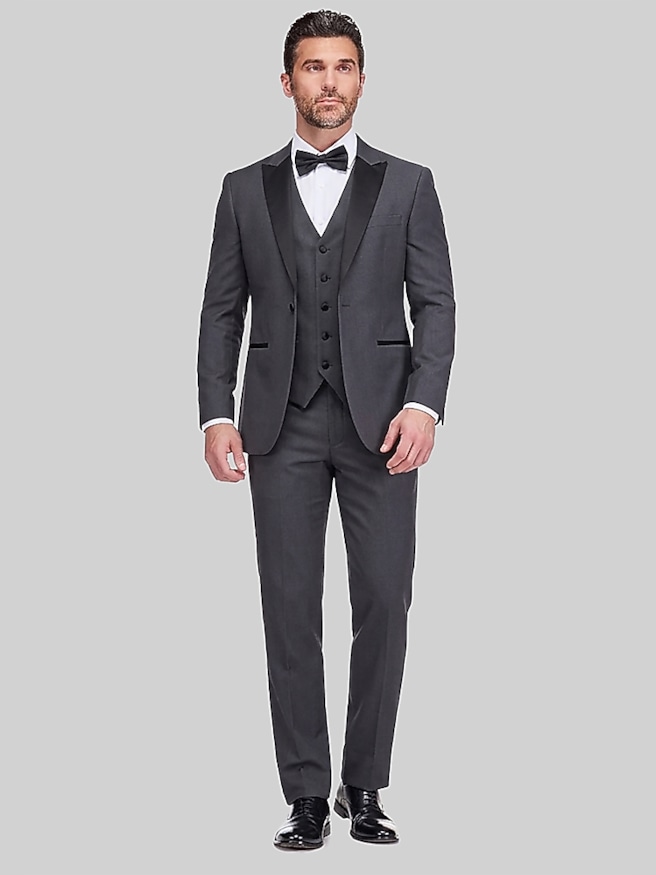
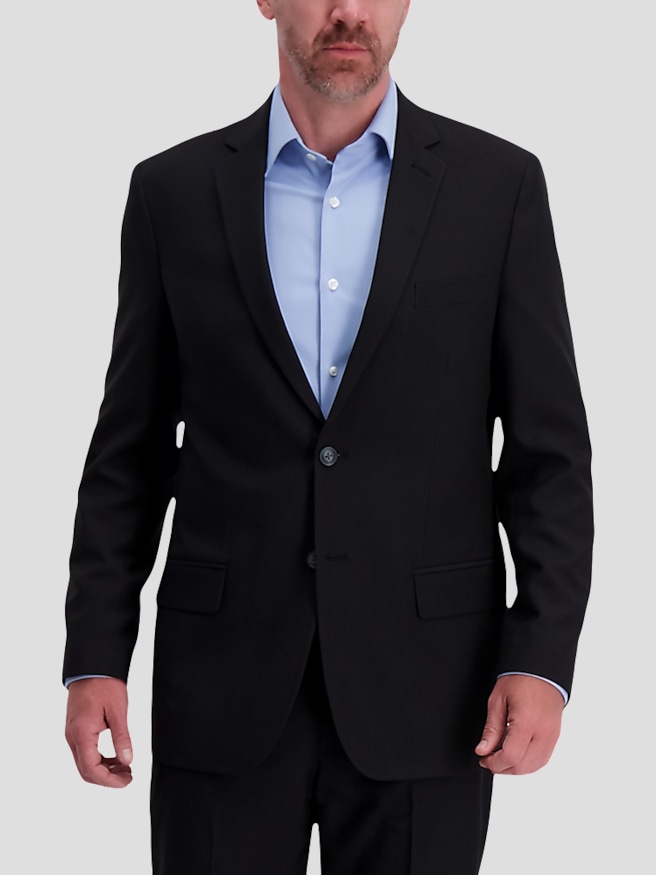
Wedding ceremony suits bring a polished, coordinated look to one of the most photographed parts of a wedding day. Options range from straightforward two-piece suits to three-piece combinations with a matching vest, with the right level of formality shaped by the invitation, venue, and couple’s preferences. A groom standing at the altar, a father escorting a loved one down the aisle, and a guest taking a seat before the processional may all wear a suit, but their outfits do not need to make the same statement. Navy and charcoal offer a restrained foundation that works with many shirt and tie combinations, while medium gray introduces a softer contrast. Black has a crisp, formal presence, though a conventional black suit is not the same as a tuxedo; a black-tie dress code generally calls for the latter. Tan, blue, and subtly textured fabrics can suit a less formal celebration when they align with the requested attire. Solid colors keep attention on the overall silhouette and are easy to coordinate across a group. Fine checks and understated patterns add dimension without necessarily becoming the focal point of ceremony photographs. A two-piece suit creates a clean jacket-and-trouser line, while a three-piece suit adds another layer of coordination and maintains a finished appearance when the jacket comes off after the ceremony. Details such as a notch or peak lapel, flap or welt pockets, and a single- or double-breasted front also influence the impression. Notch lapels tend to feel versatile and familiar; peak lapels create a more pronounced frame through the chest and shoulders. The most successful wedding look reflects the occasion without feeling like a costume. A suit that feels natural while walking down the aisle, greeting relatives, and standing beside the couple can look just as convincing in a quiet portrait as it does in a full ceremony procession. Consistency between the dress code and the wearer’s personal style gives the outfit its purpose.
Fabric and construction affect how wedding ceremony suits look, move, and hold their shape through hours of wear. Wool is a traditional suiting material because its natural resilience helps it recover from creasing, while its drape supports a defined silhouette without requiring a stiff feel. Wool blends can combine that character with other performance qualities, depending on their composition. Fabrics containing stretch may offer extra give when sitting, reaching, or moving between the ceremony and reception, although stretch does not replace a suitable fit. Linen has a distinctive texture and relaxed character, with visible creasing that is part of its appearance rather than a flaw. Cotton can have a more casual finish, while smoother worsted wool often reads as dressier. Fabric weight, weave, and lining all contribute to how substantial or fluid a suit feels. A softly structured jacket follows the body differently from one with more pronounced shoulder shaping, and neither approach is automatically better for every build. The shoulder seam should sit near the natural shoulder, the collar should rest against the shirt collar, and the jacket front should close without pronounced pulling around the button. Slim, tailored, and classic fit labels describe general silhouettes, but their proportions can vary. A close fit should still allow comfortable movement, and a roomier fit should retain a clear shape rather than gathering in excess folds. Trousers should sit securely at the intended waist position and fall cleanly through the seat and thigh. The hem can meet the shoe with little or no break for a sharper line, or with a modest break for a more traditional finish. Sleeve length is another small detail with a visible effect: a narrow edge of shirt cuff beyond the jacket sleeve helps define the wrist. Trying the full outfit while seated, walking, and extending an arm reveals issues that may not appear in a still mirror pose. These details matter during a ceremony, when comfort and composure need to last beyond the first photograph.
Coordination gives a wedding suit context without requiring every person in the ceremony to look identical. A groom might wear a vest or a distinctive tie while attendants share a suit color, or family members might echo the palette through smaller details. Related shades can create a cohesive group, but almost-matching fabrics sometimes look unintentionally mismatched when placed side by side. Comparing complete outfits together makes differences in color depth, texture, and formality easier to see. For a coordinated ceremony group, Wedding Party Suits provides a related category to consider alongside individual attire. Shirts, neckwear, shoes, and belts should support the suit rather than compete for attention. A white shirt creates clear contrast, while a pale blue shirt can feel less stark with navy or gray. A tie with subtle texture adds interest to a solid suit, and a pocket square can pick up a related color without copying the tie exactly. Boutonnieres should sit neatly on the lapel without pulling it out of shape. Shoe formality matters as well: streamlined leather footwear generally complements a tailored ceremony look better than heavily casual styles. Beyond the wedding day, a well-chosen suit can serve at future celebrations, professional gatherings, and other occasions that call for polished clothing. That versatility also makes a suit a thoughtful gift for someone with an important ceremony ahead, provided the recipient’s measurements and preferences guide the choice. Lasting value depends on appropriate care as much as construction. Following the care label, airing the suit after wear, and using a broad, supportive hanger help maintain its shape. A garment brush can remove surface dust, while prompt professional attention to stains can prevent unnecessary handling of delicate fabric. Cleaning should match the fabric’s instructions and actual condition rather than happen automatically after every wear. Sturdy seams, smooth lining, and securely attached buttons are useful details to assess in a suit intended for repeated use. With thoughtful fit and care, ceremony attire can remain a meaningful part of a wardrobe long after the final toast.