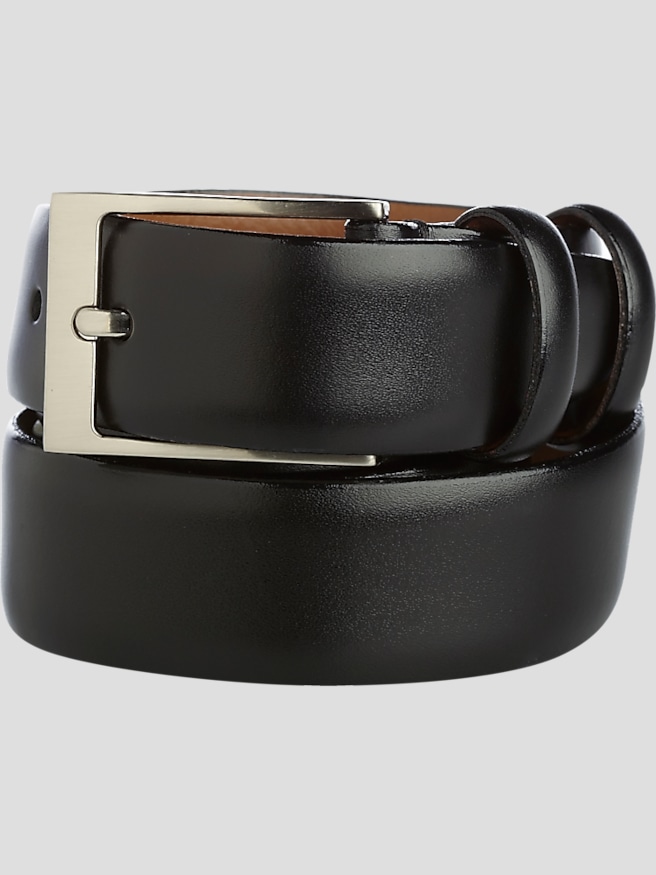
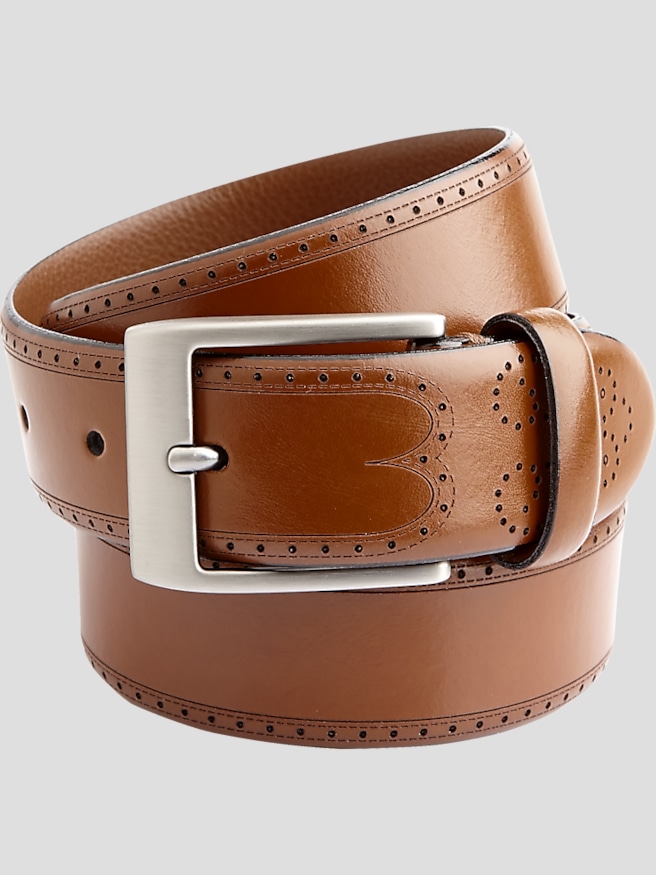
For tailored wedding attire, wedding belts are functional accessories that secure trousers and give the waistline a clean, finished appearance. They help connect the separate elements of an outfit, bringing the shoes, trousers, and small metal details into a coordinated whole. For grooms, groomsmen, fathers of the couple, and wedding guests, the most suitable belt usually complements the clothing rather than becoming its focal point. A smooth leather belt with a restrained buckle works naturally with many suits, while a more textured finish can suit a relaxed celebration with a sport coat and dress trousers. Color starts with the shoes: black leather generally pairs with black dress shoes, while brown leather works best when its depth and undertone are reasonably close to the footwear. An exact match is not always necessary, but a pale tan belt beside deep espresso shoes can look disconnected, especially when the jacket is open. Navy tailoring often works well with brown or black accessories, depending on the dress code and shoe choice; charcoal and black outfits tend to favor darker, quieter finishes. Buckle scale matters just as much as color. A compact frame buckle keeps the front of the outfit tidy, without drawing attention away from the tie, shirt, or suit. Silver-tone or gold-tone hardware can echo a watch or cuff links, although every metal detail does not need to match perfectly. Belt width should look proportional to the trousers and pass easily through the loops; many dress belts measure approximately 1 to 1¼ inches wide. Formality also sets an important boundary. Traditional tuxedo trousers typically use side adjusters or suspenders rather than a belt, and a belt should not be added to trousers without belt loops. Within those practical limits, wedding belts offer a subtle way to make tailored clothing feel considered, whether the setting is a formal ceremony, a courthouse wedding, or a reception with a less structured dress code.
Material and construction influence how a wedding belt looks on the day and how well it holds up afterward. Smooth leather has a polished character that suits dress shoes and tailored fabrics, while suede offers a softer, matte texture that works especially well with more relaxed outfits. Full-grain leather retains its natural grain, including small variations that can give the surface character, while top-grain leather has been refined to create a more uniform finish. Those descriptions are useful, but the leather grade alone does not tell the whole story: tanning, thickness, lining, stitching, and edge finishing also affect durability and comfort. The term genuine leather identifies a material category rather than guaranteeing a particular level of quality. Even stitching, neatly finished edges, and a buckle that sits securely help a belt maintain its shape through repeated wear. A dress belt should feel supportive without being so stiff or bulky that it pushes against the waistband when seated. Fit is especially important during a wedding, when the same outfit may be worn through photographs, the ceremony, dinner, and dancing. Belt sizing varies, so a size chart and a measurement taken where the trousers actually sit are more dependable than assuming every belt corresponds directly to a trouser size. Many belts fit comfortably when fastened near the middle hole, leaving adjustment in either direction. The remaining tip should tuck neatly through the keeper without extending far around the hip. A belt that must be pulled tight enough to gather the waistband is compensating for trousers that need a better fit; it should hold a well-fitting waistband in place, not reshape it. Trying the belt with the actual wedding trousers reveals details that are easy to miss in isolation, including whether the buckle lies flat, the strap clears the loops, and the color feels balanced beside the shoes. Sitting down and moving naturally provide a better comfort check than a quick look in the mirror.
Wedding settings can shape those finishing choices without requiring an entirely separate approach to dressing. A formal indoor celebration may call for a dark, smooth belt with discreet hardware, while an outdoor or destination ceremony can accommodate lighter leather tones and a less polished texture when the clothing and dress code support them. For coastal celebrations, Leather Belts For Beach Weddings offers a related focus for coordinating leather accessories with wedding attire. The guiding consideration remains the complete outfit: a tan belt makes sense with tan shoes and light-colored trousers, but the location alone does not make it the best match for every suit. For a coordinated wedding party, similar leather tones and buckle finishes can create consistency without requiring every accessory to be identical. A belt can also make a practical gift for a groom or wedding attendant, particularly when the recipient’s measurements and preferred shoe colors are known. A simple design that works with the wedding outfit can continue to serve with office clothing and other special-occasion attire. Care helps preserve that usefulness. After wear, wiping smooth leather with a soft, dry cloth removes surface dust; any cleaner or conditioner should be suitable for the particular finish and tested discreetly first. Suede generally needs a suede brush and care methods intended for its nap rather than products designed for smooth leather. Avoid soaking leather, applying direct heat, or folding the strap sharply, which can stress the surface and edges. Hanging the belt straight or storing it in a loose coil helps limit unnecessary creasing. Fastening and unfastening it gently also reduces strain around the holes. With appropriate fit and routine care, a wedding belt can remain a useful part of a dress wardrobe long after the celebration, carrying the same quiet coordination into the next occasion.