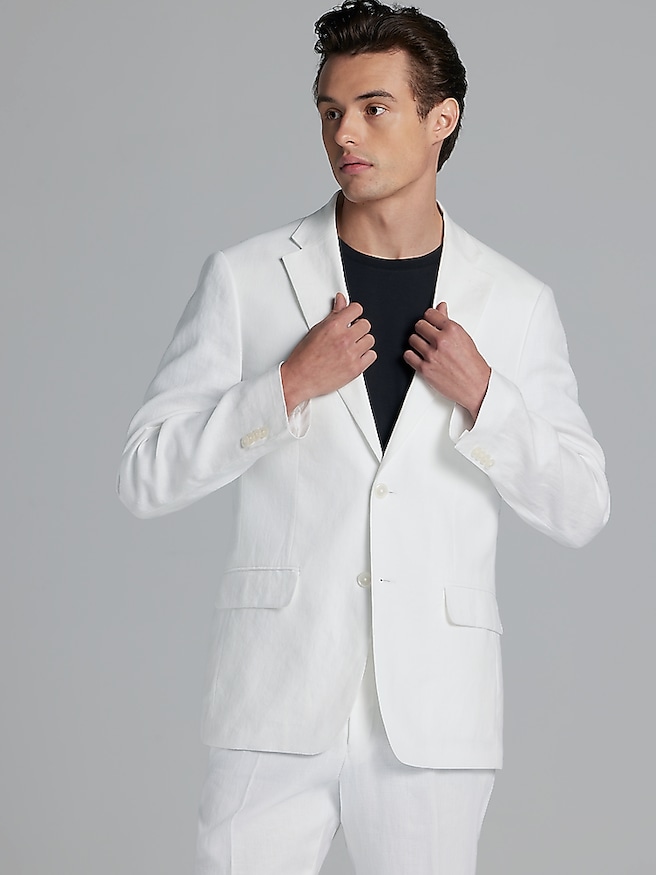
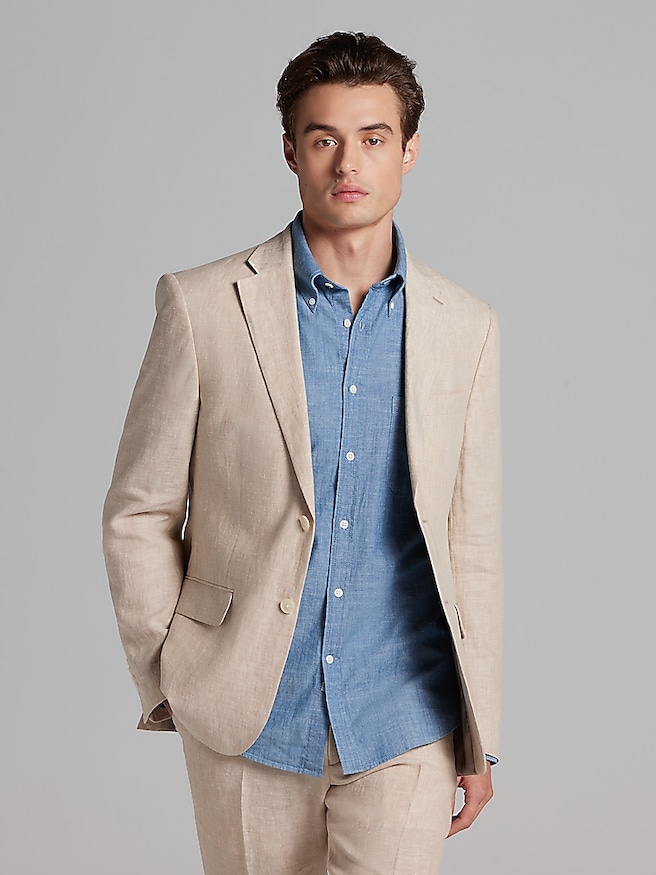
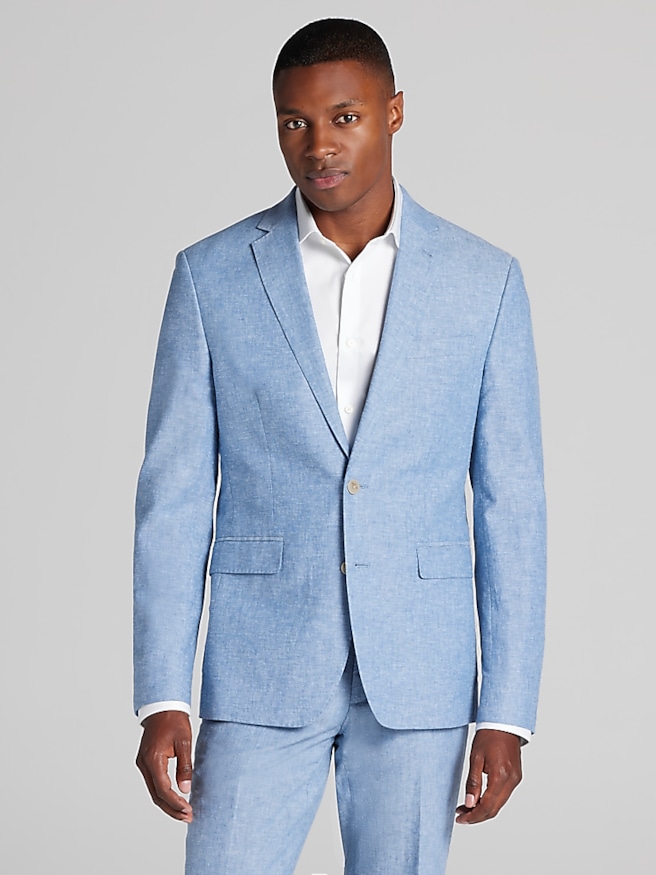
Wedding attire for summer balances the formality of a celebration with the practical demands of warm days, outdoor ceremonies, and evenings spent moving between dinner tables and the dance floor. Lightweight tailoring, comfortable shirts, and considered accessories help create a polished look without unnecessary bulk. The Summer Wedding Attire collection reflects that balance, with the occasion’s dress code providing the starting point for an outfit. A beachfront ceremony may suit a softly structured suit in a pale neutral, while an evening celebration in a ballroom may call for a dark suit or tuxedo. Location alone does not determine formality: a wedding beside the ocean can still have a black-tie dress code, and a garden reception can require a full suit rather than separate trousers and a jacket. For grooms, wedding party members, and guests, the goal is clothing that feels appropriate from the first photograph through the final toast. Light gray, tan, and muted blue can complement daytime settings, while navy and charcoal offer a more understated foundation that carries easily into an evening reception. Color also affects how individual pieces work together. A pale suit with a crisp white shirt creates clear contrast, while a light blue shirt can soften the appearance of darker tailoring. White or ivory suiting deserves extra consideration when the couple has chosen those shades for their own attire; any requested color palette should take priority over a general seasonal preference. Wedding party outfits benefit from coordination in fabric tone and level of formality, even when every person does not wear an identical look. For guests, a suit that complements the setting without closely imitating the wedding party is often the most versatile choice. The most useful summer occasionwear also has a life beyond one celebration, with jackets, trousers, and shirts that can be paired differently for future ceremonies, dinners, and other dressed-up occasions.
Fabric makes a noticeable difference when a ceremony involves sitting in direct sunlight or a reception includes several hours of dancing. Linen is valued for its airy feel and distinctive texture, although its natural creasing creates a relaxed finish rather than a perfectly smooth one. Linen blends can offer a balance of texture and structure, depending on the fibers and construction. Cotton tailoring often has a clean, less lustrous appearance that works well for daytime celebrations, but fabric weight and weave still matter; a substantial cotton cloth can feel warmer than a lightweight wool. Tropical-weight wool and other open-weave wool fabrics can provide a refined drape with good airflow, making them useful when a polished suit is required in warm conditions. Breathability depends on more than the fiber listed on a label. A lighter lining and less internal structure may reduce bulk, while a fully lined jacket can provide a smoother feel over a shirt. Fit is equally important to comfort. A jacket should follow the shoulders without pulling across the upper back, and the sleeves should allow comfortable movement when reaching forward or raising a glass. A small amount of shirt cuff visible below the jacket sleeve gives the outfit a finished appearance. Trousers need enough room through the seat and thighs for sitting comfortably, with a hem that does not gather heavily over the shoes. A close fit should not mean a strained button, tight waistband, or restricted stride. Shirts work best when the collar sits comfortably with a tie fastened and the fabric lies smoothly across the chest. Lightweight shirting can be appealing for summer weddings, but very sheer fabric may need a discreet undershirt to maintain a neat appearance. Trying the full outfit while standing, sitting, and walking helps reveal issues that are easy to miss when assessing each garment separately, especially when the celebration includes a long ceremony or an extended reception.
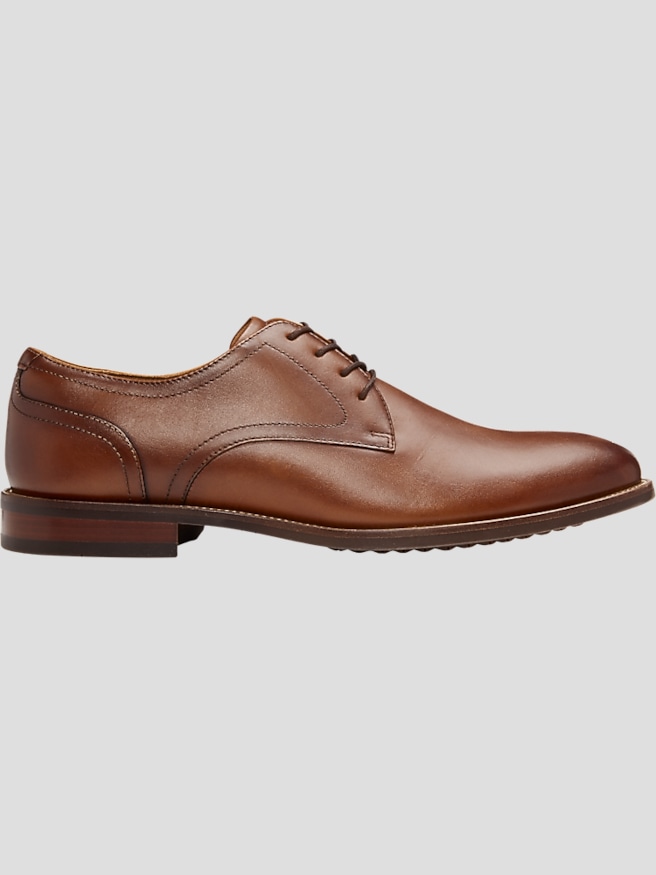
Finishing details connect summer wedding clothing to the setting without making the outfit feel overly coordinated. A textured tie can complement a linen-blend suit, while a smoother tie and neatly folded pocket square can reinforce the formality of darker tailoring. Accessories do not need to match exactly; related colors and a balanced mix of patterns usually create a more natural result. A patterned tie, for example, often works best with a quieter shirt and a pocket square that picks up one supporting shade. An open collar can suit a relaxed dress code, but it should be a deliberate choice that fits the invitation rather than an assumption based on the temperature. Footwear deserves similar attention. Leather loafers can pair well with less formal summer suiting, while lace-up dress shoes provide a traditional finish for more formal occasions. Secure footing matters on garden paths, gravel, and uneven lawns, and shoes that have been worn comfortably before the celebration are a practical advantage. Socks, belts, and other small details should support the outfit rather than distract from it; a belt is unnecessary when trousers are designed with side adjusters or worn with suspenders. Care also influences how well occasionwear lasts. Following each garment’s care label, addressing spills promptly, and allowing clothing to air after wear can help preserve its appearance. Suits benefit from supportive hangers and enough closet space to avoid compression, while shirts should be cleaned according to their fabric and finish. Linen’s characteristic wrinkles need not be treated as damage, and pressing should use a method appropriate to the cloth. Well-constructed seams, a lining that lies smoothly, and fabric suited to repeated wear contribute to lasting usefulness. For a groom or wedding party member, a thoughtfully chosen tie, pocket square, or pair of cuff links can also make a personal gift. These finishing pieces can carry a connection to the celebration while remaining useful with other formal outfits long afterward.