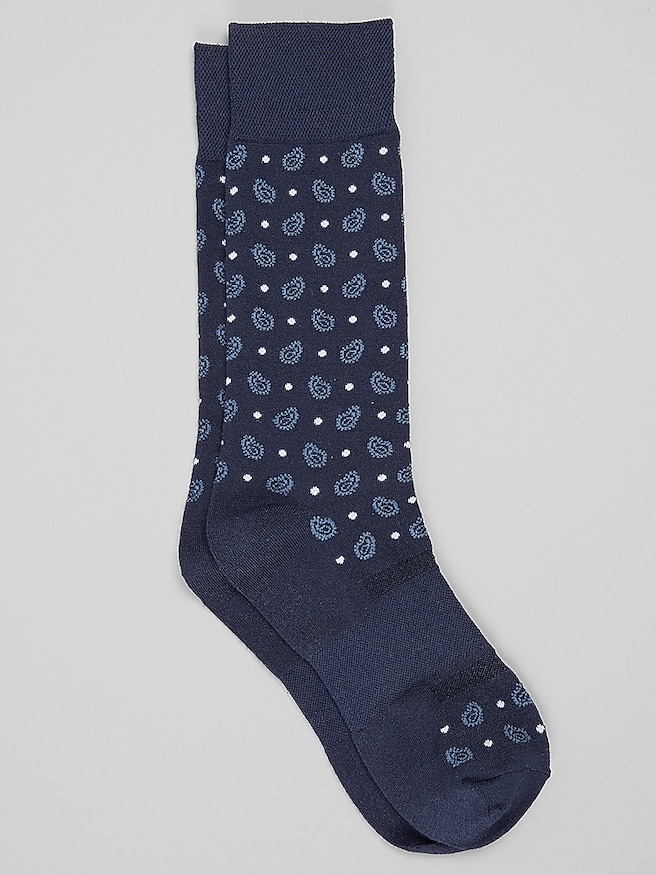
Warm black socks bring together comfortable insulation and a neutral color that fits easily into everyday wardrobes. Their warmth depends less on color than on fiber content, knit density, cushioning, and how comfortably they fit inside a shoe. A black sock can look understated beneath tailored trousers while offering a warmer feel for a chilly commute, a long day in a drafty office, or an evening spent outdoors. Wool is a familiar choice for this purpose because its fibers help trap insulating air and manage moisture vapor. Merino wool has a finer feel than many traditional wool yarns, making it worth considering when softness against the skin matters as much as warmth. Wool blends often combine those qualities with nylon or polyester for added durability, while a small amount of elastane helps the fabric stretch and recover. Synthetic blends can also provide warmth, particularly when their construction includes insulating loft or a brushed interior. Cotton offers softness and a familiar feel, but it absorbs moisture and generally dries more slowly than many performance-oriented fibers, which can become noticeable after a brisk walk or several hours in boots. Fiber percentages tell only part of the story: a densely knit, moderately cushioned sock may feel quite warm without looking bulky, while a thick, loosely constructed sock may take up more space than expected. The most comfortable choice balances insulation with breathability rather than simply using the heaviest fabric. That balance matters when the day includes both cold sidewalks and heated indoor spaces, where feet can become damp if a sock holds too much heat. Black also offers practical styling flexibility, creating a quiet transition between dark shoes and trousers without drawing attention away from the rest of an outfit. Whether paired with polished leather shoes or sturdy boots, warm black socks can serve as a useful foundation for clothing that needs to look composed and feel comfortable through a full day.
Fit has a direct effect on how warm socks feel in actual use. Fabric that bunches under the arch or folds near the toes can create pressure, while a heel pocket that sits too high or too low may allow the sock to shift with each step. A secure fit follows the shape of the foot without stretching the knit so tightly that it loses its comfortable loft. Shoe space matters just as much: thick socks inside close-fitting footwear can crowd the toes, and compression from a tight shoe can work against comfort and warmth. A medium-weight construction often suits everyday boots, while a finer wool blend may fit more naturally inside dress shoes. Cushioning beneath the heel and forefoot can add a softer feel on hard surfaces, but full cushioning takes up more room than targeted padding. Reinforcement at the heel and toe is useful for areas exposed to repeated friction, especially for someone who spends much of the day walking between meetings, standing at a counter, or moving through a busy workplace. Smooth toe seams can reduce irritation inside snug footwear, and a flexible cuff helps keep the sock in place without an unnecessarily restrictive feel. Length also changes how a pair works with clothing. Crew socks typically cover the ankle and extend onto the lower calf, making them practical with boots and casual trousers; taller dress-oriented lengths provide additional coverage when trouser hems rise while seated. A ribbed leg can add texture while helping the fabric follow the calf, though hold depends on the overall construction and fit. Warm black socks are especially useful when an outfit needs to move between settings without a footwear change. Dark denim and lace-up boots can carry them through a walk to work, while charcoal trousers and leather shoes give the same color a more tailored setting. The versatility associated with Stylish Black Socks also applies to warmer constructions, where subtle texture and an even fit can matter more visually than extra thickness.
Care helps preserve the qualities that make warm socks comfortable in the first place. Washing requirements vary by fiber blend and construction, so the care label is the most reliable starting point. Some wool blends tolerate machine washing, while others need a gentler approach; high heat and vigorous agitation can cause certain wool fabrics to shrink or change texture. A cool or lukewarm wash, when consistent with the label, is generally easier on elastic fibers than repeated exposure to high temperatures. Turning socks inside out before washing helps expose the surfaces that collect perspiration and skin oils, and a mesh laundry bag can keep pairs together while limiting snagging against zippers or rough hardware. Drying deserves equal attention because excessive heat can weaken stretch recovery over time. Air-drying, where recommended, helps maintain shape without subjecting the knit to a hot dryer cycle. Durable socks still experience wear, particularly at the heel, toe, and ball of the foot, so a sturdy blend and reinforced construction can be more useful than thickness alone. Shoes with rough interior seams or insufficient room may accelerate abrasion even in a substantial knit. Giving socks time to dry fully between uses supports comfort, and rotating several pairs distributes wear rather than repeatedly stressing the same fabric. With black socks, label-appropriate washing and drying also help preserve a consistent appearance; lint from pale towels and fuzzy fabrics can be especially noticeable against a dark surface. Beyond daily wear, warm black socks make a practical gift for a father, brother, partner, or friend who appreciates useful wardrobe essentials. The recipient’s shoe size, usual footwear, sensitivity to wool, and preference for light or substantial cushioning are more meaningful considerations than appearance alone. A person who wears fitted dress shoes may value a smooth, insulating knit, while someone who reaches for boots may prefer more cushioning and coverage. The strongest everyday choice is not necessarily the thickest pair, but one with the right combination of warmth, fit, durability, and easy coordination with clothing already in regular use.