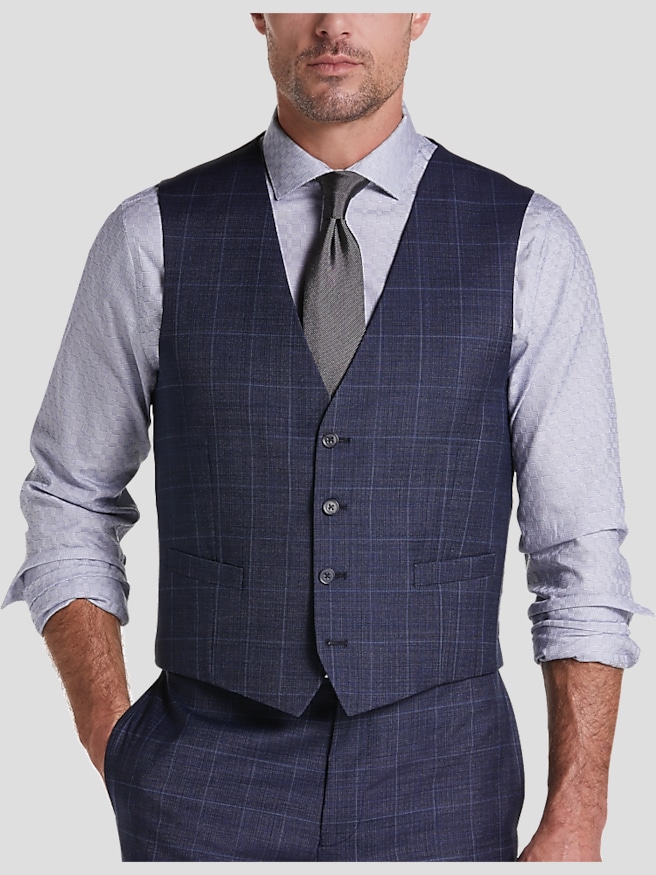
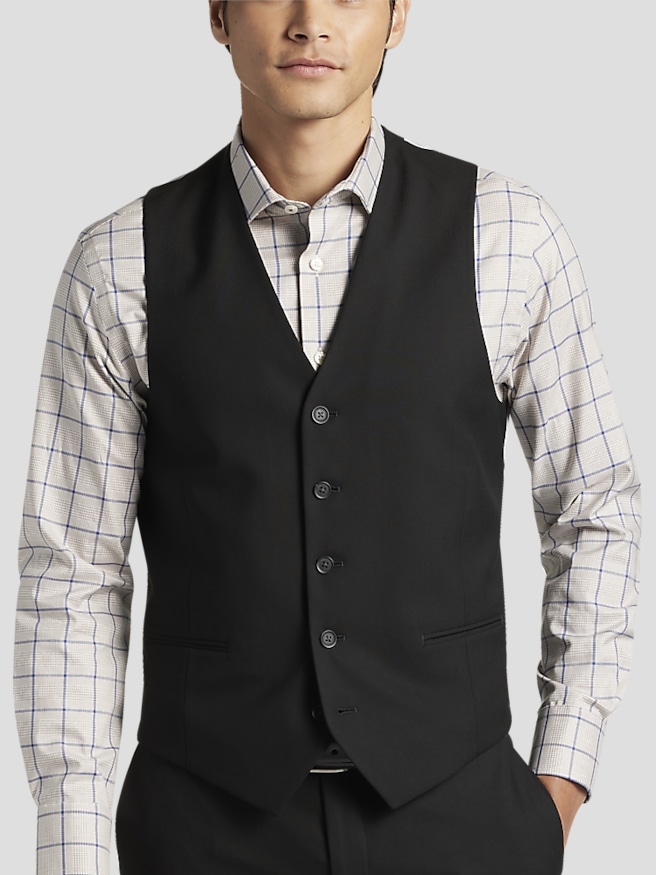
A waistcoat is a tailored, sleeveless vest worn over a dress shirt, often beneath a suit jacket. In American English, “vest” can mean anything from a casual fleece layer to a piece of formalwear, while “waistcoat” usually means the dressier garment cut to sit close to the torso. Waistcoats fall within the broader category of Button Up Vests, but what sets them apart is how they sit with tailored trousers and a jacket. In a three-piece suit, the jacket, trousers, and vest are made from the same cloth, so the vest carries the color and texture of the suit through the center of the outfit. That continuity works well for a groom or wedding party, especially in photos taken after the jackets come off. A contrasting waistcoat can work with a suit or with dress trousers and a sport coat. The contrast looks more deliberate when there’s a clear distinction in shade or texture, such as a muted gray vest against a smooth navy suit, rather than two shades that are almost a match. Single-breasted waistcoats have one row of buttons and tend to look understated beneath a jacket. Double-breasted styles have overlapping fronts and two rows of buttons, creating a broader look across the chest. The opening matters, too: a deeper V shows more of the shirt and tie, while a higher closure leaves less shirt visible. For black tie, a low-cut formal waistcoat is designed to show more of the tuxedo shirt front than a typical suit vest. At a graduation dinner or a reception with a less formal dress code, a waistcoat with dress trousers and an open-collar shirt can look put together without a jacket, especially when the trousers and vest have a similar degree of structure.
The right waistcoat fit starts at the trouser waistband. The front should cover it so that no strip of dress shirt shows between the vest and trousers when standing naturally. Trousers with a higher rise often make that overlap easier to achieve, while a longer vest isn’t always the answer for trousers that sit low: extra length can cause the front points to fold or bunch when seated. Across the chest and waist, the fabric should lie flat rather than pulling into diagonal lines around the buttons. The shoulders should rest against the shirt, and the armholes should leave enough room to reach across a table or shake hands without tugging. A good fit is close, not restrictive, and it’s easier to judge over the kind of dress shirt that will be worn with it. Sitting down and reaching forward can reveal strain at the buttons that isn’t obvious in a standing mirror check. Trying the vest under the intended jacket also shows whether the layers sit smoothly together or whether the vest bunches at the sides when the jacket closes. A back adjuster lets the wearer take in a little fullness at the waist, but pulling it tight won’t fix a vest that’s too roomy across the chest or too short in front. A bulky belt buckle can push the vest away from the waistband; suspenders, if needed, support the trousers without adding bulk at the front. On a traditional single-breasted suit waistcoat, the bottom button is customarily left undone so the lower edge can move more freely. Some formal cuts are designed to close fully, so the shape of the front and the placement of the buttons matter more than applying that convention to every vest.
Fabric shapes both the look of a waistcoat and how it holds up with wear. Smooth worsted wool has a clean surface that sits easily beneath a suit jacket, while a textured weave adds definition when the vest is worn without one. Cotton often has a more matte finish and looks at home with tailored separates. Wool blends vary in feel and structure, and some include stretch for a little more ease through the torso. The back can be made from the same cloth as the front or from a smoother lining fabric. A lined back can help a jacket glide over the vest, while a matching fabric back gives the piece a consistent appearance when worn on its own. For regular use, flat seams, firmly attached buttons, and smoothly finished buttonholes are worth a close look: the front closure takes repeated strain, particularly if the vest is snug when seated. Care depends on the shell, lining, and internal construction, so the garment label is a better guide than the fiber name alone. In between cleanings, emptying the pockets and hanging the vest where it can air out helps keep the front flat and prevents objects from leaving an impression in the fabric. With a matching three-piece suit, repeatedly cleaning only the vest can lead to subtle differences in finish over time. A waistcoat can make a thoughtful gift for someone with a graduation or wedding ahead, or for someone who already pairs dress shirts with tailored trousers. A familiar jacket size is a useful starting point, but chest and waist measurements, along with where the recipient’s trousers sit, give a better sense of whether the vest will button comfortably and cover the waistband.