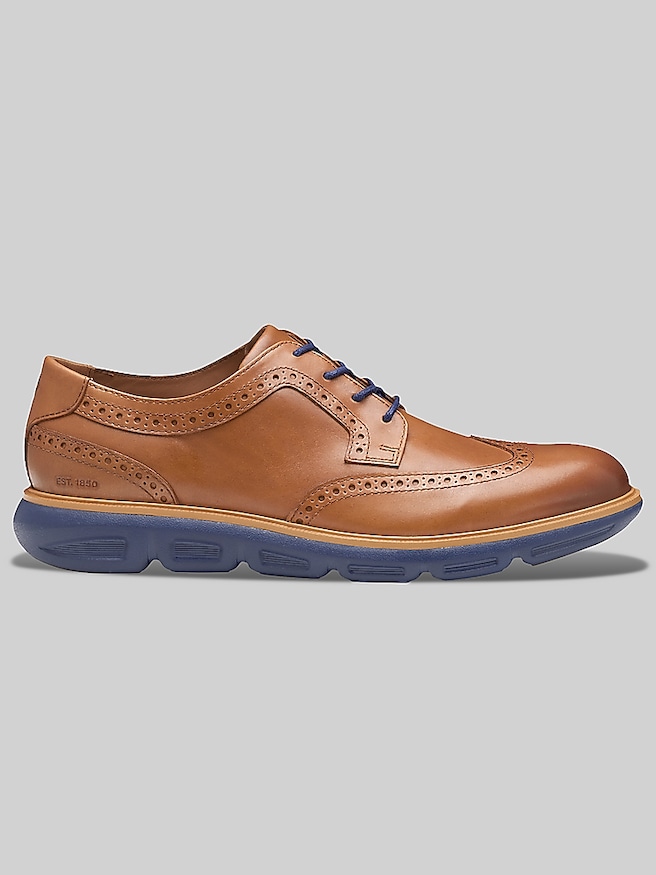
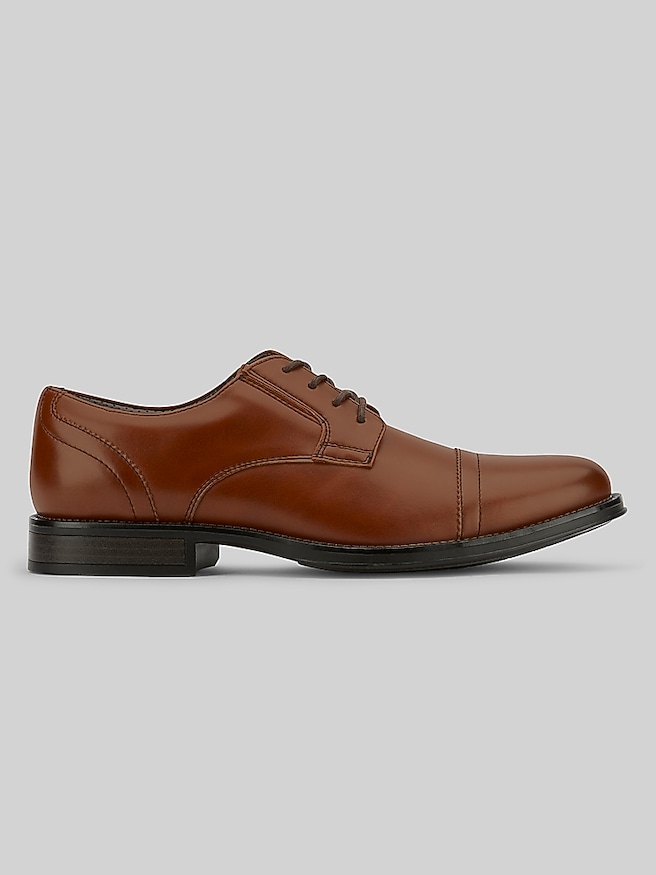
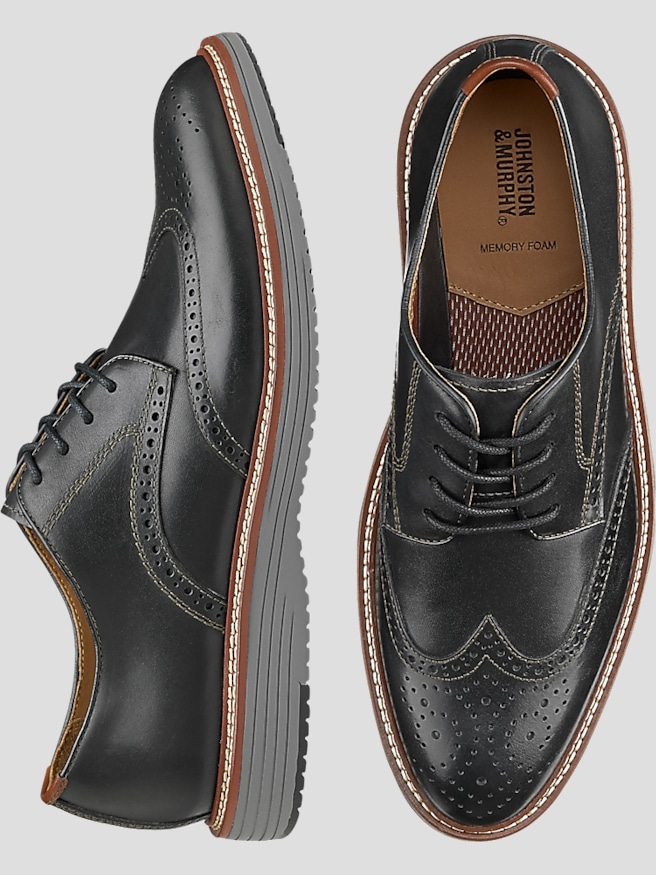
Vintage wingtip shoes are distinguished by a wing-shaped toe cap that extends back along both sides of the foot, forming a W when viewed from above. Traditional full-brogue designs pair that distinctive shape with decorative perforations, known as broguing, and often with finely serrated edges along the seams. The result is a dress shoe with more texture and visual character than a plain-toe style: small punched patterns catch the light, curved panels frame the forefoot, and polished leather gives the details depth. Broguing has roots in footwear traditions associated with Scotland and Ireland, although the perforations on modern dress shoes are decorative rather than intended to drain water. Over time, these practical influences became part of a tailored wardrobe, giving wingtips their familiar balance of refinement and sturdy character. The word vintage can describe shoes made in an earlier era or newer designs inspired by historic silhouettes, so the distinction matters when considering appearance, condition, and construction. An older pair may have natural creasing and a developed patina, while a vintage-inspired pair can offer a similar visual effect without decades of wear. Neither an aged finish nor a particular shade of brown establishes a shoe’s age by itself. Details such as the shape of the toe, the arrangement of the leather panels, and the proportions of the sole contribute just as much to its period-inspired character. Wingtip describes the toe treatment, not the lacing system: Oxford wingtips have closed lacing for a more closely fitted appearance, while Derby wingtips have open lacing that can offer more adjustment over the instep. Longwing designs carry the wing-shaped panels all the way around to the heel, creating an especially continuous line along the sides. Rounded toes and substantial soles tend to emphasize a traditional look, while a more tapered shape feels dressier. Black leather keeps the pattern restrained; brown, burgundy, and contrasting leather panels make the craftsmanship more noticeable.
Materials and construction shape how vintage-style wingtips feel, age, and hold up to regular use. Smooth leather shows the perforations clearly and can develop a rich patina with consistent care. Full-grain leather retains its natural surface character, though leather quality also depends on tanning, thickness, and finishing rather than a single label. Suede softens the visual effect of the wingtip pattern and works especially well with textured trousers and less formal tailoring, but it needs its own brush and appropriate protective treatment. Leather linings can help manage moisture, while the insole, internal structure, and sole all influence comfort. A leather outsole creates a traditional dress-shoe profile; a rubber outsole can add cushioning and traction, depending on its design. Neither material makes every shoe suitable for every surface, and smooth soles deserve particular attention on slick floors. Welted construction may allow a qualified repair specialist to replace worn soles, helping extend a well-maintained pair’s useful life. Other construction methods can provide flexibility or a lighter feel, so durability is best considered through the whole shoe rather than one feature alone. Fit remains more important than the size printed inside. The heel should feel secure without persistent slipping, the widest part of the foot should align with the widest part of the shoe, and the toes should have room without being pushed against the front. A structured wingtip may soften with wear, but break-in should not be expected to correct pinching, numbness, or an unsuitable width. Trying shoes with the dress socks intended for regular wear gives a more useful sense of fit than trying them with thick athletic socks. For genuinely older footwear, condition deserves close attention: dried leather, brittle stitching, cracked linings, and deteriorated soles can affect wearability even when the uppers photograph well. A handsome patina is different from structural damage. For anyone drawn to updated interpretations of these traditional details, Cool Wingtip Shoes offers a related perspective on the same distinctive silhouette.
The appeal of vintage wingtip shoes lies in how naturally they connect tailored clothing with everyday personal style. A dark brown pair beneath navy trousers brings definition to an office outfit without demanding much additional decoration. Burgundy leather can pick up the depth of a charcoal suit, while a warm medium brown complements textured gray trousers and a simple sport coat. Black wingtips offer a more restrained foundation for business dressing, especially when the broguing is fine and the sole is relatively slim. For a wedding with a suit-based dress code, the pattern can add personality without relying on a bright accessory, although strict formal dress codes may call for a different shoe style. More substantial longwings work comfortably in the visual sense with chinos, corduroy, or dark denim, provided the trouser opening leaves the shoe’s proportions balanced. A hem that falls cleanly near the top of the shoe keeps the wing-shaped cap visible rather than burying its detail beneath excess fabric. These shoes can suit someone building a tailored wardrobe, someone who enjoys heritage clothing, or someone who simply prefers a dress shoe with a little texture. As a gift, they are most practical when the recipient’s size, width, and preferred fit are known; a familiar silhouette does not guarantee a familiar fit across different shoe shapes. Care helps preserve both comfort and appearance. After wear, brushing away dust prevents buildup around the perforations and seams. Smooth leather benefits from an appropriate conditioner used sparingly and a polish suited to its finish; suede requires different tools and should not be treated with ordinary leather cream. Cedar shoe trees can help absorb moisture and maintain shape, while allowing shoes to rest between wears gives the interior time to dry. A shoehorn protects the heel counter from being crushed, and prompt attention to worn heel edges can prevent more extensive damage. With thoughtful fit, suitable construction, and steady maintenance, vintage wingtips offer enduring character that comes from their distinctive design as much as from age.