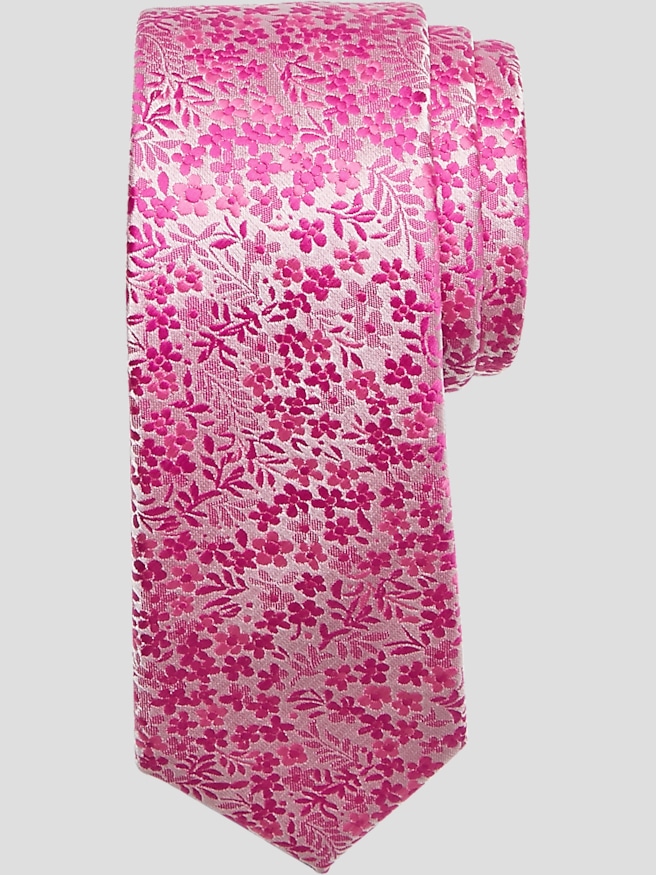
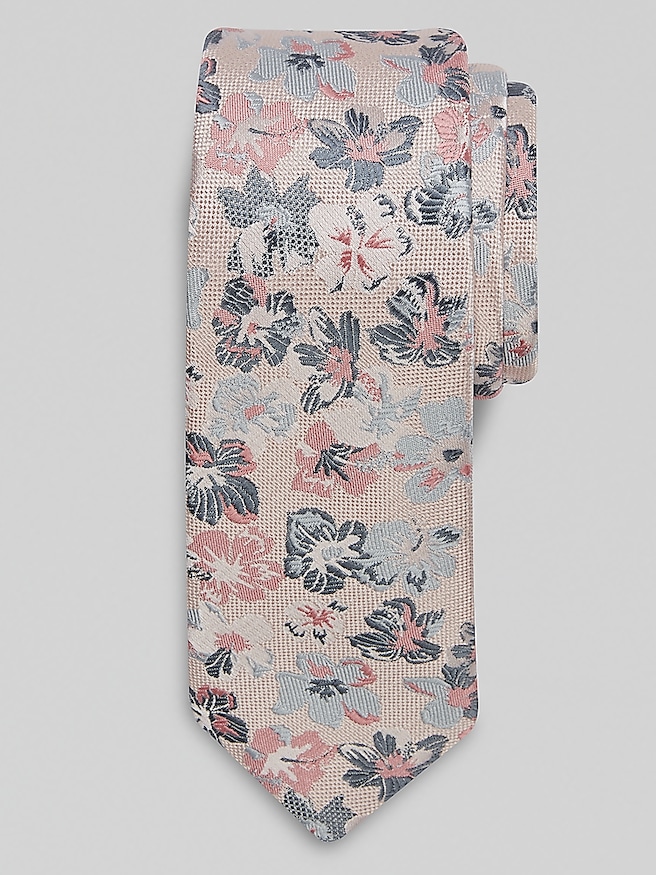
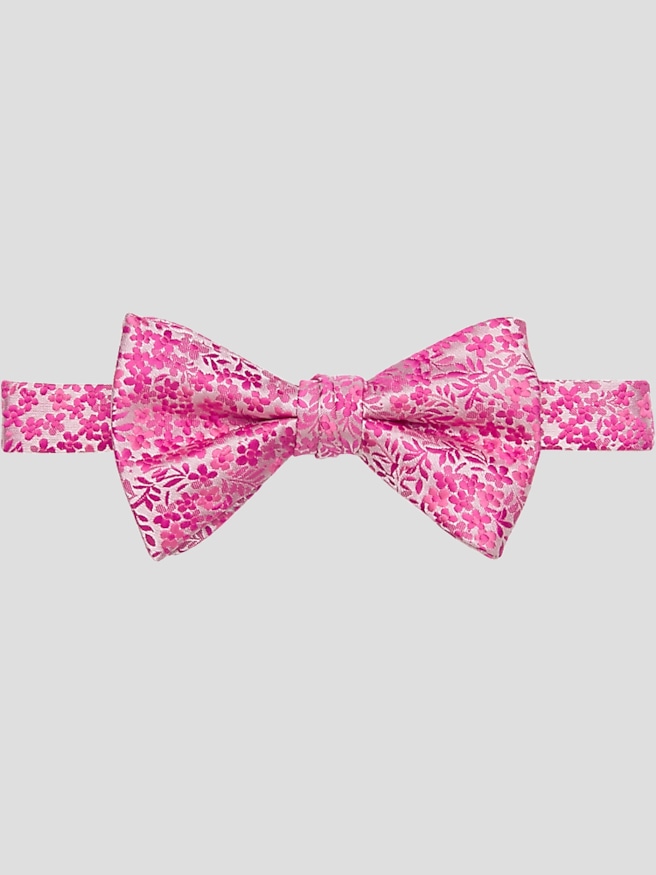
Vintage floral ties bring botanical pattern, softened color, and a sense of history to tailored clothing. The term can describe neckties made in an earlier era or newer ties with vintage-inspired designs; a retro print alone does not establish a tie’s age or origin. Their defining details often include trailing vines, scattered blossoms, ornamental leaves, and densely arranged flowers that recall decorative textiles, old botanical illustrations, or traditional wallpaper. Some patterns are quiet enough to read almost like texture from across a room, while others make the tie the focal point of an outfit. Small cream flowers against navy create a restrained effect, while dusty rose, muted gold, olive, and burgundy can give a larger botanical design an aged, richly layered appearance. The background color matters as much as the flowers: a dark ground contains a busy pattern, and a pale ground makes the same shapes feel more open and graphic. For anyone drawn to expressive neckwear without an overly bright finish, vintage-inspired floral ties offer a useful middle ground between solid colors and bold novelty designs. They work with business tailoring, wedding attire, and relaxed combinations of a sport coat and dress trousers, depending on the fabric and scale of the print. A fine floral pattern beneath a charcoal jacket can add personality at a client dinner without dominating the outfit; a more expansive vine design can make a simple navy suit feel distinctive at a celebration. Within the broader category of Men's Floral Ties, vintage looks are distinguished less by one particular flower than by the relationship between color, spacing, linework, and texture. They can suggest a particular era without requiring an entire period-inspired outfit. A clean shirt collar, well-proportioned lapels, and polished shoes usually provide enough structure to let the pattern feel intentional rather than theatrical. That balance also makes this style approachable for someone who normally wears understated accessories but wants a little more character in a familiar suit.
Fabric and construction influence how a floral tie looks, knots, and holds up over repeated wear. Silk can carry finely drawn petals and nuanced colors with a smooth finish, although its sheen varies with the weave and treatment. Printed silk often allows crisp illustration and intricate shading, while woven floral designs build the motif into the fabric and may have a more dimensional surface. Cotton tends to give botanical prints a matte, easygoing character that sits comfortably with textured jackets and less formal tailoring. Linen and linen blends can introduce visible slubs and a slightly irregular surface, while polyester and other blends may offer resilience and straightforward maintenance when the care label supports it. No fiber guarantees a particular level of quality or durability on its own. The weave, interlining, stitching, and finishing all contribute to the way a tie drapes and recovers after a knot is released. A well-balanced tie should hang smoothly rather than twist, and its edges should look even without puckering. Width is best considered alongside jacket lapels, shirt collar proportions, and personal preference, rather than treated as a fixed rule. A narrow tie can look disconnected beneath broad lapels, while a wider blade may overwhelm a compact collar. Length matters just as much: with trousers sitting at the intended waist position, the front tip generally reaches near the waistband or the middle of a belt buckle. Taller wearers or those who favor fuller knots may need additional length to achieve that proportion. A four-in-hand knot gives many floral patterns a slightly asymmetrical, understated finish and leaves more of the design visible below the collar. A half-Windsor can provide a more balanced triangle for a wider collar opening, though thicker fabrics may become bulky when wrapped repeatedly. The flower placement will shift each time the tie is knotted, which is part of the appeal of an allover print. A small dimple beneath the knot can add depth without needing to center a blossom precisely, and a neatly concealed back blade keeps the overall line tidy.
Coordinating a vintage floral tie is often simplest when one minor color in the pattern connects with another part of the outfit. A pale blue shirt can echo a tiny blue leaf or petal, while a cream shirt can soften a design built around brown, rust, or muted red. White remains a clear backdrop when the tie has several colors competing for attention. With a patterned jacket, contrast in scale helps: a small botanical repeat can sit against a broad windowpane, whereas two equally dense patterns may be harder to distinguish. A pocket square does not need to duplicate the tie. Plain white linen or a subtle design that shares one accent color can look more considered than an exact match. For wedding parties, coordinated background colors can create a unified appearance even when floral motifs vary, provided that approach fits the couple’s dress expectations. Guests can use the same principle to add character without drawing attention away from the occasion, while anyone attending a business function should consider how conservative the setting is before choosing a large, high-contrast print. Vintage floral neckties can also make thoughtful gifts for someone who enjoys classic menswear, botanical art, or accessories with visual texture. Looking at the recipient’s usual suit colors and preferred tie width is more useful than choosing a pattern in isolation. Care helps preserve both the design and the tie’s shape. Follow the fiber and cleaning instructions on the label, gently reverse the knot after wear, and avoid pulling the narrow blade through a tight knot. Letting the fabric rest before putting it away can help light creases relax. Hanging a tie on a smooth rack or storing it loosely rolled prevents the sharp folds that come from leaving it compressed in a drawer. Blot spills rather than rubbing them, and seek professional cleaning when the label calls for it; aggressive spot treatment can leave rings or disturb a delicate finish. Authentic older ties may need extra caution because age, past storage, and previous wear can affect the fabric and seams. With thoughtful handling, floral neckwear can remain a distinctive part of a tailored wardrobe through many occasions.