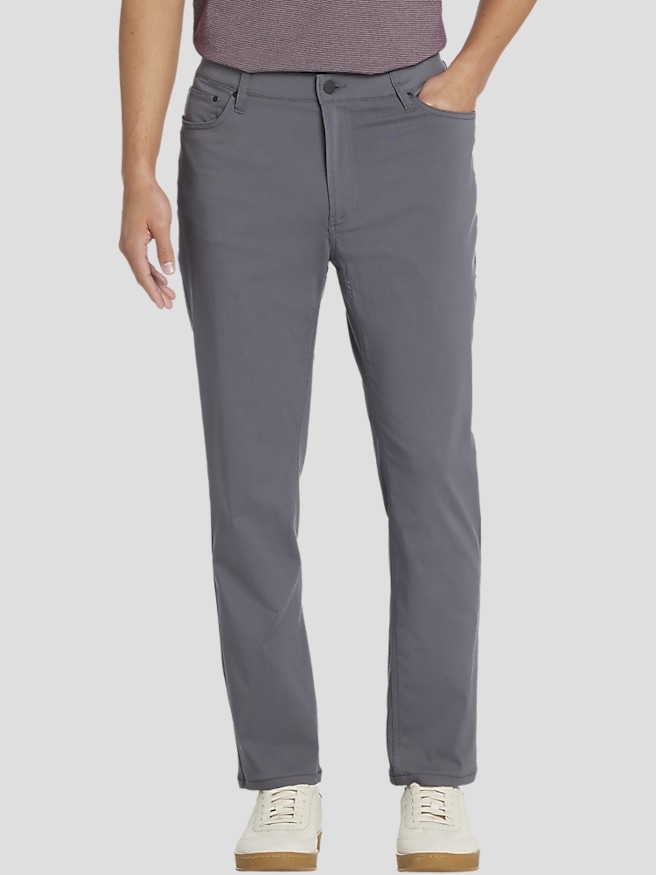
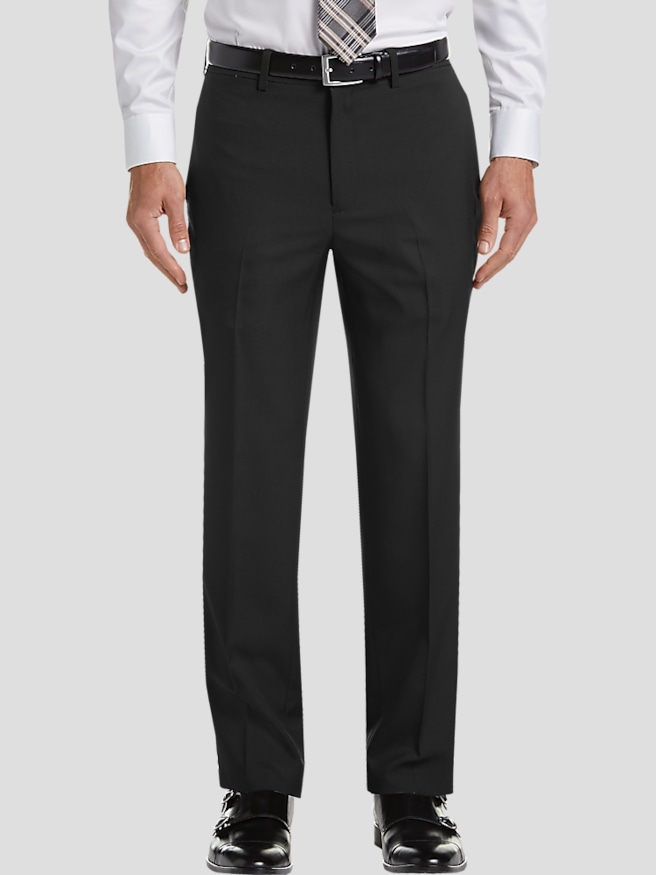
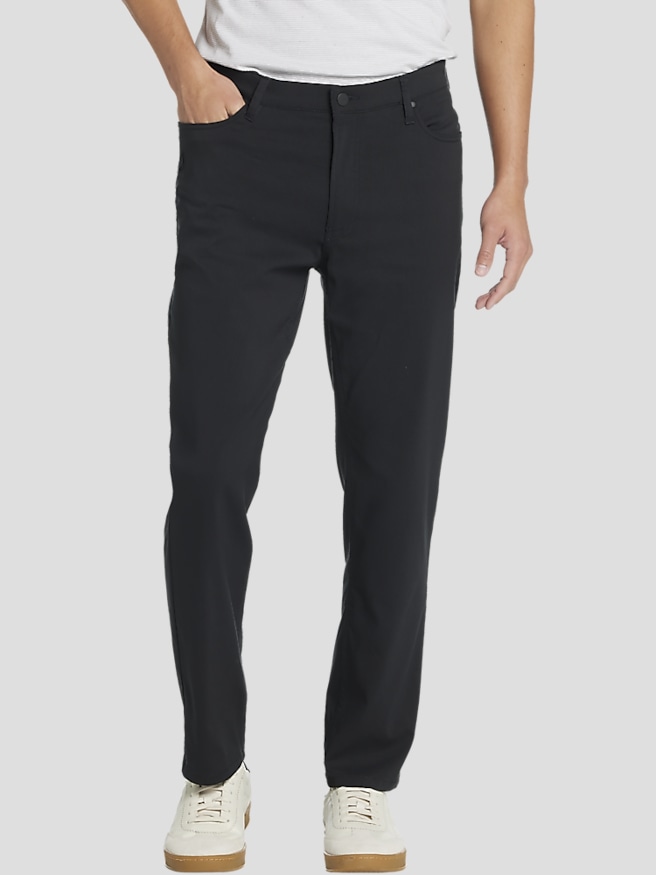
Men’s urban pants bring together the ease of streetwear, the structure of everyday trousers, and the practical details that suit life on the move. The term describes a style category rather than one fixed cut: relaxed chinos, tapered cargo pants, clean-lined joggers, and casual trousers can all fit an urban wardrobe. Their common ground is versatility, with silhouettes that look at home on a train platform, in a casual office, or at a neighborhood restaurant. A straight leg creates a clean line from hip to hem, while a tapered leg leaves room through the thigh before narrowing toward the ankle. Wider cuts put more emphasis on drape and proportion, giving a simple T-shirt or cropped jacket a more deliberate shape. Cargo pockets and utility-inspired seams introduce a functional look; flat fronts and discreet side pockets keep the effect closer to smart casual. Neither approach needs an elaborate outfit to work. Black trousers with a textured knit and leather sneakers feel understated, while olive cargo pants with a plain tee and an overshirt lean more casual. Charcoal, navy, tan, and other neutral shades make it easier to repeat a pair across several outfits without everything looking the same. Texture matters as much as color: washed cotton feels easygoing, a smooth woven surface looks sharper, and denim adds visual weight. For commuting, desk work, errands, and an evening out, the most useful urban pants balance a comfortable cut with details that feel appropriate in each setting. A restrained silhouette can move between those settings with a change of shirt or footwear, although utility-heavy styles generally remain casual. Urban styling does not have to mean oversized proportions or numerous pockets. A simple pair with a well-placed waist, an intentional hem length, and enough room to move can express the same modern sensibility. That breadth makes the category relevant to anyone building a practical everyday wardrobe, from students heading across campus to professionals whose workplaces allow a relaxed dress code.
Fabric and construction shape how men’s urban pants feel over a full day, especially when that day includes walking, sitting, and repeated trips up stairs. Cotton twill has a recognizable diagonal weave and a substantial hand that works well for chinos and utility-inspired trousers. Cotton-rich fabrics can feel soft against the skin, though their tendency to crease depends on the weave, finish, and blend. Denim offers a more pronounced texture, with rigid versions holding a structured silhouette and stretch versions allowing additional give. Woven fabrics containing nylon or polyester may offer useful abrasion resistance, shape retention, or quicker drying, but those qualities vary by construction and should be confirmed in the garment details. Elastane adds stretch; it does not, by itself, guarantee breathability or lasting recovery. Knit joggers tend to flex readily, while woven joggers can provide a more defined outline with a similarly casual waistband and cuff treatment. For a related direction centered on performance-minded everyday dressing, Mens Tech Pants explores the overlap between modern trouser styling and technical fabric features. Practical details deserve the same attention as fabric content. A gusset can provide extra space through the crotch, articulated knees can support bending, and secure closures can help keep small essentials contained. Pocket placement also changes how pants wear: low, bulky cargo pockets create a stronger utility profile, while pockets positioned closer to the body give a cleaner appearance. A phone or wallet should sit comfortably without pulling the fabric out of line or pressing into the hip when seated. Reinforced stitching at stress points, neatly finished seams, and sturdy pocket openings are useful construction details for frequently worn pants. Added hardware is not automatically a sign of greater durability, and a heavier fabric is not always the most comfortable choice. The right balance depends on intended use, whether that means long stretches at a desk, frequent walking between appointments, or casual plans that call for an uncomplicated outfit.
Fit gives urban pants their character, but comfort depends on more than the label attached to the cut. Slim, straight, relaxed, and wide-leg descriptions are starting points; the rise, thigh room, knee width, and leg opening determine how the finished silhouette sits on the body. A waistband should remain secure without digging in, and the seat should allow sitting without pulling sharply across the pockets. Men with fuller thighs may prefer a relaxed top block paired with a tapered lower leg, which creates definition at the ankle without requiring a close fit everywhere. A straight cut can feel less restrictive through the calf and works with both low-profile shoes and more substantial footwear. Hem length makes a visible difference. A clean ankle-length finish puts the focus on sneakers, a slight break rests lightly over the shoe, and an intentionally stacked leg creates folds above the footwear for a more pronounced streetwear look. Extra length should look deliberate rather than trail under the heel, where fabric can fray. Proportion carries through the rest of the outfit: wider trousers pair naturally with a defined shoulder or shorter outer layer, while a narrower leg can balance a roomier shirt. For gifting, familiar waist and inseam measurements are more dependable than a general size guess, and a favorite everyday silhouette offers a useful clue to personal taste. Care helps preserve both that fit and the finish. The care label takes priority, since cotton, denim, stretch blends, and technical woven fabrics may need distinct treatment. Closing fasteners, emptying pockets, and turning darker pants inside out can help limit snagging and surface wear during washing. Excessive heat may affect elastic fibers or cause shrinkage, making the specified wash and drying settings important. Prompt attention to stains and small seam repairs can also extend useful wear. With suitable care, urban pants can remain a dependable foundation for repeat outfits, offering the ease needed for everyday movement and enough structure to make casual dressing feel considered.