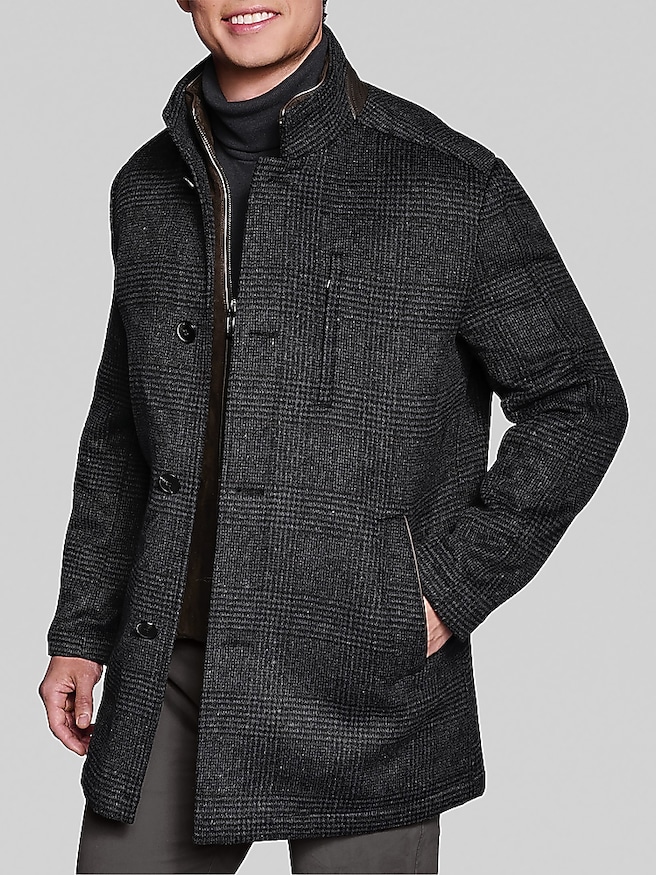
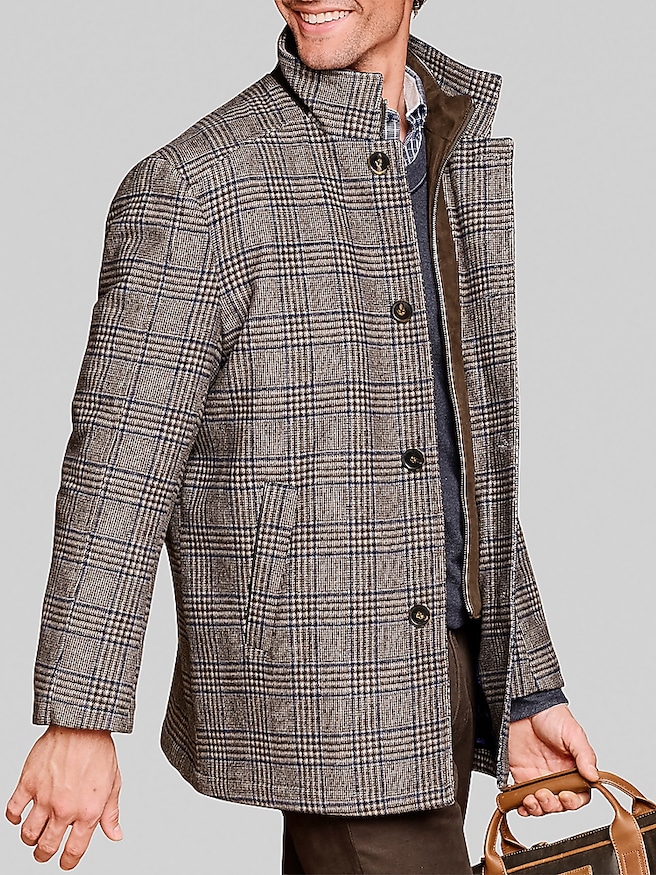
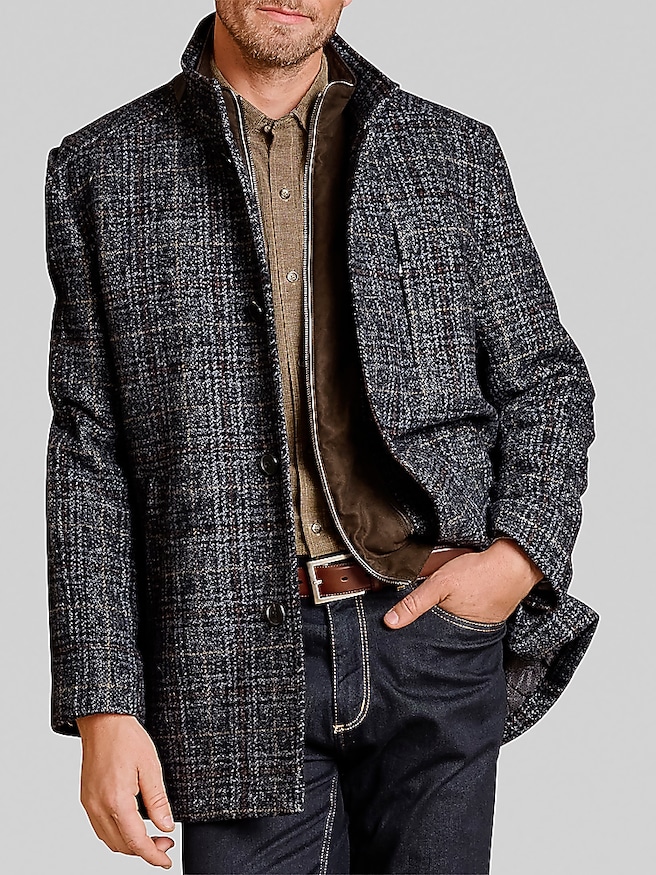
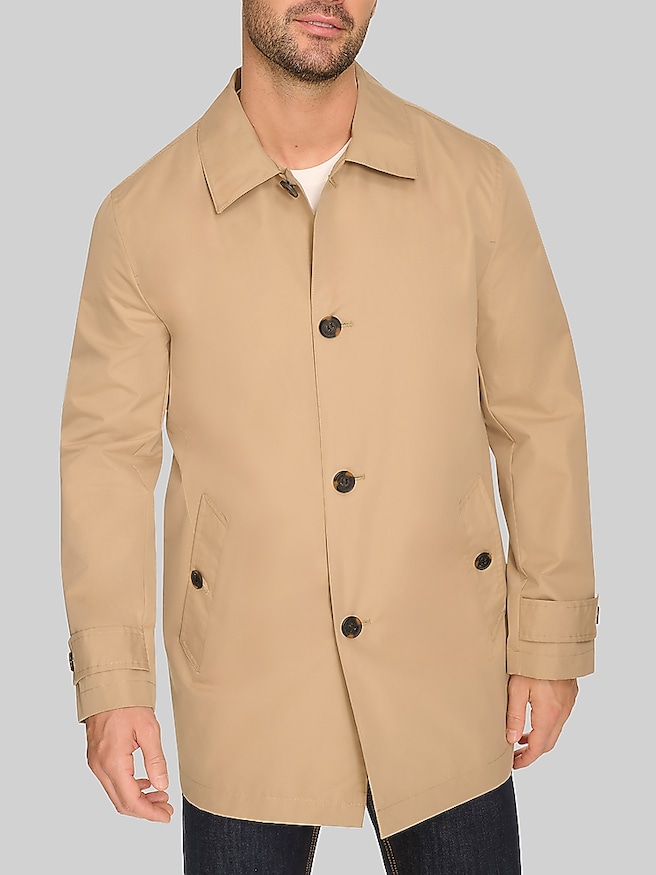
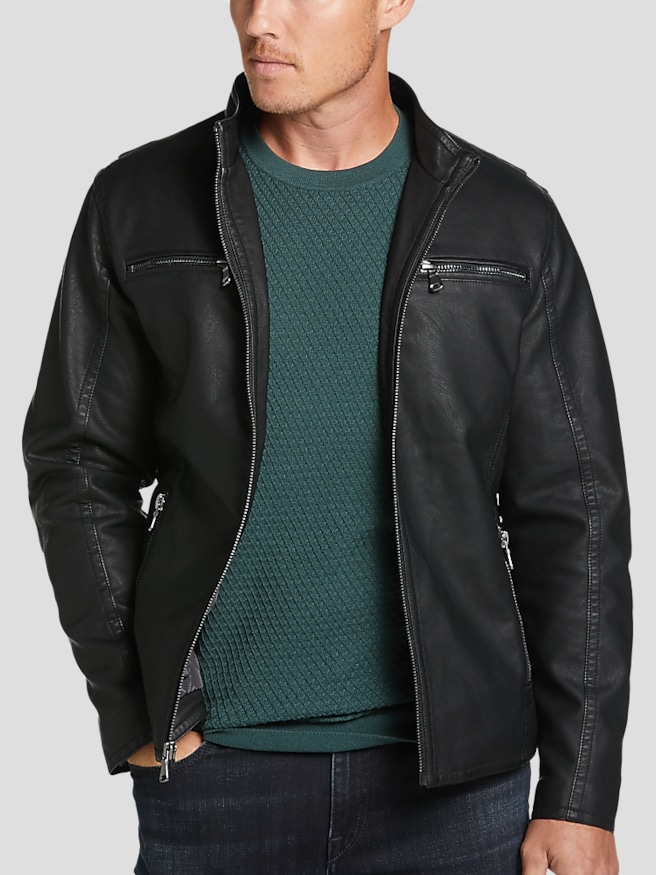
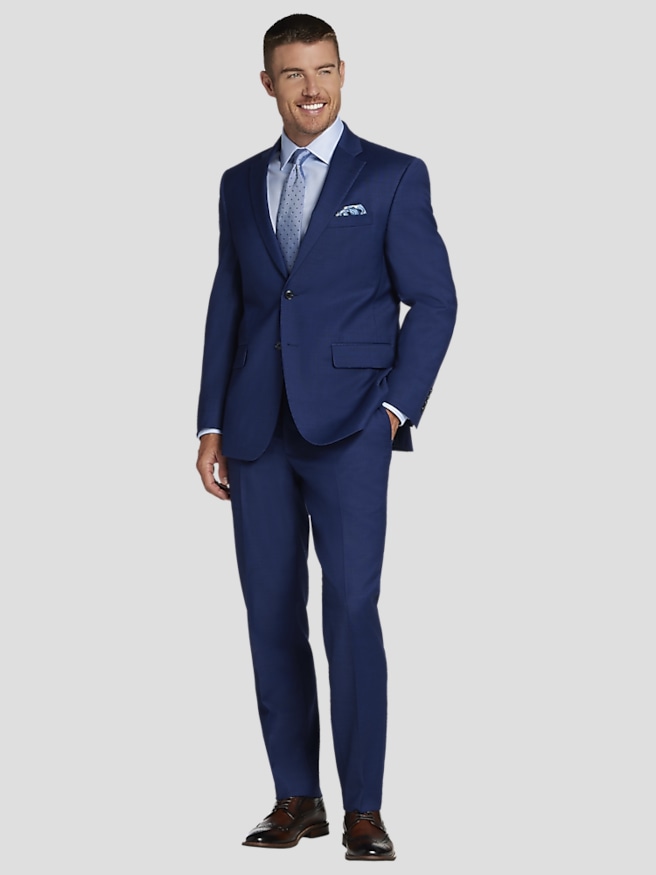
Urban outerwear brings together city-ready function and a street-influenced look, with jackets and coats designed to work across commutes, office hours, and time off. The category spans streamlined bombers, utility jackets, insulated puffers, overshirts, and longer coats, connected less by a single silhouette than by an emphasis on movement, useful details, and easy layering. A short jacket creates a defined outline with straight-leg trousers and sneakers, while a longer coat adds structure over tailoring or a simple knit. Neither approach needs oversized logos or elaborate hardware to feel urban; a matte finish, a substantial collar, or a well-placed pocket can give an otherwise understated piece its character. Black, charcoal, navy, and olive offer a versatile foundation, particularly when the rest of an outfit mixes textures rather than bright colors. More relaxed shapes lean toward streetwear, while clean shoulders and restrained detailing bridge casual and professional settings. For someone walking several blocks to a train, sitting through a commute, and heading directly into a meeting, the appeal is practical as much as visual. Outerwear has to look composed without making each part of the day feel like a wardrobe change. Hip-length designs offer freedom of movement and a casual proportion; longer hems provide additional coverage and can sit more naturally over a suit jacket. Pocket placement matters, too: hand pockets should be easy to reach, and secure compartments can keep small essentials contained on a crowded platform. Closures, collars, and adjustable cuffs influence how the jacket feels in use, not just how it looks on a hanger. The strongest urban outfits often balance one substantial outer layer with quieter pieces underneath, allowing shape and texture to do the work. For a more traditional take on those proportions, Classic Outerwear offers a related style direction rooted in enduring silhouettes. Urban styling can borrow that same sense of polish while introducing a roomier cut, a technical fabric, or a more utilitarian finish.
Fabric determines much of an outer layer’s weight, texture, protection, and maintenance needs. Wool and wool blends bring visual depth and a tailored drape, making them a natural match for dress trousers, textured sweaters, and business clothing. Their warmth depends on fabric weight and construction, so a wool label alone does not establish how much protection a coat provides. Nylon and polyester shells can create a lighter, smoother profile, and tightly woven constructions may help limit wind penetration. Water-resistant finishes can shed light moisture, but water resistance is not the same as waterproof construction; sustained rain calls for features such as an appropriate membrane, sealed seams, and protected closures. Cotton twill and canvas contribute a sturdier, workwear-inspired texture that pairs comfortably with denim and substantial footwear. Leather offers another distinct surface, with grain, finish, and suppleness influencing both appearance and care. Insulated outerwear adds a separate consideration: down provides warmth with relatively little weight, while many synthetic fills retain more insulating ability when damp and may be easier to maintain, depending on the garment. Fill type alone does not tell the whole story, since insulation quantity, coverage, shell construction, and fit all affect comfort. Quilting can distribute insulation and add dimension, whether the result is low-profile enough for a daily commute or deliberately fuller as part of a streetwear silhouette. Linings also deserve attention. A smooth lining helps a sleeve glide over a sweater, while a more textured interior can feel substantial but create friction against another layer. For days that involve walking outdoors and then spending time inside a train or building, manageable bulk and an easy front opening can be more useful than maximum insulation. A hood offers coverage when needed, while a stand collar keeps the neckline compact and works neatly with a scarf. These details make urban outerwear adaptable to real routines, from a brisk walk between appointments to an evening that includes both sidewalk travel and indoor stops.
Fit is where the design becomes personal. An urban jacket can be close-cut, relaxed, or intentionally oversized, but each shape still needs enough room for its intended layers and everyday movement. A structured shoulder should sit cleanly without pulling across the upper back; a dropped shoulder is meant to extend farther and create a softer outline. Reaching for a train’s overhead rail, carrying a backpack, or sitting with the front fastened quickly reveals whether the chest, sleeves, and hem have sufficient ease. A coat worn over tailoring needs space for the jacket beneath it without compressing the lapels or bunching at the upper arms. A shorter casual layer may feel better over a T-shirt or fine-gauge knit, particularly when extra fabric would gather at the waist. Sleeve length should provide useful wrist coverage without swallowing the hands, and a longer hem should allow a comfortable stride. Durability comes from the relationship between fabric and construction: firmly attached buttons, smooth-running zippers, reinforced pocket openings, and even stitching help support frequent wear. Areas that rub against shoulder straps or seat backs may show wear sooner, making the surface texture and care requirements especially relevant for daily commuters. Following the garment’s care label protects more than appearance. Excess heat, unsuitable cleaners, or an incorrect wash cycle can affect coatings, shrink fabrics, or flatten insulation. Wool coats often benefit from gentle brushing and airing between wears, while leather needs care suited to its particular finish. Some insulated and technical garments require specific washing and drying methods to preserve performance. Storage matters as well, with supportive hangers for structured coats and clean, thoroughly dry conditions before longer periods of storage. As a gift, outerwear feels especially thoughtful when it reflects the recipient’s routine: a streamlined shape for someone who dresses for the office, a relaxed silhouette for a streetwear enthusiast, or useful pocketing for someone who travels light. Familiarity with their usual layers, preferred length, and tolerance for garment care helps make the choice more personal. The lasting appeal is an outer layer that feels natural in motion and belongs with the clothes already worn most often.