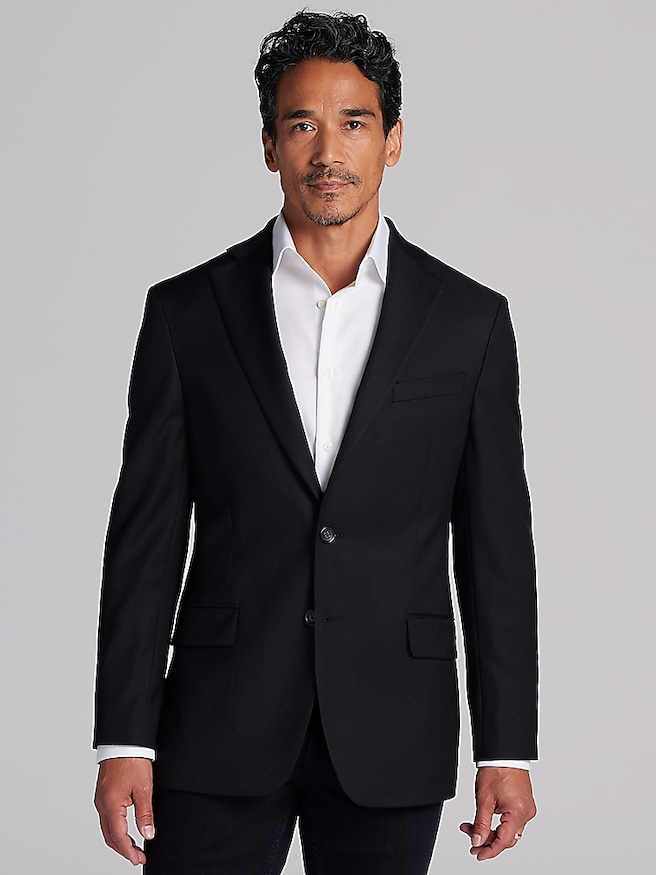
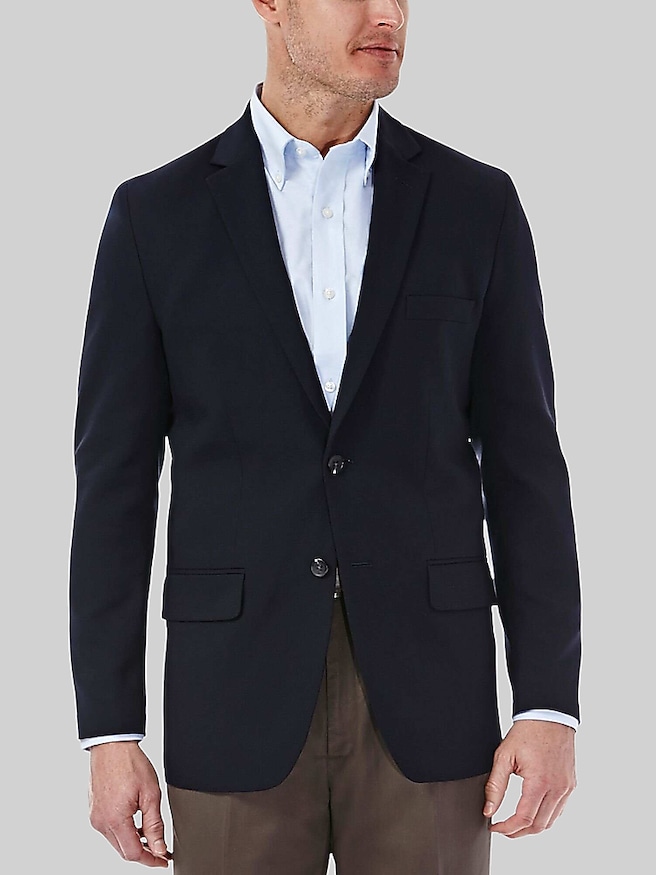
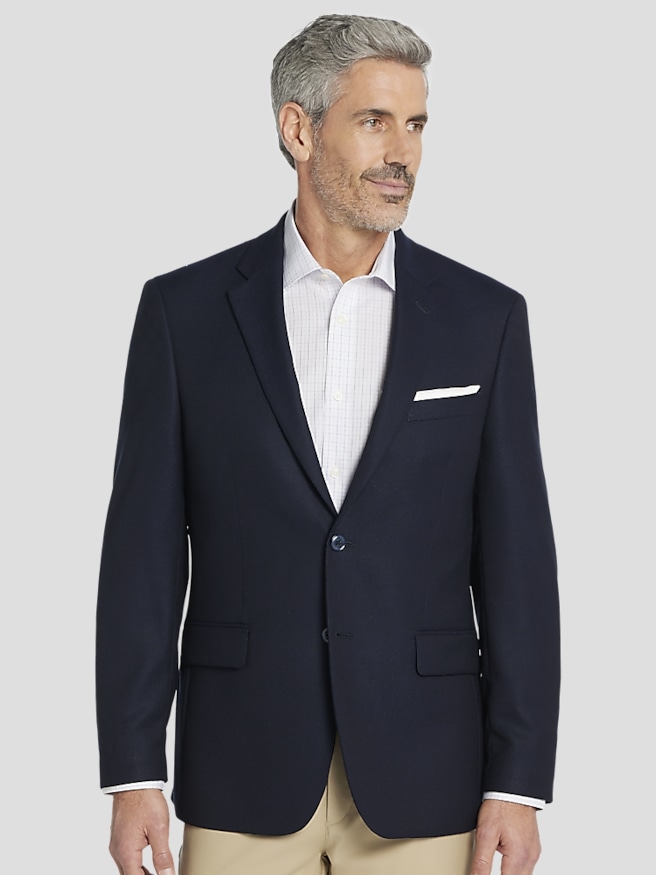
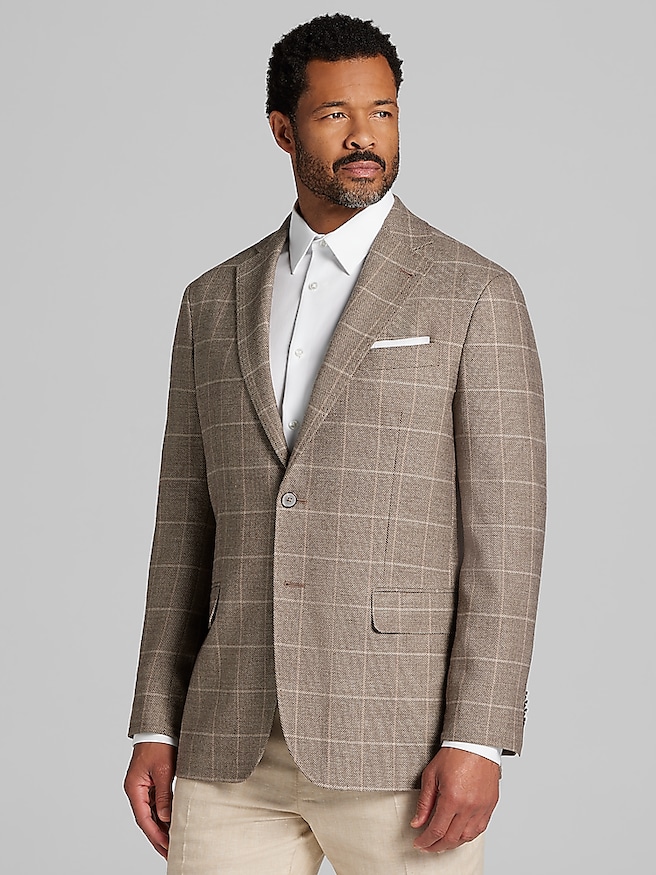
Unique sport coats bring personality to tailored dressing through distinctive patterns, expressive colors, textured fabrics, and details that go beyond a conventional solid jacket. Their character might come from a broad windowpane check, a subtle paisley woven into the cloth, a rich jewel tone, or a contrasting lining that appears when the jacket opens. The strongest designs give the eye something interesting to notice without making the entire outfit feel busy. A small-scale geometric pattern can read almost like a solid from across the room, then reveal its detail in conversation. A larger plaid makes a clearer statement and gives a simple shirt and trousers a deliberate focal point. Texture creates another kind of distinction: the raised surface of a basketweave or the directional nap of velvet can be expressive even in a restrained color. Unlike a matching suit jacket, a sport coat is intended to work with separate trousers, making it especially useful for outfits that mix tailored and casual elements. That flexibility suits a dinner reservation, an art opening, a wedding with a dressy-casual dress code, or a workplace where personal style has room alongside professional polish. For someone who spends much of the day in straightforward shirts and pants, an unusual jacket can change the character of the outfit without requiring an entirely new approach to getting dressed. A deep burgundy coat over a pale shirt feels confident without needing a bold tie; a softly patterned jacket with dark trousers can feel equally comfortable at a client dinner or an anniversary celebration. The appeal of Cool Sport Coats For Men lies in that balance of individuality and versatility. Distinctiveness does not have to mean loud color or oversized motifs. Thoughtful proportions, an unexpected fabric surface, or a well-chosen contrast can give a sport coat its own identity while keeping it easy to wear repeatedly.
Fabric and construction influence how a distinctive sport coat looks, moves, and holds up to regular use. Wool can provide drape, resilience, and a clean tailored shape, while the weave determines whether its surface appears smooth, grainy, or visibly textured. Cotton often lends a more relaxed character, particularly when the fabric develops gentle creases with wear. Linen has an irregular texture and natural tendency to wrinkle that contribute to an easygoing appearance rather than a perfectly pressed finish. Blends can combine these qualities, and some fabrics include stretch fibers for added give; the fiber label and construction details are more useful than assuming every blend behaves the same way. Velvet brings depth because its pile reflects light differently as the wearer moves, while a textured weave can add visual interest without relying on a print. The amount of structure also matters. A shaped chest and defined shoulder create a more architectural silhouette, whereas lighter internal construction can produce a softer line. Neither approach is inherently better; the right choice depends on the intended setting and the way the jacket sits on the body. Shoulder seams should rest close to the natural shoulder, with sleeves hanging cleanly rather than twisting or collapsing into pronounced folds. A buttoned front should feel secure without pulling into an X across the midsection, and there should be enough room to reach forward comfortably. Jacket length, sleeve length, and lapel width work together to establish proportion, especially when a prominent pattern draws attention to the silhouette. Trying the coat over the type of shirt or knitwear it will accompany gives a more realistic sense of fit than judging it in isolation. For long dinners, presentations, or events that involve sitting and standing repeatedly, ease through the upper back and waist deserves as much attention as the view in the mirror. Clean stitching, firmly attached buttons, and smoothly finished pocket openings are useful details to examine, particularly on a jacket intended for frequent wear.
Styling a statement sport coat usually works best when the rest of the outfit gives its defining feature room to stand out. With a multicolor check, a shirt or pair of trousers that echoes one quieter shade in the pattern can create a cohesive result without looking overly matched. A patterned coat with solid trousers also establishes a clear visual hierarchy, while a textured solid jacket leaves more room for a striped shirt or a restrained tie. Dark, clean-finished jeans can suit relaxed settings, provided the dress code allows them; tailored trousers make the same jacket feel more composed. Footwear changes the impression as well, with loafers offering an easy finish and lace-up dress shoes adding formality. A pocket square need not reproduce every color in the coat, and an expressive lining does not require matching accessories. Often, one repeated color is enough to connect the pieces. These qualities can make a distinctive sport coat a thoughtful gift for a father, partner, friend, or graduate who enjoys dressing for dinners, celebrations, or professional occasions. Familiarity with the recipient’s jacket measurements and preference for subtle or bold patterns is especially helpful, since personality and fit matter equally. Care should follow the garment’s label rather than a blanket rule for all tailored clothing. A broad, supportive hanger helps maintain the shoulder shape, and space in the closet prevents textured surfaces from being compressed. A garment brush suited to the fabric can remove surface dust, while airing the coat between wears can reduce unnecessary cleaning. Velvet, embroidery, and other raised details may need special handling, so aggressive brushing or direct ironing is best avoided unless the care instructions permit it. Professional attention can be appropriate for stains, pressing, or delicate construction. Rotating wear and addressing loose buttons early also support longevity. With considered care and balanced styling, an expressive sport coat can become a familiar part of a wardrobe rather than a piece reserved for a single entrance.