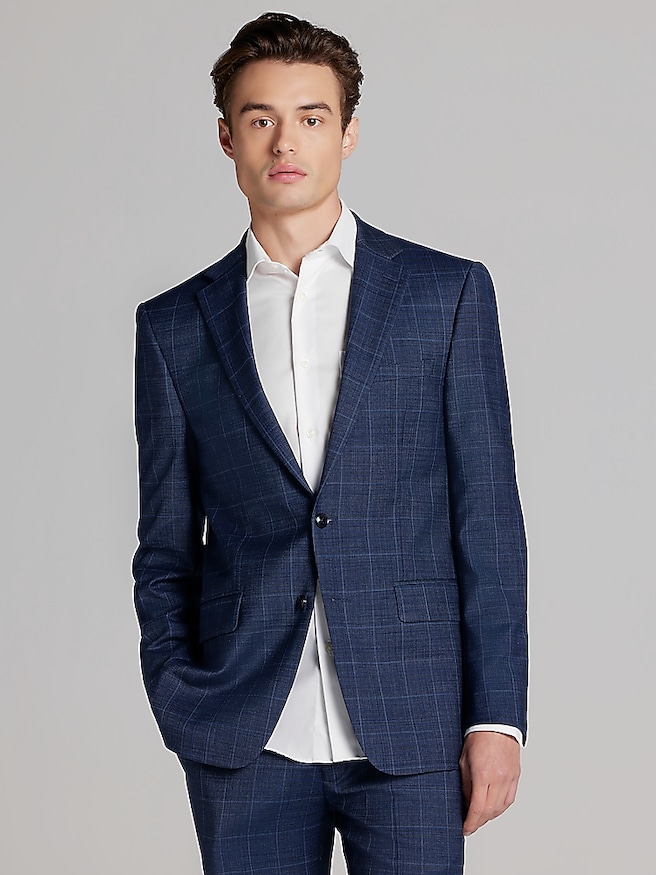
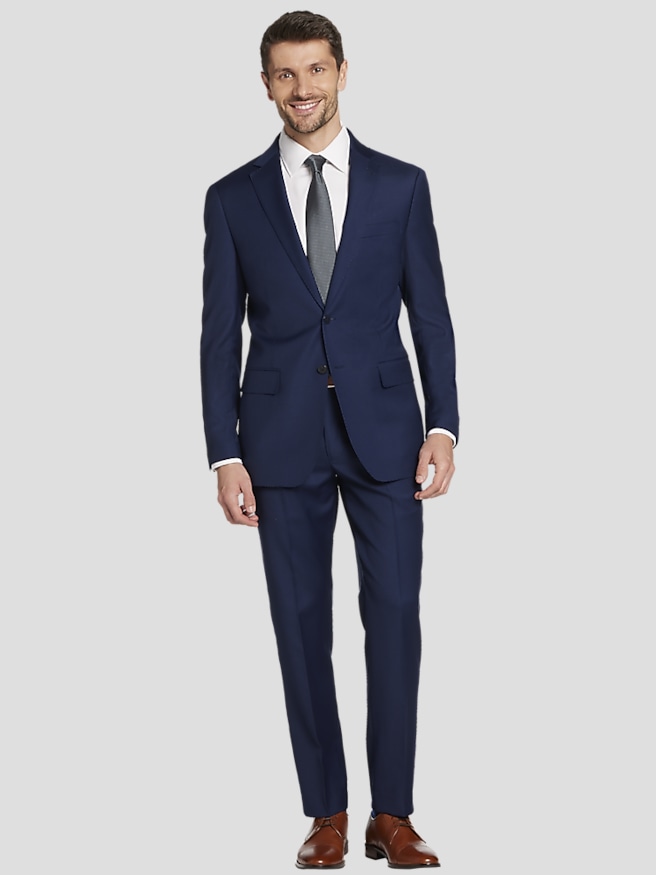
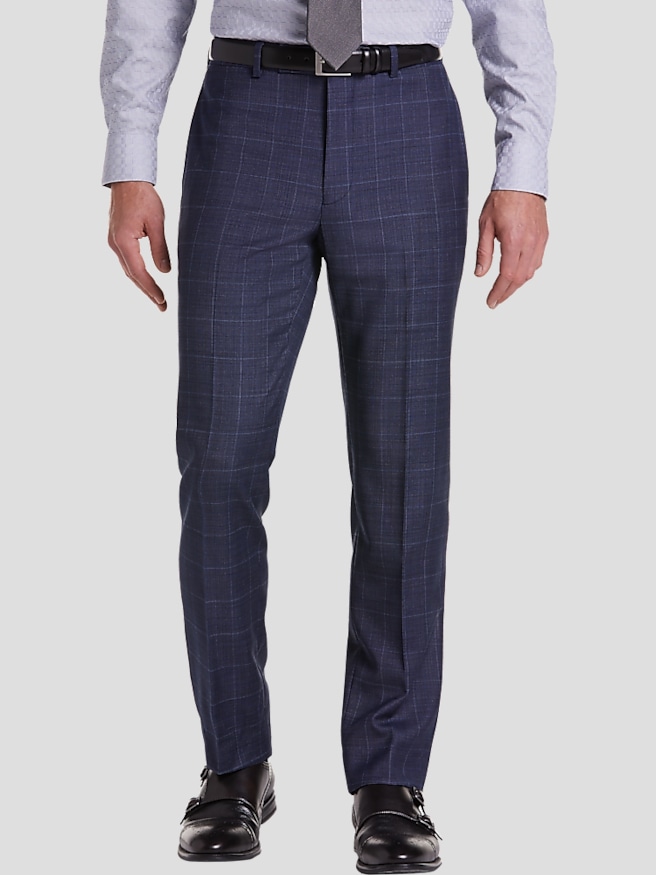
Two-tone suits for Valentine's Day use two distinct colors or shades to give tailored clothing a more expressive finish. The contrast may appear between the jacket body and lapels, across carefully placed panels, or through a coordinated jacket-and-trouser combination in complementary tones. Some designs keep that distinction subtle, such as deep navy against black; others make it the defining feature, with burgundy against cream or red accents against a dark background. The placement of the second color matters as much as its intensity. Contrasting lapels draw attention toward the face and shirt collar, while larger blocks of color create a stronger visual statement across the body. For a Valentine's Day dinner, a restrained dark combination can feel dressed up without competing with the setting. A more pronounced contrast suits an evening built around cocktails, live music, or a celebration where expressive clothing is welcome. Burgundy brings a connection to the occasion without requiring bright red throughout the outfit, and cream offers a softer counterpoint to deeper shades. Black grounds vivid colors and creates a crisp outline, especially when the shirt and shoes stay simple. These combinations can look quite distinct in person and in photographs: low-contrast shades often appear nearly uniform in dim light, while pale lapels or bold panels remain noticeable across a room. The streamlined button arrangement associated with Single Breasted Suits For Valentine's Day can complement a two-tone palette, while a double-breasted front creates a broader, more structured appearance. Neither color contrast nor a particular button arrangement determines the dress code on its own. A restaurant reservation usually leaves room for personal interpretation, but an invitation specifying black tie calls for appropriate formalwear rather than simply a dark suit. The strongest result comes from contrast that feels intentional, with enough visual breathing room for the tailoring itself to show.
Fabric gives two-tone tailoring much of its character, affecting how the colors meet, how the jacket hangs, and how comfortable the outfit feels through a full evening. Wool is valued for its drape, breathability, and natural resilience, making it a useful foundation for tailored clothing intended for repeated wear. Wool blends can bring additional characteristics, including stretch or improved resistance to wrinkling, depending on the fibers and construction. Polyester blends may hold a crisp appearance, though breathability and surface sheen vary considerably. Fiber content alone does not tell the whole story: fabric weight, weave, lining, and the internal structure of the jacket all influence the finished feel. A matte body fabric with a smoother contrasting lapel creates depth without needing a large difference in color. Velvet introduces a richer surface whose shade changes with the direction of its pile and the way light reaches it. Satin creates a clearer highlight, so even a narrow satin detail can become a focal point. Texture deserves consideration alongside color because two shades that seem quiet on their own can look much bolder when one surface reflects light. Fit then determines whether those details sit cleanly. Shoulder seams should follow the natural shoulder line, and the collar should rest against the shirt rather than standing away from it. A fastened jacket should lie smoothly across the chest without pronounced pulling around the button. Slim silhouettes follow the body closely, but they still need enough room for sitting at dinner, reaching across a table, or moving onto a dance floor. More relaxed tailoring offers additional ease without needing to look oversized. Trouser rise and length also shape the overall impression, particularly when the trousers contrast with the jacket and make the waistline more noticeable. A clean hem keeps the lower half looking deliberate, while a comfortable waistband helps the outfit remain wearable beyond the first photograph. Alterations can refine sleeve and trouser length, but a sound fit through the shoulders and torso provides the essential starting point.
Finishing pieces work best when they support the suit's two-tone design rather than introduce several competing ideas. A plain white shirt gives strong colors a clean backdrop, while a pale neutral can soften the transition between a dark jacket and lighter contrasting details. A tie that repeats one of the suit's tones creates continuity; a pocket square can add texture without matching every element exactly. When the lapels already provide a sharp accent, restrained accessories let that feature remain visible. Smooth leather shoes bring definition to the outfit, and darker footwear often anchors a high-contrast combination. The intended setting still matters: an open collar may feel comfortable at a relaxed dinner, while a tie and a neatly arranged shirt collar create a more finished appearance for a dressier celebration. For someone receiving a suit as a Valentine's Day gift, familiar colors and a known fit are often more useful than an adventurous silhouette selected without sizing information. A partner who already enjoys tailored clothing may appreciate a distinctive lapel treatment, while someone who dresses up less often may get more use from a subtle contrast that also works for anniversaries, weddings, and evening events. Long-term usefulness depends on care as well as styling. The garment's care label should determine cleaning methods, especially when the two tones involve contrasting fabrics, decorative finishes, or structured components. A broad, supportive hanger helps preserve the jacket's shoulders, and properly hanging the trousers reduces unnecessary creasing. Letting the suit air out after wear and gently brushing suitable fabrics can help remove surface dust between cleanings. Direct heat can flatten textured fabrics or leave unwanted shine, so pressing and steaming require attention to the material and its instructions. Secure buttons, even stitching, and neatly finished edges contribute to durability, particularly around pockets and other areas that receive frequent handling. With thoughtful proportions and appropriate care, a two-tone suit can retain its distinctive character well beyond Valentine's Day, bringing the same considered contrast to another dinner, celebration, or occasion worth dressing for.