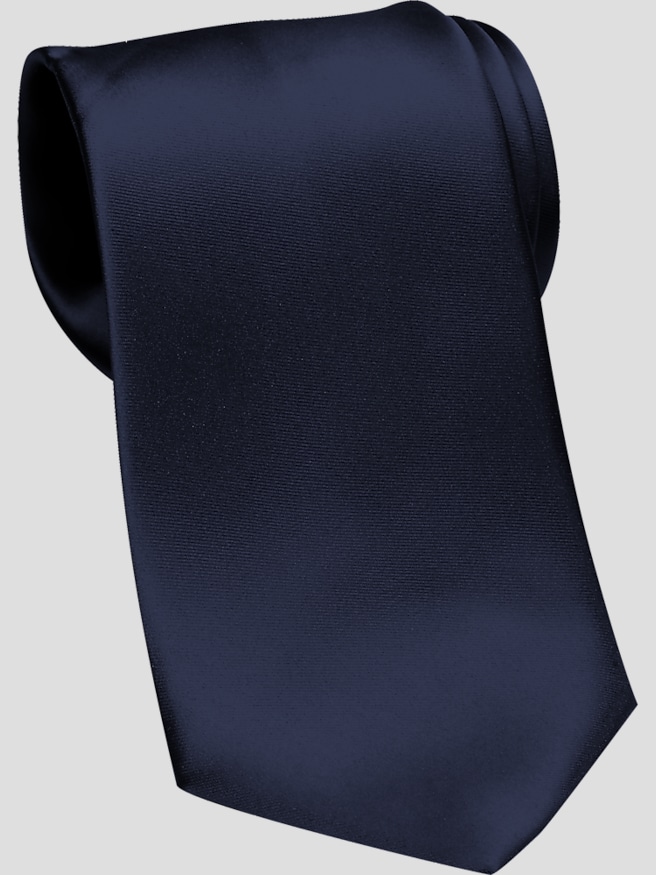
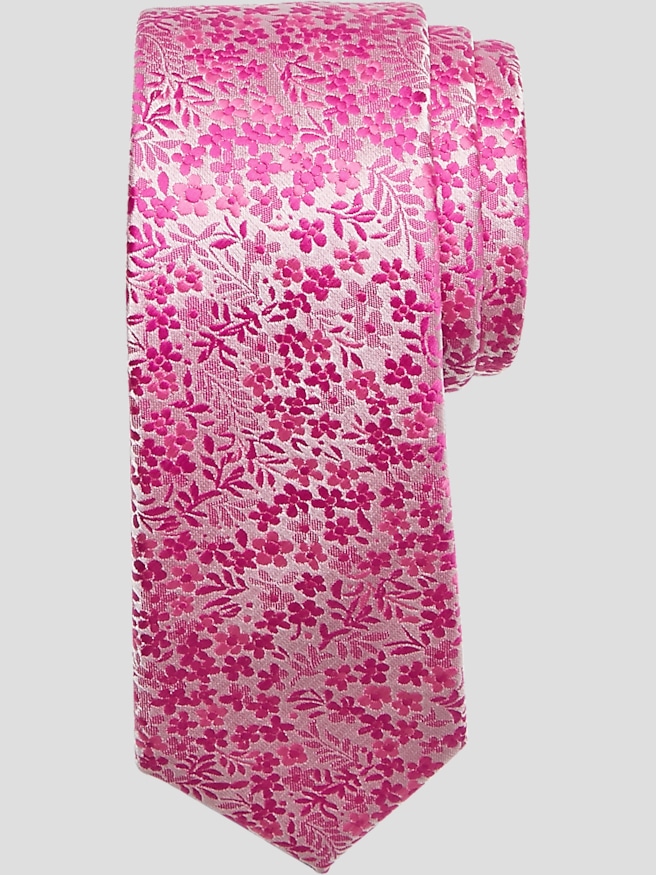
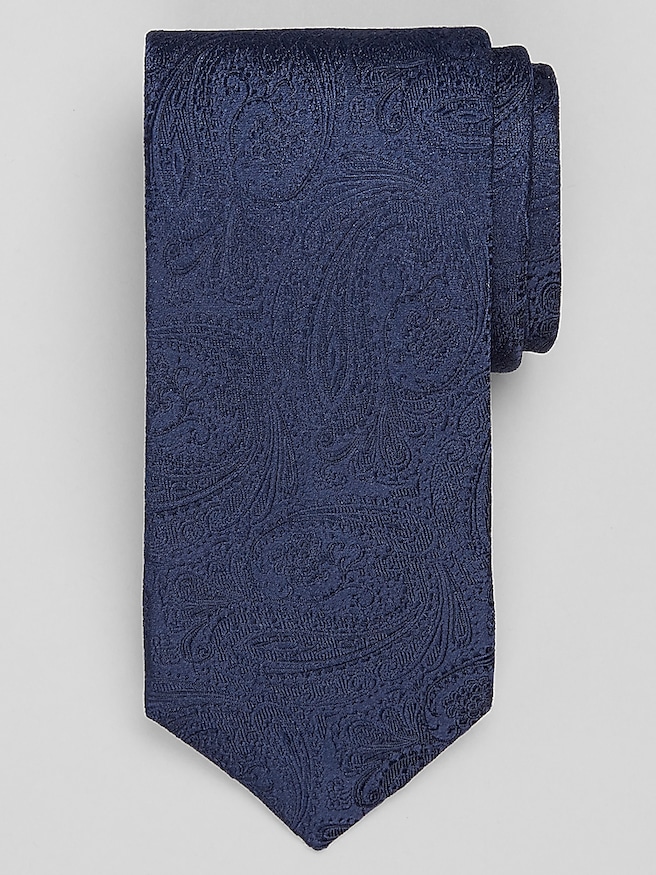
Trendy prom ties for men bring together rich jewel tones, textured fabrics, and expressive patterns that give a suit or tuxedo a distinctive finishing touch. A burgundy tie against a charcoal suit creates depth without overwhelming the outfit, while emerald, plum, and deep blue can add color to a black or navy jacket. Softer shades offer another direction: dusty pink, pale blue, and champagne can feel polished against a crisp white shirt, especially when the rest of the outfit stays simple. The effect depends as much on the fabric’s surface as on its color. A smooth, lustrous tie catches the light in formal portraits, while a matte or subtly textured finish creates a quieter contrast with a sharply tailored jacket. Patterns range from small dots and geometric repeats to flowing paisley and woven floral designs, each bringing a different amount of visual energy. A small repeating motif can look nearly solid from across the dance floor but reveal its detail in close-up photographs. Larger patterns make the tie more of a focal point and generally look most balanced with a solid shirt. With Men's Fancy Ties as the focal point, restrained accessories give decorative patterns and distinctive textures room to stand out. Coordinating with a date or a group does not require an exact color match; a shared accent shade can connect the outfits while leaving each person’s style intact. A patterned tie with a small touch of green, for example, can complement a green outfit without making every accessory identical. Checking colors together in natural light helps distinguish a true navy from a brighter blue or a warm burgundy from a cooler wine tone. The strongest prom looks usually have one clear point of emphasis, whether that is a bold tie, an unusual jacket texture, or a vivid pocket square, rather than several details competing for attention.
Material, proportions, and construction shape how a prom tie looks and feels through photographs, dinner, and dancing. Silk is valued for its drape and depth of color, with finishes that range from smooth satin to richly textured woven designs. Jacquard fabric creates its pattern through the weave, giving motifs dimension rather than relying only on a printed surface. Polyester and blended fabrics can also deliver a clean finish and defined pattern; care requirements depend on the fabric and construction, so the label matters more than assumptions about the fiber alone. A tie should feel substantial enough to hold its shape without creating an oversized knot beneath the collar. Even stitching, neatly finished edges, and a lining that supports a smooth drape are useful signs of thoughtful construction. Width is another important part of the overall balance. A narrower tie often complements a close-cut suit and modest lapels, while a wider tie can sit more comfortably alongside broader lapels and a fuller jacket silhouette. Neither choice needs to be extreme to look modern. On a conventional outfit with a visible waistband, the front tip typically finishes near the belt buckle or waistband rather than noticeably above or below it. Taller wearers and anyone choosing a larger knot may need additional tie length to reach that point comfortably. A compact four-in-hand knot suits many narrower collars and creates a slightly asymmetrical shape; a half-Windsor offers a fuller, more balanced appearance when the collar has enough space. Thick fabric naturally produces a larger knot, so texture and knot choice work together. Bow ties provide a distinct alternative for a tuxedo or a deliberately dressy suit, although the event’s dress code should lead the choice. Traditional black-tie styling favors a black bow tie with a tuxedo. Whether the tie is long or bow-shaped, a comfortable collar fit helps it stay settled without feeling restrictive through an evening of movement.
A well-chosen prom tie can remain useful long after the last photograph, particularly when its color and pattern work with more than one outfit. A deep blue textured tie can move easily from a school celebration to a graduation ceremony, while a restrained geometric pattern may feel appropriate for a wedding or an early job interview. A dramatic floral or luminous jewel tone has a different role: it can become the memorable detail reserved for occasions that invite more personality. For a gift, the most useful clues are the recipient’s suit color, shirt collar, usual style, and comfort with bold accessories. Someone who prefers understated clothing may appreciate a rich solid with subtle texture more than a large statement print, while an expressive dresser may enjoy a pattern that becomes the centerpiece of the outfit. Presentation matters, but so does keeping the fabric in good condition before and after the event. Hanging a tie without a tight fold or storing it loosely rolled helps limit creases; leaving it knotted between wears can set wrinkles and strain the fabric. After wearing, gently reversing the tying steps is easier on the material than pulling the narrow end through a tightened knot. Spills deserve prompt, careful attention: blotting is gentler than rubbing, and cleaning should follow the care label, especially for silk or structured neckwear. Direct heat can mark delicate surfaces, and textured weaves may flatten under an iron, making fabric-appropriate care important. Before heading out, the finishing details are simple but noticeable: a centered knot, a straight front blade, and a narrow end secured out of sight. A tie bar, when worn, should attach the tie to the shirt and remain narrower than the tie itself. Those small touches help an expressive accessory look intentional, allowing color, texture, and pattern to carry the personality of the outfit without distracting from the person wearing it.