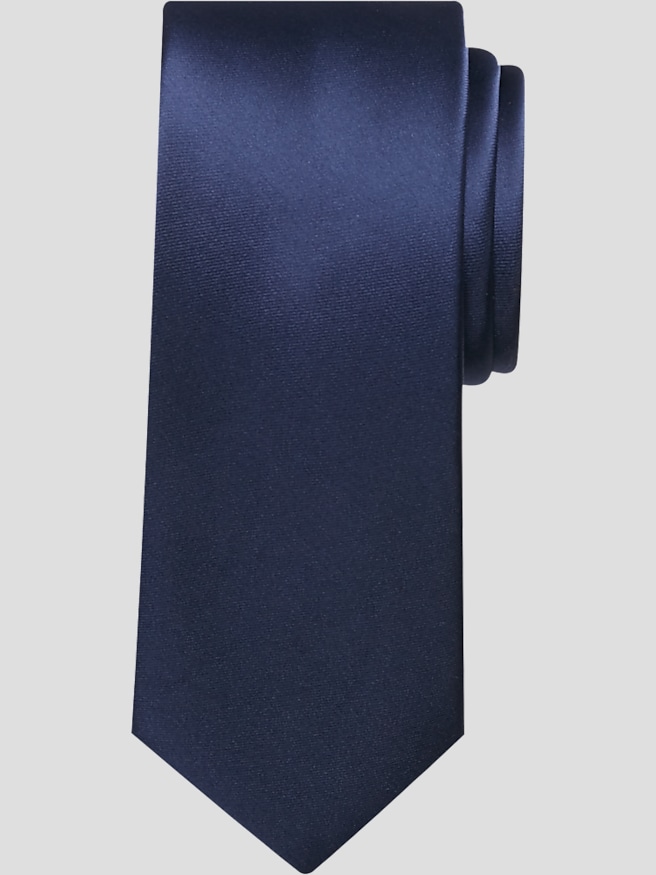
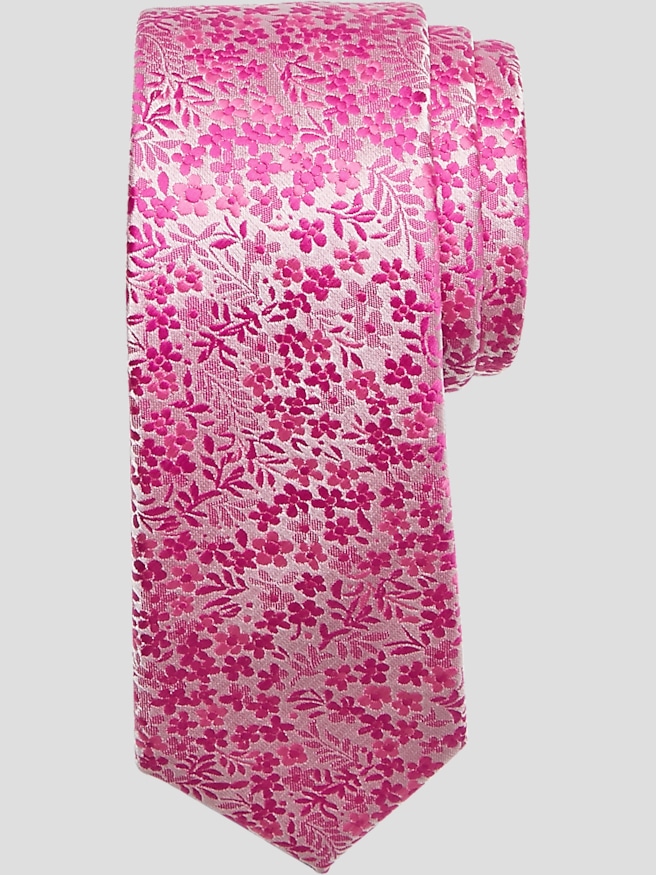
Burgundy, rich brown, forest green, and textured navy are versatile tie colors for navy suits, with the strongest pairing depending on the shirt, the fabric, and the occasion. Burgundy creates a defined contrast against dark blue without looking overly bright, making it a dependable choice for interviews, business presentations, and wedding celebrations. Wine and oxblood shades have a similar richness, especially against a crisp white shirt. Brown ties bring a softer contrast, from warm chocolate against deep navy to lighter tan against a brighter blue suit. Forest green offers depth and distinction while remaining understated enough for many professional settings. A navy tie creates a tonal combination, particularly when its shade or weave is visibly different from the jacket. The understated character of Navy Silk Ties works especially well with a white shirt, where the shirt provides a clean boundary between the tie and suit. Light blue shirts create a gentler transition and pair naturally with burgundy, brown, and navy patterns. Pale pink can also complement navy tailoring, with deeper blue or wine-colored ties keeping the combination grounded. Patterns add another dimension: a small dot reads as restrained, a spaced geometric motif brings personality, and a stripe can introduce a second color without overwhelming the suit. Scale matters as much as color. A finely striped shirt generally looks more balanced with a larger, clearly separated tie pattern than with another tiny stripe of nearly the same size. With a patterned suit, a solid or subtly textured tie gives the eye a place to rest. With a solid navy suit and plain shirt, the tie has more room to become the focal point. These relationships make navy particularly adaptable, supporting a quiet office combination one day and a more expressive outfit for a reception or anniversary dinner another day, without requiring every accessory to match exactly. A pocket square that picks up a secondary shade can connect the outfit while retaining some visual separation.
Fabric gives ties for navy suits much of their character, even when the color remains the same. Smooth silk has a natural luster that can look polished under office lighting and at an evening reception, while silk twill adds diagonal texture and often forms a defined knot. Grenadine is an open, textured weave that gives a solid-colored tie visual depth without relying on a printed pattern. That texture is especially useful in navy-on-navy combinations, where a smooth tie in an almost identical shade might otherwise disappear against the jacket. Knitted ties have a more relaxed surface and often a squared end, making them a natural companion to less structured tailoring and business-casual settings where a tie still feels appropriate. Wool and wool-blend ties offer a matte, tactile finish that relates well to textured suit fabrics. Polyester and blended fabrics can provide resilience, though their feel, sheen, and care requirements vary with construction. The right choice is not simply the glossiest fabric; it is the one whose surface suits the jacket and the setting. Proportion makes an equally noticeable difference. A tie’s widest point generally looks balanced when it is close to the width of the jacket lapels. Around 3 to 3.25 inches is a common reference for many conventional lapels, rather than a rule for every suit or build. Narrower lapels usually call for a slimmer tie, while broader lapels can support more width. Length should allow the tied tip to reach approximately the waistband or belt buckle without leaving the narrow end hanging below it. Taller wearers or those who prefer larger knots may need additional length. A compact four-in-hand knot often complements a narrower collar opening, while a half-Windsor can fill a more open collar without excessive bulk. Fabric thickness affects that result: a substantial knit or wool tie creates more volume than a lightweight woven silk tie, even with the same knot. A gentle dimple below the knot adds definition without making the finished look feel stiff or overworked.
Everyday usefulness also depends on how a tie holds its shape and how easily it fits into an established wardrobe. A burgundy tie with a restrained pattern can move between a navy interview suit, a client-facing office outfit, and a daytime wedding with little adjustment beyond the shirt and accessories. A textured brown tie can make a sharply tailored navy suit feel more approachable for a dinner or networking event, while a dark navy tie with subtle surface interest keeps attention on the overall silhouette. For someone who wears a suit frequently, alternating ties gives each one time to relax between uses and reduces repeated stress on the same folds. Care starts with the fabric label, since silk, wool, and synthetic blends do not all respond to cleaning in the same way. Loosening a knot carefully and reversing the tying process helps protect the fabric; pulling the narrow end forcefully through a tight knot can distort the shape over time. Woven ties generally benefit from being stored untied on a smooth hanger or loosely rolled without sharp creases. Knitted ties are often better stored flat or gently rolled so their own weight does not stretch them. Direct heat, hard pressing, and vigorous rubbing can damage delicate surfaces or leave unwanted shine. A spill is best handled promptly by gently blotting rather than scrubbing, with further treatment guided by the care instructions or a cleaner experienced with neckwear. Smooth fabric, even stitching, and a tie that hangs straight are useful details to assess when considering long-term wear. Ties also make thoughtful gifts for graduates, partners, fathers, and colleagues whose wardrobes already include navy tailoring. A familiar shirt color, preferred tie width, and typical dress code provide better direction than novelty alone. For a recipient who favors understated clothing, a rich solid or small repeating pattern can feel personal while remaining easy to wear across meaningful occasions and ordinary workdays alike.