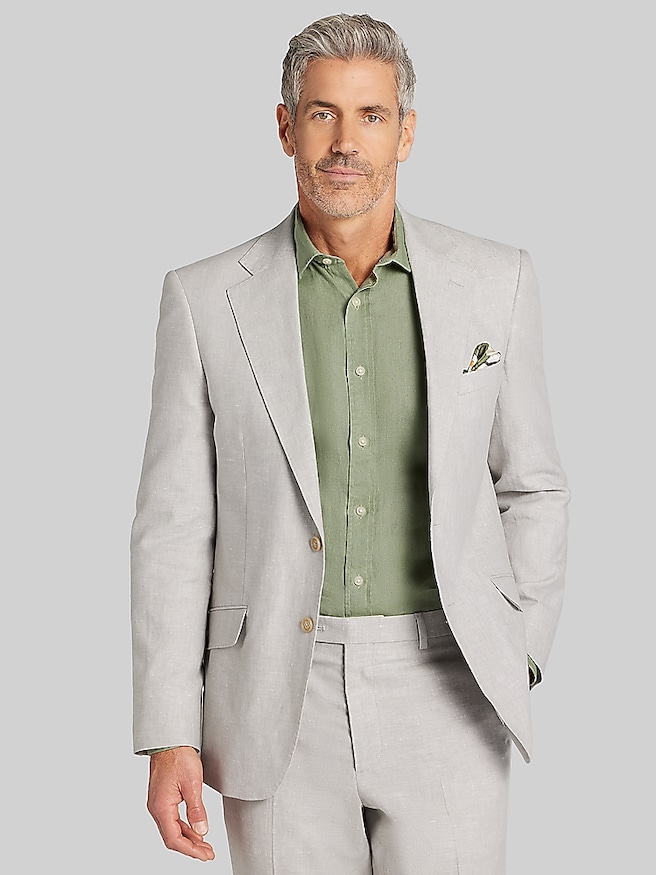
A three-piece wedding suit consists of a coordinated jacket, vest, and trousers, giving the outfit a more finished appearance than a jacket and trousers alone. The vest adds structure through the torso and keeps the shirt neatly framed, even when the jacket comes off at the reception. Three-piece suits for weddings work well for grooms, groomsmen, fathers of the couple, and guests whose invitations call for a suit. Their appeal lies in the balance of occasion and versatility: the complete ensemble feels deliberate at the ceremony, while the individual pieces can serve other purposes afterward. Navy, charcoal, and medium gray offer familiar foundations, with subtle differences in depth and texture helping each look feel distinct. A dark, smooth fabric creates a crisp impression in formal portraits, while a restrained check or softly textured weave brings more character to a less traditional celebration. The invitation and the couple’s preferences should set the level of formality. A three-piece suit is not automatically a substitute for a tuxedo when black tie is specified, regardless of how dark the fabric or how polished the accessories. For a wedding party, matching fabric and color establish cohesion, while small changes in ties, pocket squares, and boutonnieres can distinguish the groom without making the group look disconnected. A guest can take a quieter approach with a solid suit, a clean shirt, and accessories that complement rather than imitate the wedding party. Venue also matters: an ornate ballroom often suits a sharper, more restrained combination, while a gallery or restaurant celebration may leave room for a subtle pattern. The strongest choice looks appropriate from the ceremony aisle to the dinner table and allows the wearer to move comfortably through both. It should feel like a considered outfit, not simply an extra layer added for photographs.
Fabric and fit determine how well a three-piece suit carries that appearance through a full wedding day. Wool is a traditional choice because it drapes cleanly, has natural resilience, and can recover from minor wrinkles between wearings. Worsted wool generally produces a smoother surface, while more textured weaves give the suit greater visual depth. Wool blends can combine that familiar drape with other performance characteristics, although the result depends on the fiber mix and construction. Cotton offers a less formal character and tends to show creases more readily; linen has a distinctive texture and visible wrinkling that belongs to its relaxed appearance. Those qualities are aesthetic choices rather than flaws, but they should match the occasion. Lining, seams, and fabric recovery also deserve attention, particularly when the suit will be worn repeatedly. A durable suit needs more than substantial cloth: sound stitching, secure buttons, and enough room at stress points help it hold up to sitting, reaching, and dancing. Fit is especially important because the vest sits between two other garments. The jacket shoulders should follow the natural shoulder line without overhanging, and the lapels should lie flat rather than bowing away from the chest. With the jacket fastened, the front should remain smooth instead of pulling into pronounced creases around the button. The vest should sit close to the body without straining, cover the trouser waistband, and avoid leaving a strip of shirt visible above the trousers. Its neckline should frame the tie neatly beneath the jacket. Trousers need a comfortable waist and enough room through the seat and thighs to sit through the ceremony and dinner without tugging. The hem should meet the shoes cleanly, with the amount of break reflecting the desired silhouette. Trying on all three pieces with the intended shirt and shoes reveals proportions that separate fittings can miss. A few seated steps, a comfortable reach, and a walk across the room often say more about fit than standing still in front of a mirror.
Accessories bring a three-piece wedding suit together without needing to compete with the vest. A white dress shirt creates a clear, traditional contrast, while pale blue can soften the combination when the dress code allows. The collar should sit neatly under the jacket and leave enough room to fasten comfortably with a tie. Silk ties with a subtle texture or restrained pattern work well against solid fabric; when the suit itself has a visible pattern, quieter accessories help maintain balance. A pocket square can pick up a color from the tie without matching it exactly. Polished lace-up dress shoes provide a dependable finish, with black lending a more formal impression and darker brown working with many navy and gray combinations. Socks that relate to the trousers keep the line of the leg visually continuous when seated. Because the vest draws attention to the waist, bulky belt buckles can interrupt an otherwise clean silhouette; side-adjuster trousers or compatible suspenders are alternatives when the trouser construction permits. On a traditional single-breasted vest, the bottom button is commonly left undone, although the garment’s design should guide that choice. The jacket is generally unbuttoned when seated to reduce strain and keep the front from bunching. After the celebration, caring for all three pieces together helps preserve their coordinated appearance. Follow the care label, address spills promptly without aggressive rubbing, and use professional cleaning when needed rather than automatically after every wear. A broad, shaped hanger supports the jacket, while properly hung trousers and a neatly stored vest are less likely to develop stubborn creases. Let the fabric air before placing the suit in a breathable garment bag. Beyond weddings, the complete ensemble can suit other dressy celebrations, and Men's Homecoming Three-Piece Suits offers another occasion-focused perspective on the same coordinated silhouette. Thoughtful fit, restrained styling, and consistent care give a wedding suit a useful life well beyond the final photograph.