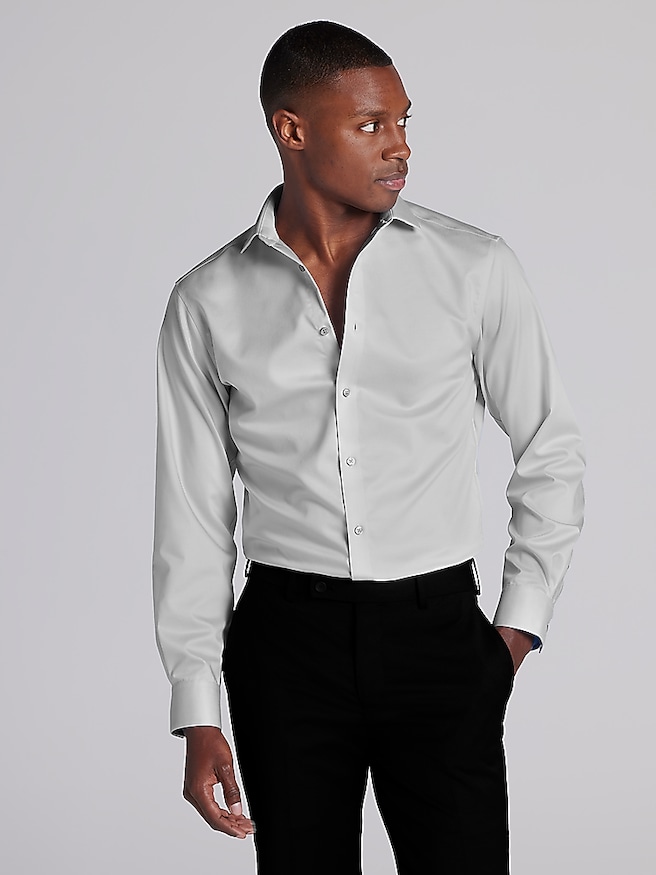
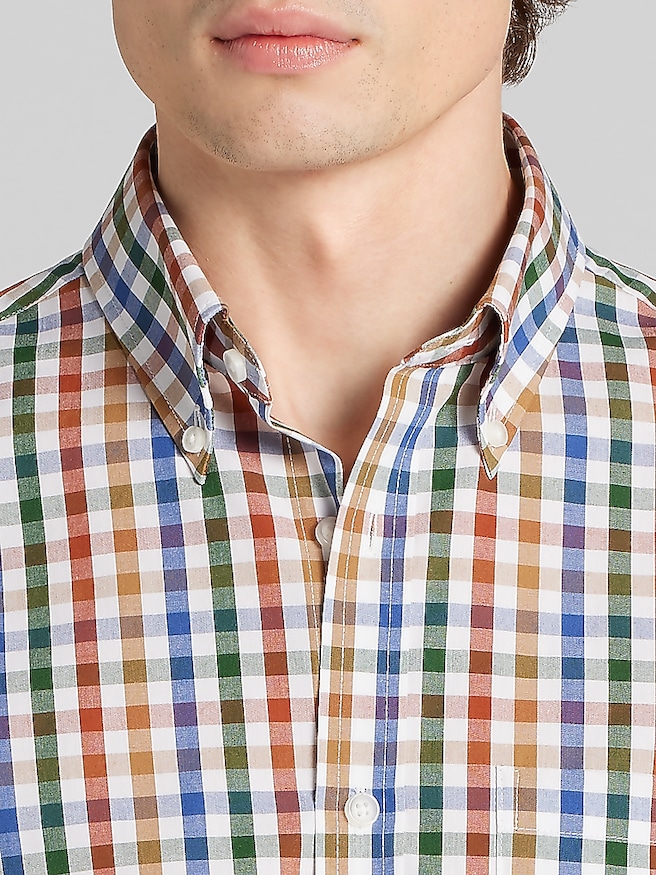
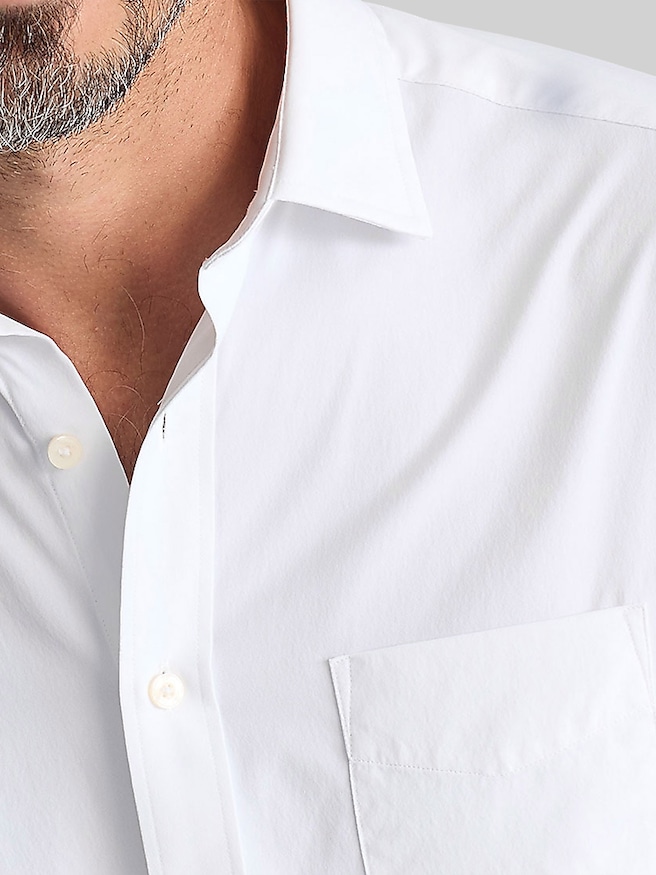
Tattersall check men’s shirts are defined by thin, evenly spaced lines that cross to create an open grid, typically with two alternating colors against a white, cream, or similarly light background. That arrangement gives the pattern its distinctive balance: more detail than a solid shirt, but enough open space to keep the overall look crisp and understated. Unlike gingham, which usually creates blocks of color through overlapping bands, tattersall is recognized for its fine intersecting lines. The pattern takes its name from an eighteenth-century London horse market, where checked horse blankets helped establish its association with equestrian life and country clothing. That heritage still comes through when a tattersall shirt sits beneath a textured sport coat, though the pattern works just as naturally with chinos in an office or dark jeans at a weekend gathering. Scale and contrast make a noticeable difference. A small check with soft blue and gray lines can look almost solid from across a room, while a larger grid in deeper shades brings the pattern forward. For an easy outfit, repeat one color from the check elsewhere: navy trousers beneath a shirt with blue lines, for example, or a brown belt alongside warm earth tones. Keeping nearby pieces mostly solid gives the grid room to stand out without making the outfit feel busy. A textured wool jacket, corduroy trousers, or a smooth knit sweater adds depth without requiring another strong pattern. During the cooler months, a shirt collar showing above a crewneck sweater offers just enough detail to make simple layers feel considered. Tattersall is particularly useful for settings between formal and casual, including relaxed offices, family dinners, and weekend lunches. It adds character without dominating an outfit, making it a practical choice for someone who likes familiar wardrobe staples but wants more visual interest than a plain button-front shirt.
Fabric and construction shape how a tattersall shirt feels throughout the day, so the check itself is only part of the choice. Cotton is a familiar shirting material because it is breathable, absorbent, and comfortable against the skin, although its weight and weave influence its feel as much as its fiber content. A smooth, lightweight cotton weave can sit neatly beneath a jacket, while a twill often has a slightly fuller hand and a subtle diagonal texture. Brushed cotton offers a soft surface that suits cooler weather and relaxed layering, but it generally looks less crisp than a smooth dress-shirt fabric. Cotton blends may add stretch, help a shirt dry more quickly, or reduce wrinkling, depending on the fibers and finishing treatments involved. Those benefits should come from the garment’s stated features rather than assumptions based on its appearance. The same applies to moisture management and easy-care performance: neither is guaranteed simply because a shirt has a tattersall pattern. Fit matters just as much when a day includes a commute, several hours at a desk, and dinner afterward. Shoulder seams should sit near the edge of the shoulders, and the front should close smoothly without pulling into small gaps between buttons. There should be enough room across the upper back to reach forward comfortably, with sleeves that allow the elbows to bend without strain. A closer cut creates a clean outline under knitwear, while a roomier cut can feel more comfortable for someone who prefers extra movement or wears an undershirt. Collar shape also changes the impression. A button-down collar keeps its points controlled in an open-neck outfit, while a spread or point collar can create a more dressed-up appearance beneath a jacket. For wear with a tie, the fastened collar should feel secure without pressing into the neck. Shirt length deserves attention as well: a longer, curved hem generally stays tucked more reliably, while an untucked shirt should end at a balanced point around the hips rather than hanging far down the thighs.
A well-chosen tattersall shirt earns its place through repeated wear, and both finishing details and care habits influence how well it holds up. Even stitching, securely attached buttons, and neatly finished seams are useful signs to examine. Pattern alignment across prominent areas can contribute to a polished appearance, although matching checks alone does not establish overall quality. Cuffs and collars receive frequent contact with skin, outer layers, and work surfaces, so they benefit from prompt attention when marks appear. Follow the garment’s care label for washing, drying, and ironing, especially when the fabric contains wool, stretch fibers, or a special finish. If machine washing is permitted, separating pale backgrounds from darker clothing helps reduce the risk of color transfer. Treating a collar mark with a fabric-appropriate product before washing is often more effective than repeatedly exposing the whole shirt to a harsher cycle. Excessive dryer heat can encourage shrinkage or stress some fibers; using the recommended setting and removing the shirt promptly helps preserve its shape. Smooth the placket, collar, and cuffs before hanging, and iron only at a temperature suited to the fabric. For everyday use, the most useful version of the pattern is often the one that works with trousers and layers already in the closet. Someone who wears mostly navy and charcoal may find cool-toned checks especially adaptable, while olive, tan, and brown clothing pairs naturally with warmer lines on a cream ground. For a broader comparison of check scales and everyday layering options, Mens Long Sleeve Check Shirts offers a related category to explore. A tattersall shirt can also make a thoughtful gift for a father, partner, brother, or friend who regularly wears collared shirts. Matching the recipient’s usual fit, preferred fabric feel, and habit of wearing shirts tucked or untucked matters more than choosing the boldest color combination. With those details considered, this traditional check can move comfortably between a workday jacket, a favorite sweater, and an uncomplicated weekend outfit.