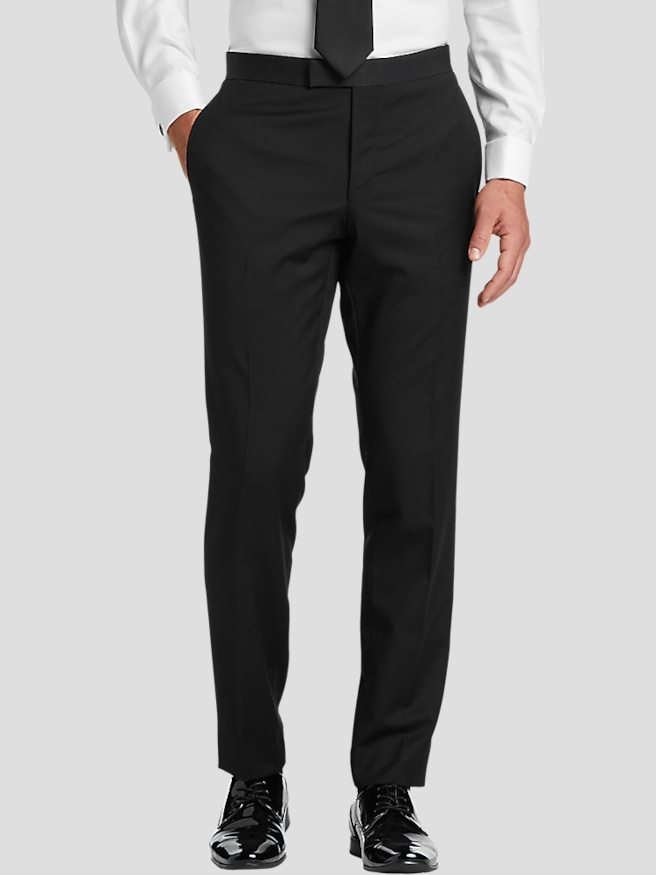
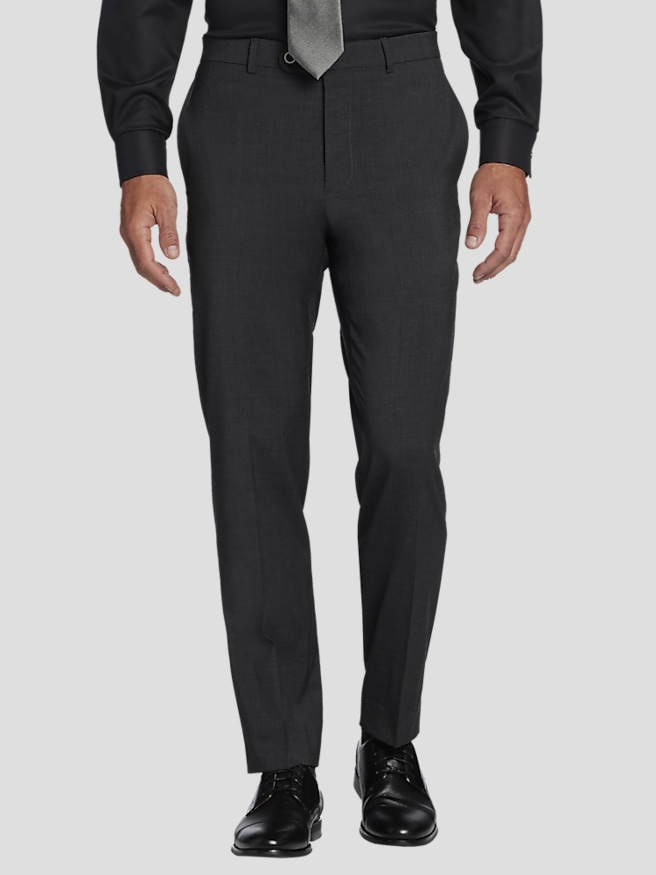
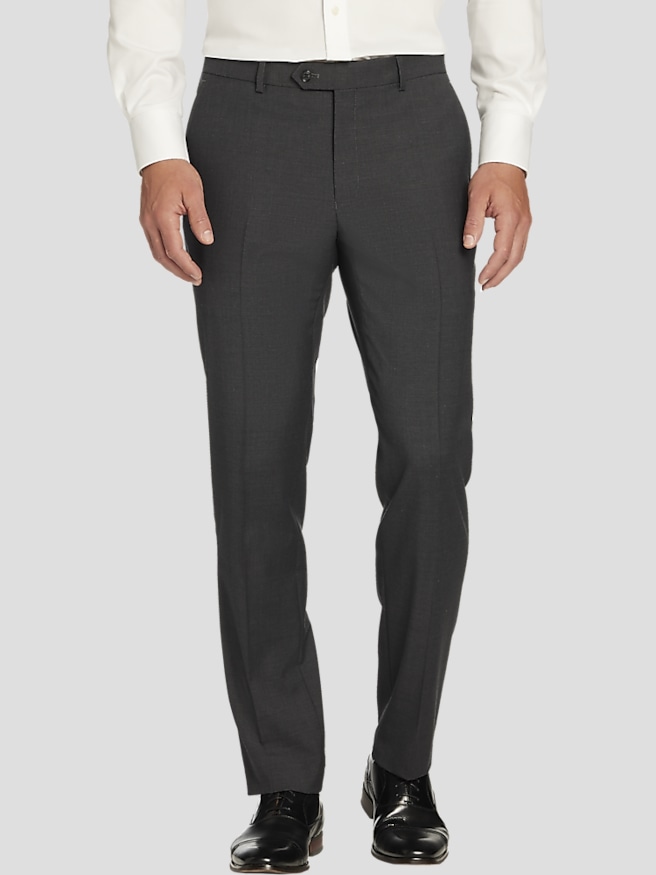
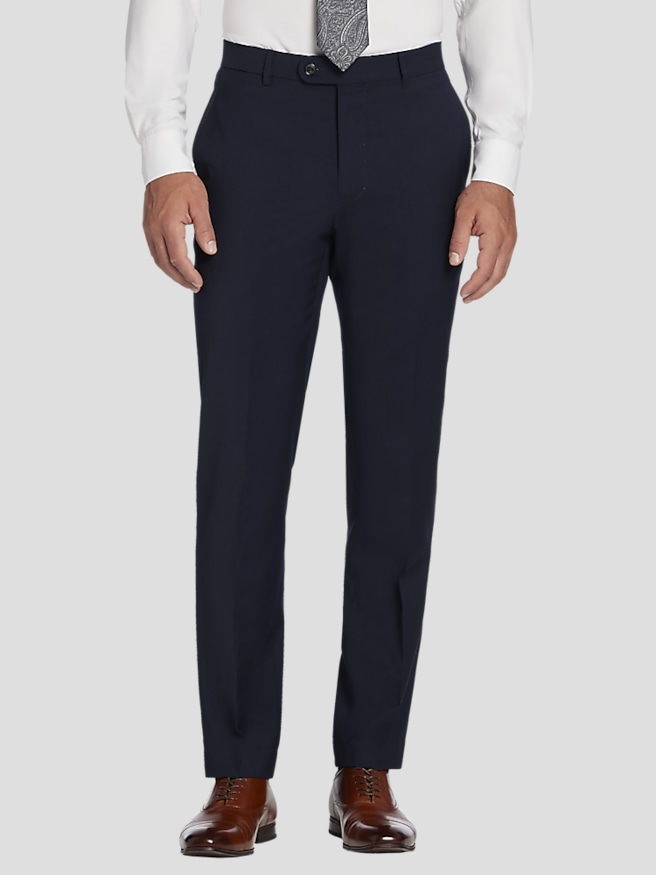
Tan wool trousers bring a softer neutral to tailored dressing, with shades that can run from pale sand and muted beige to richer camel and golden brown. That range makes them easy to coordinate with familiar wardrobe staples without looking as stark as very light dress pants. A navy blazer, white oxford shirt, and dark brown leather shoes create a dependable combination for an office presentation, while a fine-gauge knit polo and suede loafers make the same color feel more relaxed at a dinner reservation. The appeal is partly visual and partly structural: wool can drape cleanly through the leg, hold a pressed crease, and recover from light wrinkling with time between wears. The exact character depends on the cloth. Worsted wool, made with fibers combed into a smooth yarn, often produces a refined surface suited to dress trousers. Wool gabardine has a tightly woven twill structure with a subtle diagonal rib, giving the fabric a crisp appearance and substantial feel. More textured wool cloth creates a softer impression that pairs naturally with knitwear and less structured jackets. Pure wool and wool blends each have a place; added fibers may contribute stretch, strength, or easier maintenance, but those qualities depend on the full composition and construction rather than the word “blend” alone. A small amount of elastane can add flexibility, while lining through part of the leg may help the trousers move smoothly over the body. The fabric label is especially useful when comparing tan wool trousers with Winter Wool Pants, since color alone does not indicate weight or construction. For everyday business dressing, dinners, graduation ceremonies, or wedding guest attire where separates fit the dress code, tan offers polish without requiring a matching jacket. It is a useful foundation for someone building a tailored wardrobe and an equally practical addition for someone who already wears darker dress pants regularly.
Fit determines whether tan wool pants look comfortably tailored or simply too tight or too loose. A well-positioned waistband should sit securely at the intended rise without needing a belt pulled hard enough to gather the fabric. The front should lie smoothly, the pockets should stay close to the hips, and the seat should allow sitting without pulling across the seams. Horizontal tension lines near the upper thigh or pockets that flare outward can signal that more room is needed. Excess fabric collapsing beneath the seat can point to a shape mismatch rather than a waist-size problem. Slim fits generally narrow through the thigh and lower leg, while straight and more relaxed cuts provide additional room and a less tapered outline. Those labels are useful starting points, but the actual measurements and the way the trousers hang matter more. Flat-front styling creates a clean, uninterrupted look; pleats add shaping and can provide room through the upper leg when properly fitted. Neither detail belongs to only one body type or occasion. Rise also changes the overall proportion: a higher waistband can create a longer leg line and support a tucked-in shirt, while a lower rise places the waistband closer to the hips. At the hem, little or no break gives a precise finish, and a slight break allows the fabric to rest lightly on the shoe. Bringing the shoes intended for regular wear to a fitting helps establish the right length. Cuffs add visual weight at the bottom of the leg, while plain hems keep the finish quieter. For a day that includes commuting, desk work, and an evening event, comfort should hold up while walking, climbing stairs, and sitting—not just while standing in front of a mirror. Alterations can refine the waist, hem, and sometimes the leg shape, though the amount of usable seam allowance limits what is possible. Starting with a good fit through the hips and seat usually gives tailoring a stronger foundation.
The most useful shade of tan is one that works with the shirts, jackets, and shoes already worn often. A subdued beige creates gentle contrast with charcoal knitwear, a light blue shirt, or an olive sport coat. A deeper camel tone has more presence and can anchor cream, navy, and rich brown combinations. Keeping some distinction between the trouser color and the jacket helps separates look intentional rather than like an almost-matching suit. Smooth wool dress pants usually sit comfortably alongside polished leather shoes and a crisp shirt, while a more textured pair can support suede footwear and an open collar. Tan wool trousers are not a substitute for formal evening attire when a strict dress code calls for it, but they cover a broad stretch of settings between casual pants and a full suit. They can also make a thoughtful gift for a graduate beginning an office role or someone whose calendar includes frequent dinners and family celebrations, provided the size, preferred rise, and fit are known. Long-term appearance depends on both construction and care. Secure stitching, neatly finished seams, and reinforced areas around pockets and closures are useful details to examine. A finer-feeling wool is not automatically more durable; cloth weight, weave, yarn, and the strain placed on the garment all contribute to wear. Following the sewn-in care label is essential, because washable blends and dry-clean-only wool require distinct treatment. After wearing, empty the pockets and hang the trousers neatly so folds can relax. A soft garment brush can lift surface dust, and prompt attention to a spill helps prevent it from settling into the fibers. Blot rather than rub, and use professional cleaning when the label or the stain calls for it. Pressing with the appropriate setting and a protective cloth helps reduce the risk of shine. Rotating between pairs, avoiding overfilled pockets, and storing only clean, thoroughly dry trousers help preserve the shape and finish that make wool worth wearing.