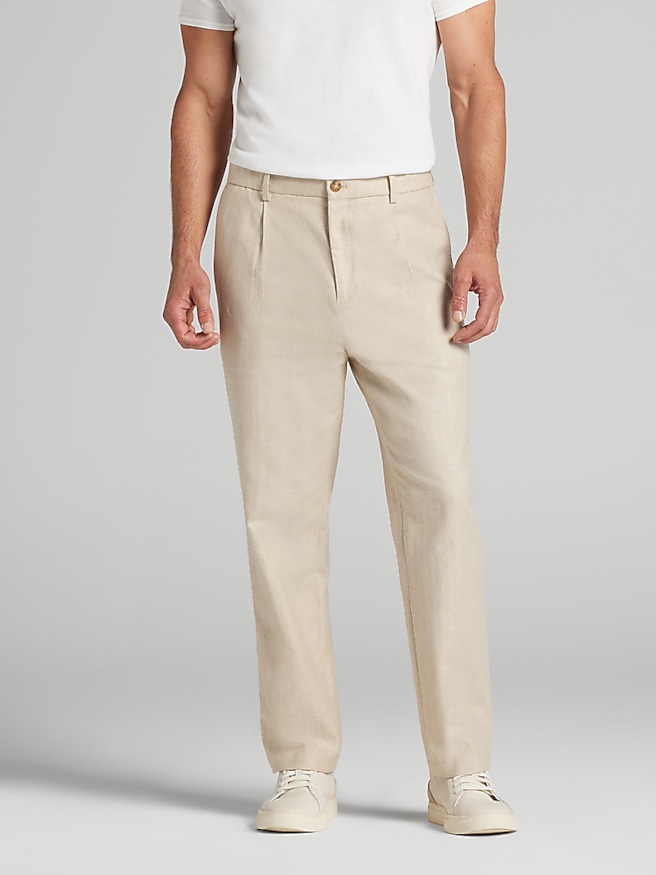
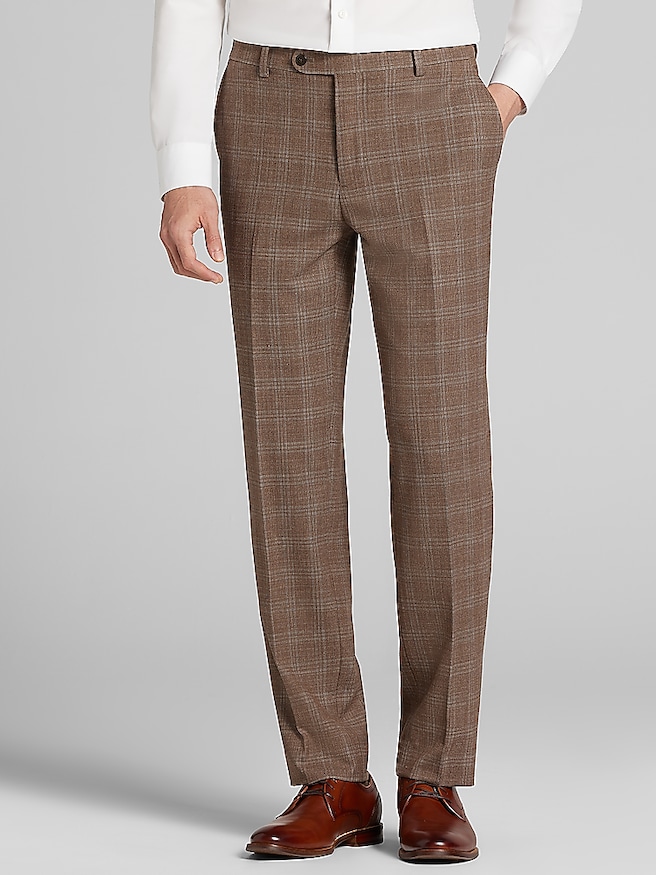
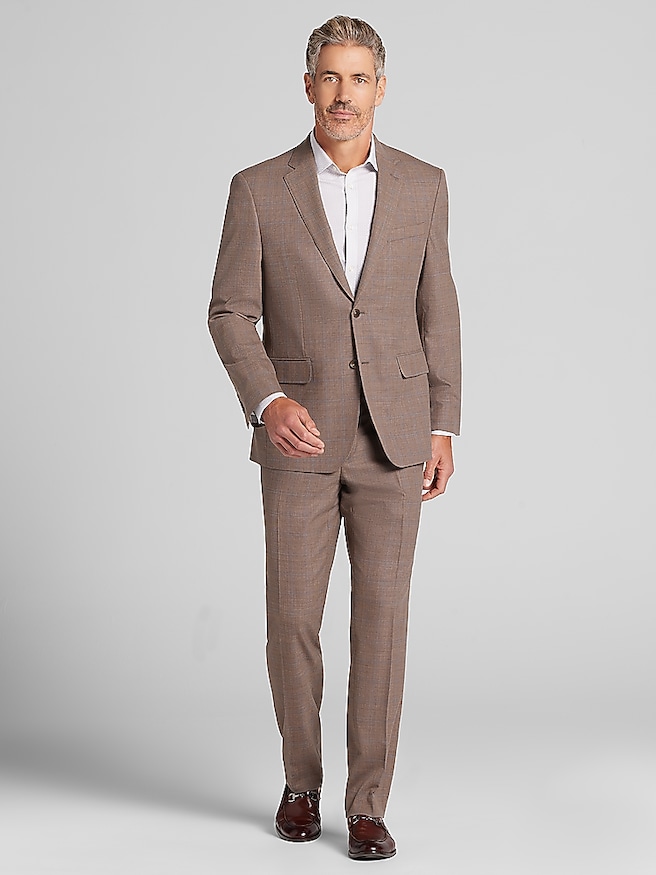
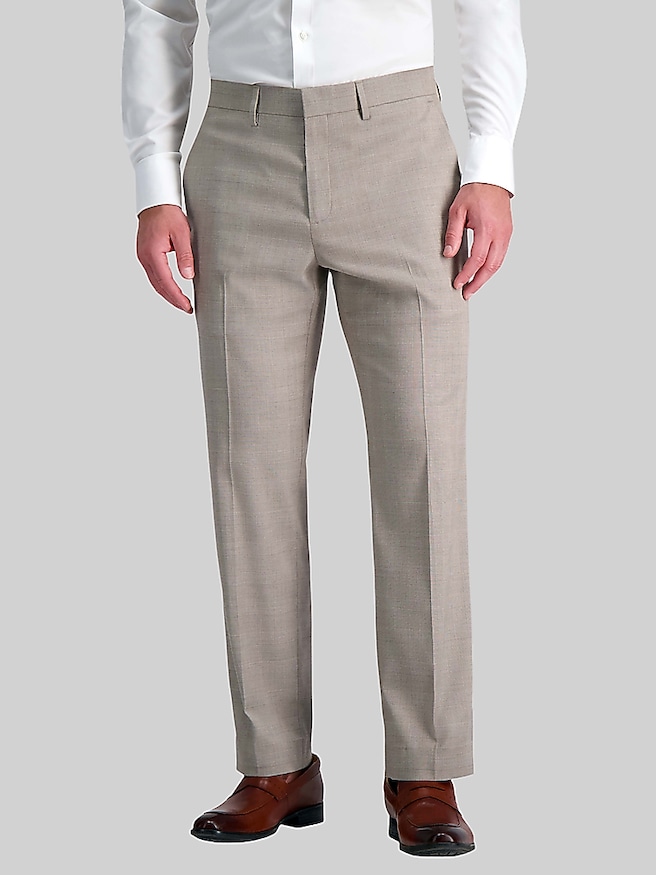
Tan plaid pants bring pattern into a wardrobe without demanding a bold color palette. Their appeal comes from the balance between a familiar neutral base and intersecting lines that give the fabric depth. A fine, low-contrast check can look almost solid from across a room, revealing its detail only up close, while a larger windowpane creates a more noticeable pattern. Shades of tan also vary: some lean toward sandy beige, others have a golden cast, and some sit closer to muted taupe. Those undertones influence how easily the pants work with the shirts, jackets, and shoes already in a closet. A white Oxford shirt and dark brown loafers create a clean combination for an office with a business-casual dress code; a navy knit polo gives the same pattern a more relaxed feel for dinner. With plaid, the spacing and color of the lines matter as much as the background. A subtle blue line can connect naturally with a navy jacket, while charcoal checks look grounded beside a gray sweater. Keeping adjacent pieces mostly solid lets the pattern remain visible without making the outfit feel busy. Texture can add interest instead of another print: the grain of a leather belt, the soft surface of suede shoes, or the weave of an unstructured sport coat provides contrast without competing with the plaid. For a client lunch, family celebration, or an evening at a restaurant, tan plaid pants offer a useful middle ground between plain chinos and more formal dress trousers. The best match depends on the setting, since a crisp crease and tailored construction read dressier than a casual waistband and softly washed fabric. Even footwear changes the impression, with polished leather lending definition and understated sneakers keeping a casual outfit approachable. That flexibility makes the pattern especially useful for someone who wants more character in everyday dressing without building an outfit around a bright statement piece.
Fabric and fit determine how tan plaid pants feel through a full day, not just how they look on a hanger. Wool fabrics often have a smooth drape and can hold a crease well, making them a natural choice for tailored trousers. Cotton tends to offer a more familiar, substantial hand, with a relaxed character that works well in less formal settings. Blended fabrics may combine those qualities with fibers chosen for resilience, shape retention, or stretch. A small amount of stretch can make sitting, walking, and bending more comfortable, although the overall cut still needs enough room to move freely. Fabric weight, weave, and finishing all affect the result, so fiber content alone does not tell the whole story. A tightly woven cloth may feel crisp and structured, while a softer construction can fall more fluidly through the leg. Plaid makes those differences particularly noticeable because its lines reveal pulling, twisting, and excess fabric. The waistband should sit securely without digging in, pockets should lie reasonably flat, and the seat should allow comfortable movement without pronounced tension lines. Slim fits tend to follow the leg more closely, while straight fits leave a more consistent line from thigh to hem. Neither needs to look tight or oversized to feel intentional. Rise matters, too: a waistband that sits comfortably in the intended position helps a tucked shirt stay neat and keeps the proportions balanced with a jacket. At the hem, a clean finish can preserve the clarity of the check, whether the pants meet the shoe with little break or a modest fold. Excess length can bunch the pattern around the ankle and distract from an otherwise sharp fit. Thoughtful tailoring can refine the waist or length, but the underlying cut should already suit the wearer. For someone moving between a desk, meetings, and dinner plans, comfortable fit and dependable drape often matter more than a particular fit label.
Long-term wear depends on choosing a construction that suits the intended use and following the care label rather than treating every plaid fabric alike. Pants worn regularly for commuting or office work benefit from secure seams, well-finished pocket openings, and a waistband that maintains its shape. Areas such as the seat, inner thighs, and pocket edges naturally experience friction, so an appropriate fit helps reduce unnecessary strain. Care requirements can vary considerably between washable cotton blends and tailored wool fabrics. Some pants can be machine washed according to their instructions; others require professional cleaning. Excess heat can affect certain fibers, finishes, and stretch components, so drying and pressing directions deserve the same attention as washing instructions. Prompt attention to spots, gentle handling, and properly supported storage help preserve the fabric’s appearance. Hanging trousers neatly can limit unwanted folds, and aligning an existing crease keeps the plaid from looking skewed. A fabric brush may be suitable for removing surface lint from some wool trousers, while a lint roller can help with everyday debris when appropriate for the material. These small habits support a polished appearance without making the pants feel too precious for regular use. Tan plaid pants can also make a thoughtful gift for someone who already wears tailored separates, especially when the choice reflects a familiar fit and a color palette they enjoy. Waist size, inseam, and care preferences are more useful clues than guessing from appearance alone. Someone drawn to deeper earth tones may also appreciate the richer contrast of Brown Plaid Pants, while tan offers a lighter neutral foundation for white, navy, olive, and chocolate shades. A pair that works with familiar shirts and shoes is more likely to become part of an ordinary routine, from a presentation at work to a birthday dinner. The lasting appeal lies in that combination of recognizable color, considered pattern, and a fit that feels easy to wear.