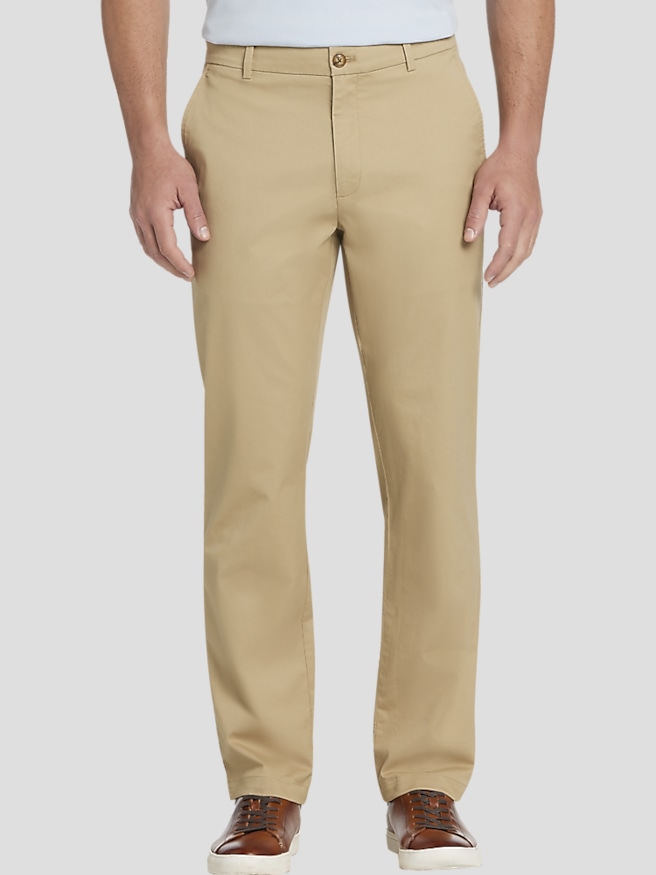
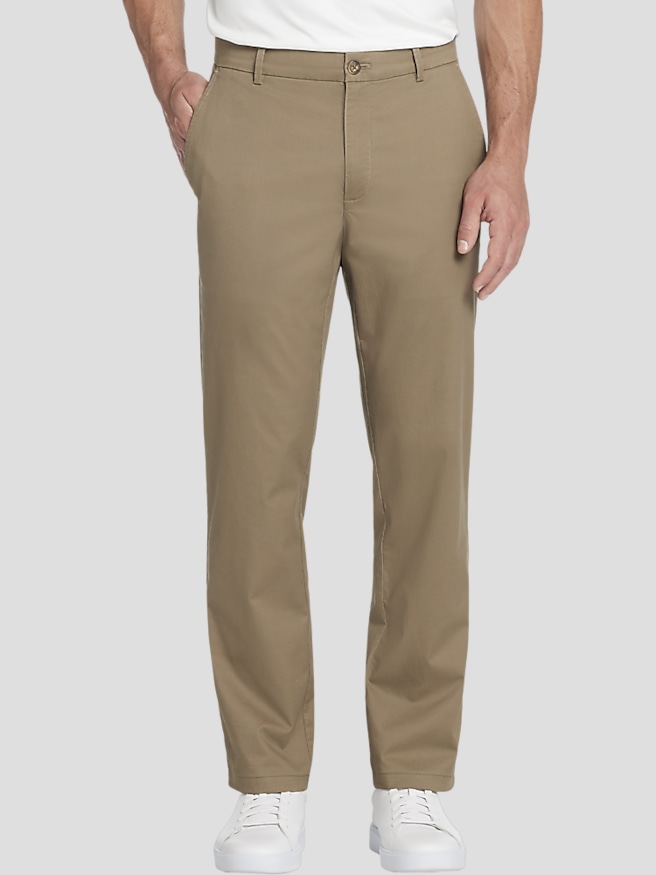
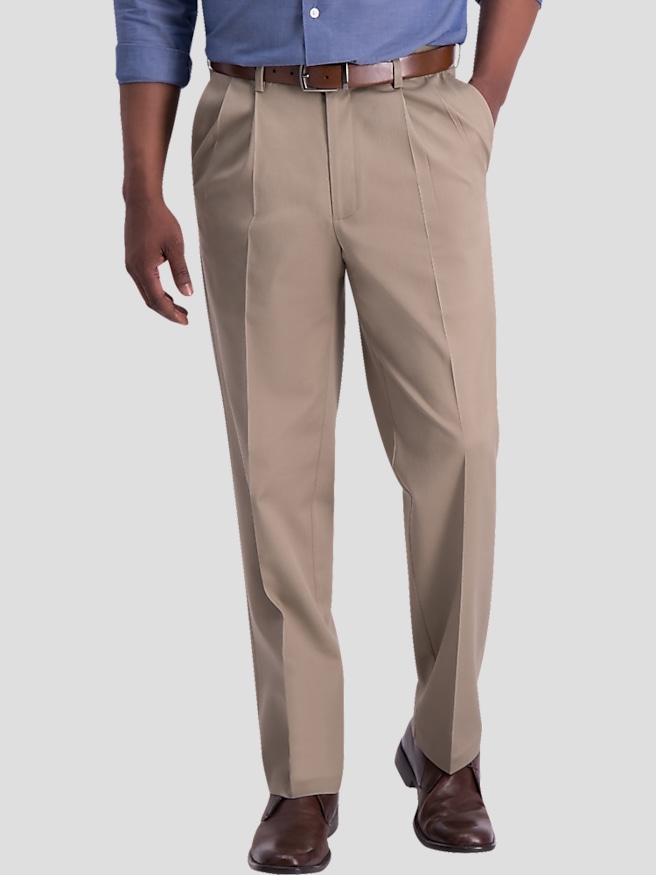
Tan color pants are a versatile neutral in a men’s wardrobe, with styles ranging from casual chinos and five-pocket pants to tailored trousers for business and social occasions. The color sits between pale beige and deeper brown, though individual shades may lean golden, sandy, or slightly gray. That subtle variation gives tan pants more range than a single color name might suggest: a light sand shade creates a clean contrast with a navy shirt, while a richer tan complements an olive knit or a brown sport coat. Tan also works with white, charcoal, burgundy, and denim blue, making it easy to build outfits around shirts and shoes already in a closet. For an office with a business-casual dress code, tan trousers paired with a tucked-in button-down, leather belt, and loafers strike a comfortable balance between relaxed and polished. Chinos with a polo and simple sneakers feel more at home at a casual dinner, a museum visit, or a weekend gathering. The distinction comes from more than color. A pressed crease, discreet pockets, and a smooth fabric surface tend to look dressier than visible stitching, patch pockets, or a garment-washed finish. Tan pants can complement a navy blazer at a daytime celebration, but the event’s dress code still determines whether separates are appropriate; they are not a substitute for formal attire when a suit or tuxedo is required. The terms tan and khaki often overlap in everyday conversation, although tan describes a color and khaki can refer to either a shade or a style of cotton pants. Looking at the fabric, cut, and construction gives a clearer picture of how a pair will wear. For someone whose schedule moves from a desk to dinner with friends, a restrained shade and uncomplicated silhouette offer flexibility without making every outfit look the same. A textured shirt, a fine-gauge sweater, or a softly structured jacket can each give the same neutral foundation a distinct character.
Fabric has a substantial influence on the appearance, feel, and upkeep of tan pants. Cotton twill has a diagonal weave that gives chinos their familiar texture and structure, with a surface that generally feels less formal than fine dress-trouser fabric. For a cotton-focused option, Tan Cotton Pants bring that familiar character to outfits built around polos, button-down shirts, and casual jackets. The weight and finish of the cloth matter as much as its fiber content: a substantial twill can hold a more defined shape, while a softer, washed fabric may have a relaxed appearance from the start. Cotton blended with a small amount of stretch fiber can provide additional give when sitting, bending, or climbing stairs, though comfort still depends on the cut rather than stretch alone. Wool and wool-blend trousers often have a smoother drape and a more tailored look, making them a natural match for dress shirts and sport coats. Linen and linen blends introduce visible texture and characteristic creasing for outfits where a less structured finish is welcome. Blends containing synthetic fibers may offer easier maintenance or improved resistance to wrinkling, depending on their construction and finish. No single material delivers every benefit, and fabric performance should be judged alongside the care label and intended use. For washable pants, following the recommended water temperature, wash cycle, and drying method helps protect both color and fit. Prompt attention to stains is especially useful on lighter tan shades, where a splash of coffee or a mark near the hem can stand out. Testing a treatment on an inconspicuous area helps reduce the risk of discoloration. Pants labeled for professional cleaning need that care rather than an improvised wash. Using the appropriate iron setting, pressing on the reverse side when recommended, and hanging trousers neatly can help maintain their finish. Durability also depends on details such as secure pocket stitching, reinforced stress points, and a reliable waistband closure. Repeated abrasion at pocket edges and cuffs can affect even sturdy cloth, so avoiding overloaded pockets and hems that drag contributes to a longer useful life.
Fit brings those fabric and styling choices together. Slim tan pants generally sit closer through the seat and thigh and may narrow toward the ankle, creating a trim outline beneath an untucked shirt or fitted jacket. Straight-leg cuts maintain a more consistent line from the knee downward, while relaxed fits provide additional room for someone who prefers ease through the hips and thighs. These labels are useful starting points, not guarantees of identical proportions. Rise, waistband shape, and thigh room all affect how pants feel on an individual body. A comfortable waistband should remain secure without digging in, and the front pockets should lie reasonably flat rather than pull open. Sitting down should not create excessive strain across the lap or seat. Fabric bunching beneath the seat, persistent pulling across the thighs, or a waistband that gaps noticeably can indicate that another cut would be a better match. Length deserves the same attention. A slight break over loafers or lace-up shoes creates a traditional finish, while a cleaner hem with little or no break gives a sharper outline; excess fabric pooling over footwear can make otherwise neat trousers look unfinished. Tailoring may refine the hem or waist, but starting with appropriate room through the seat and thighs usually produces a better result than relying on alterations to reshape the entire pair. For travel, presentations, or long dinners, comfort while seated matters just as much as appearance while standing. Tan pants can also be a thoughtful gift for a dad, partner, graduate, or colleague beginning a new role, especially when the recipient’s measurements and preferred fit are known. A familiar cut in a neutral shade is easier to incorporate into an established wardrobe than an unfamiliar silhouette. Whether worn for regular office days or dressed up for a family celebration, well-fitting tan pants offer an understated foundation that lets the rest of the outfit set the tone.