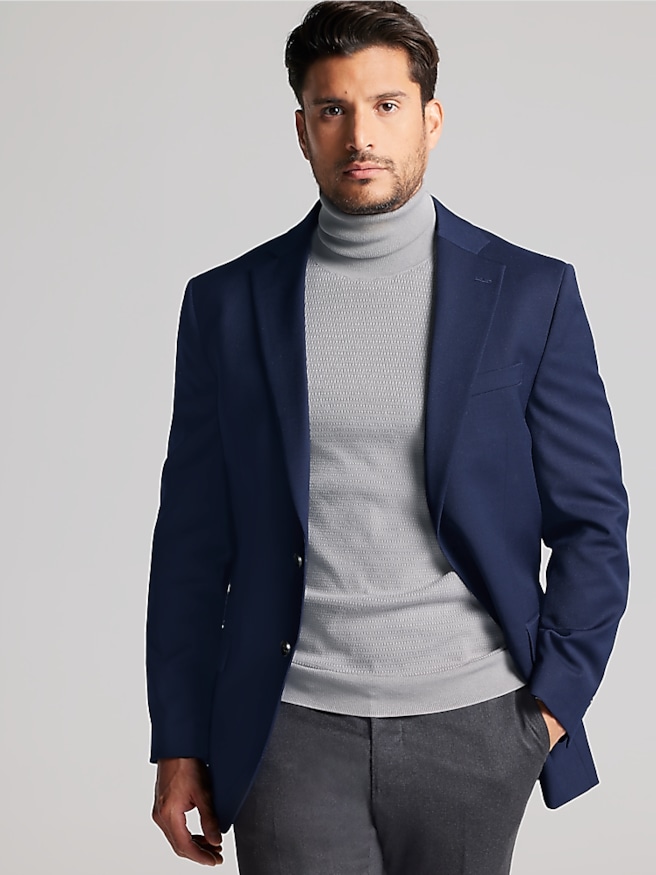
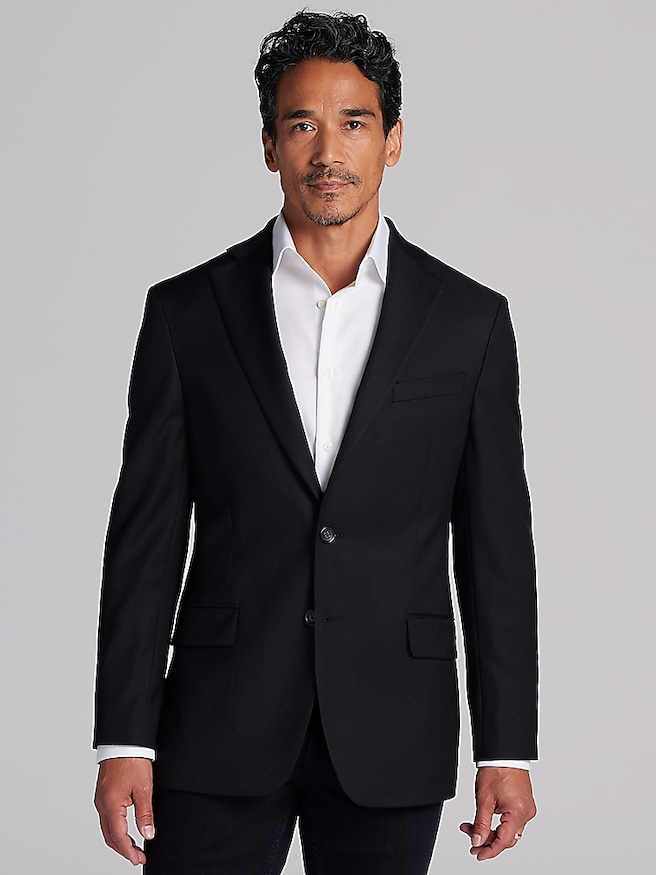
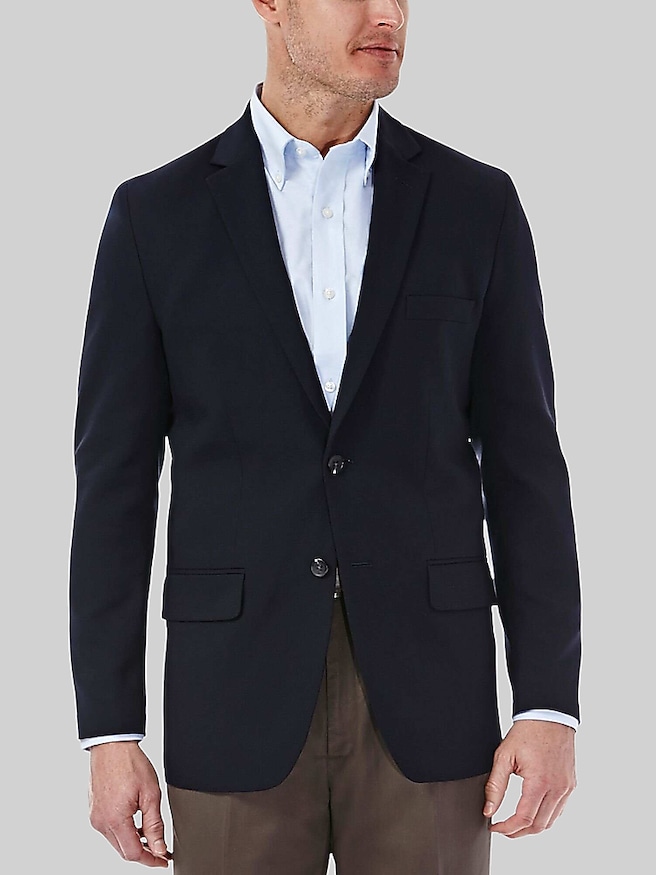
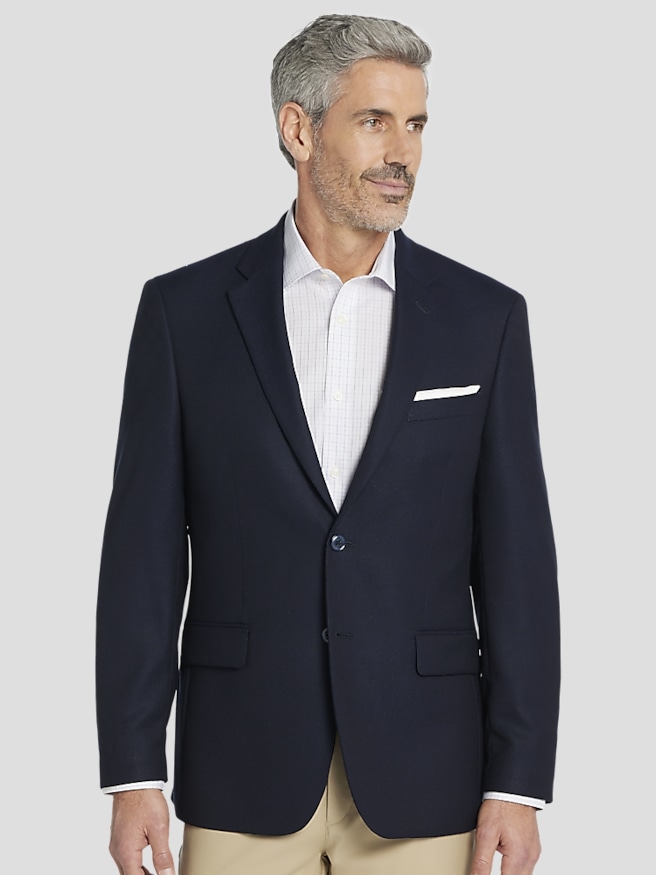
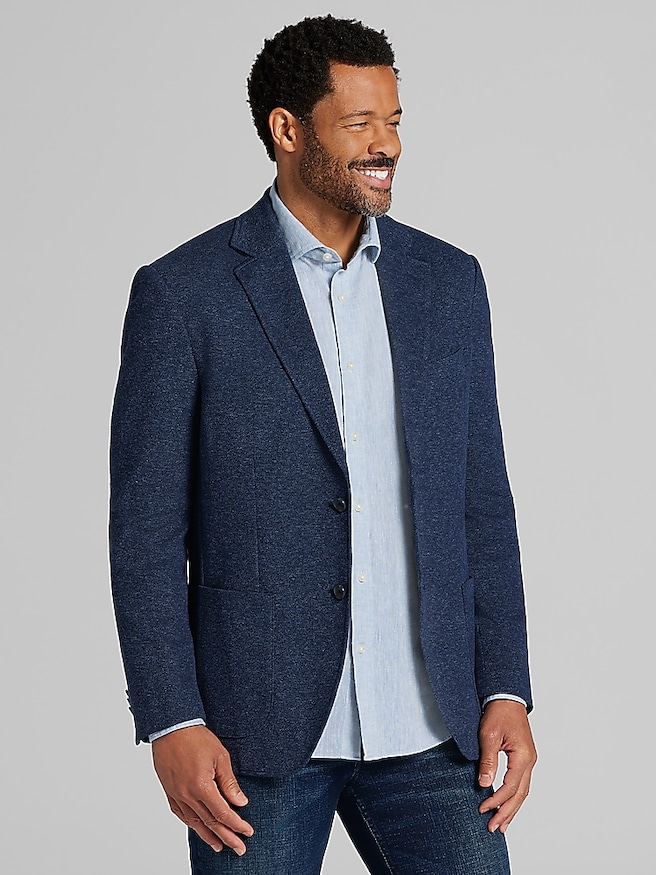
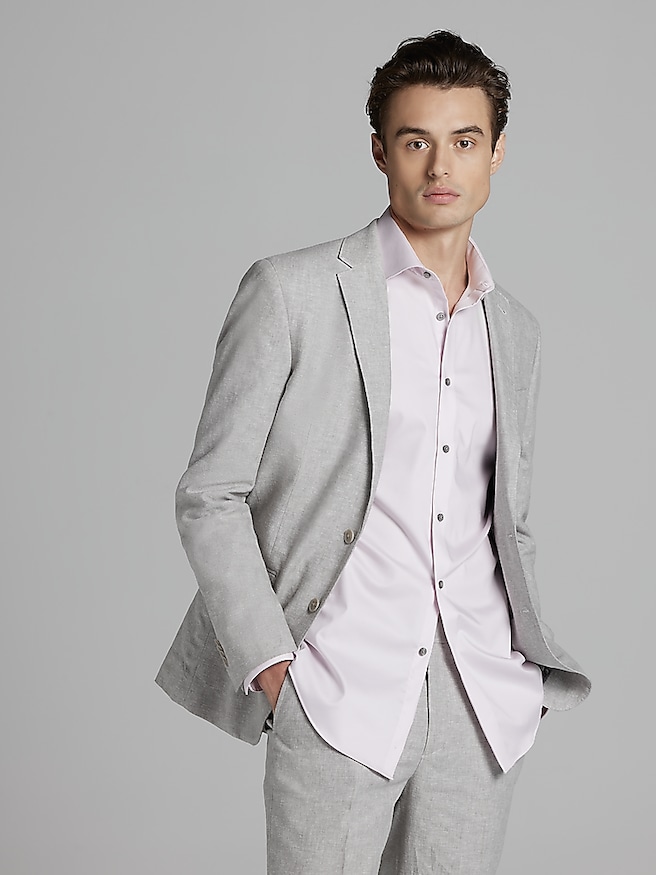
Tailored blazers are separate jackets shaped to follow the body, with defined shoulders, a clean chest, and a balanced waist that give an outfit a polished silhouette. They bring structure to dress trousers, chinos, or dark denim without requiring a matching suit. The word tailored describes the jacket’s shape and finish; it does not necessarily mean the garment was made to measure. Some blazers have a pronounced shoulder and a closely shaped waist, while others use softer construction for a more relaxed outline. Both can look refined when the proportions suit the person wearing them. That versatility makes a blazer useful for office presentations, dinner reservations, graduation celebrations, and wedding receptions where the dress code allows separates. A dress shirt, tailored trousers, and leather lace-ups create a more traditional combination, while a fine-gauge knit and loafers give the same jacket an easygoing character. For an interview, a quiet fabric and restrained accessories keep the attention on the conversation rather than the outfit. Navy and charcoal provide understated foundations, while brown, olive, and muted checks add visual depth without demanding elaborate styling. Texture also changes the effect: a smooth weave reads crisp and businesslike, while a subtle basket weave or herringbone gives the surface more character. Details such as notch lapels, patch pockets, and flap pockets influence how dressed up a jacket feels. Patch pockets generally suggest a more relaxed approach; flap pockets and a smoother finish often look dressier. Lapel width works best in proportion to the jacket and the wearer, rather than as an isolated statement. The goal is a balanced outfit, with enough contrast between the blazer and trousers to make the combination look intentional instead of like an incomplete suit. A blazer can cover many occasions, but it is not a substitute for a tuxedo when an invitation specifies black tie. Its strength lies in the space between casual clothing and a coordinated suit, where a well-shaped jacket adds polish without making the outfit feel overly formal.
Fit determines whether that polished shape feels natural in motion. A tailored blazer should sit neatly across the shoulders, with the shoulder seam close to the point where the shoulder meets the upper arm. Excess fabric hanging beyond that point can make the jacket appear oversized, while a shoulder that is too narrow may pull across the upper back. The collar should rest against the shirt collar without a noticeable gap, and the lapels should lie smoothly against the chest rather than bowing outward. When the jacket is buttoned, the front should close comfortably without an X-shaped strain around the fastening. A defined waist can create a sharp outline, but an overly tight midsection often causes the vents to spread and the fabric to wrinkle. Enough room to sit, shake hands, and reach across a desk matters just as much as the view in a mirror. Sleeve length typically leaves a small amount of dress-shirt cuff visible when the arms rest naturally at the sides. Jacket length should balance the torso and legs, generally covering the seat rather than stopping abruptly above it. Short, regular, and long proportions affect more than the hem: they also influence sleeve length, button placement, and where the waist shaping falls. Someone who spends much of the day at a desk may appreciate room through the upper arms and back, while someone dressing for a reception may prioritize a clean drape over a lightweight shirt. Stretch fabric and softer internal construction can support ease of movement, though neither can compensate for a jacket that is too small. For a related emphasis on movement and an easy feel, Comfortable Blazers offers another way to explore the category. Alterations can refine sleeve length and modestly adjust the waist, but major shoulder changes are more involved. Starting with a sound fit through the shoulders and chest gives those finishing adjustments a better foundation. A successful fit looks composed while standing and remains comfortable through the ordinary movements of the day.
Fabric and construction shape how a blazer drapes, feels, and holds up to repeated wear. Wool is a traditional choice because its natural resilience helps fabric recover from light creasing, while its drape supports a smooth outline. Worsted wool often has a cleaner surface suited to business settings; more textured wool fabrics bring a less formal appearance. Cotton can feel familiar and relaxed, though it may develop visible creases through the elbows and body. Linen has a distinctive texture and an easy drape, with wrinkles that are part of its character rather than a sign of poor fit. Blends can combine these qualities, and a small amount of stretch may improve flexibility. The full fabric composition matters more than any single fiber named on a label. Inside the jacket, lining, interlining, and shoulder construction affect both structure and feel. A full lining provides a smooth interior over shirts, while partial lining leaves more of the inner fabric exposed. Softer construction allows a gentler silhouette; firmer construction creates a more defined chest and shoulder. Durability also depends on sound seams, securely attached buttons, and fabric suited to the intended use. A blazer worn frequently for commuting and meetings benefits from a resilient weave and a shape that does not strain at stress points. Care begins with the garment’s label, especially for blended fabrics and structured jackets. A broad, shaped hanger supports the shoulders, and a soft garment brush can lift surface dust before it settles into the cloth. Giving the jacket space between wears helps it recover its shape. Overfilled pockets can distort the front, so bulky keys and phones are better carried elsewhere. Professional cleaning should follow the care instructions rather than an automatic schedule after every wear. For a gift, accurate measurements and a clear sense of the recipient’s usual dress habits are more useful than guessing from a shirt size alone. Whether chosen for a first professional wardrobe or an established rotation of separates, a thoughtfully fitted blazer earns its place through dependable shape, useful versatility, and careful upkeep.