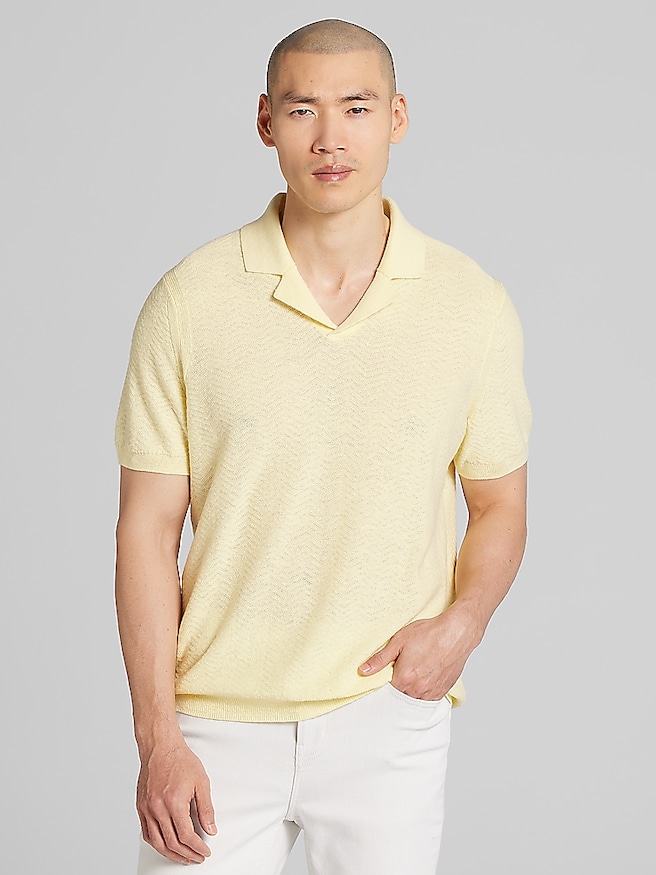
Sweater gifts for men bring together everyday usefulness and a personal touch, especially when the fabric, shape, and neckline reflect how the recipient already dresses. The best match is usually a sweater that feels familiar enough to wear often but adds something thoughtful to his wardrobe: a softer texture, a richer color, or a silhouette that works with his favorite shirts and pants. For someone who keeps his clothes simple, a solid crewneck offers clean lines and easy pairings with chinos, jeans, and tailored trousers. A V-neck leaves space for a shirt collar and can frame a tie without covering it completely, making it a natural choice for someone who enjoys a more polished look. Cardigans offer an open front that can be buttoned for definition or left undone for a relaxed feel, while quarter-zip styles let the wearer adjust the neckline and show a little of the layer underneath. These distinctions matter more than chasing a trend. A dad who wears an oxford shirt most days may appreciate a fine-gauge knit that slips comfortably over the collar and cuffs; a brother who favors T-shirts and denim may get more use from a textured crewneck with an easy fit. Navy, charcoal, and medium gray coordinate with many established wardrobes, while burgundy, olive, and muted blue introduce color without demanding a completely new outfit. Texture adds another layer of character. Ribbed knits create linear definition, cable patterns give the surface depth, and smooth knits keep the overall effect understated. When a sweater is a birthday, anniversary, graduation, or thank-you gift, those small choices help it feel selected for the person rather than simply selected by size. Sweaters also sit naturally alongside other Clothing Gifts For Men, particularly when the goal is something he can wear to a family dinner, an office gathering, or a casual evening out.
Material plays a large part in how a sweater feels, drapes, and holds up to repeated wear. Cotton generally has a familiar hand and can be a good match for someone who prefers an easygoing knit, though weight and construction influence whether it feels crisp, soft, or substantial. Merino wool is known for its fine fibers and ability to manage moisture, with a smooth appearance that often suits both casual clothing and more tailored combinations. Cashmere is valued for its softness and light feel, but that delicate surface benefits from careful handling and attention to friction. Blended yarns can combine the character of natural fibers with added resilience, shape retention, or easier maintenance, depending on their composition. No fiber name alone guarantees quality; yarn, stitch density, finishing, and proper care all contribute to performance. A fine-gauge sweater has smaller stitches and a relatively smooth surface, which helps it sit neatly beneath a blazer. A heavier, more pronounced knit creates a fuller silhouette and is often better worn as the main layer rather than squeezed beneath a close-fitting jacket. For a gift recipient who notices scratchy fabrics, the feel at the neck and wrists deserves particular attention because those areas may touch bare skin. A shirt underneath can provide a buffer, but it does not make every fabric equally comfortable. Durability is also visible in the details: even stitching, secure seams, and ribbed edges that recover after gentle stretching are useful signs of sound construction. Some pilling can occur with wear, especially under the arms or where a bag strap rubs, and does not automatically mean the sweater is poorly made. A fabric-appropriate sweater comb or depilling tool, used carefully according to its directions, can help maintain the surface. The most satisfying sweater gift balances softness with the level of upkeep the recipient is comfortable taking on, whether he enjoys caring for finer knits or prefers a straightforward laundry routine.
Fit makes that material choice feel intentional. A sweater should allow comfortable movement through the shoulders and arms without pulling across the chest, and the intended layers should influence the size and cut. Someone wearing a knit over a T-shirt may prefer a closer profile than someone placing it over a woven button-front shirt. On a traditional set-in sleeve, the shoulder seam generally sits near the edge of the shoulder; dropped shoulders are a design choice and create a more relaxed outline. Sleeves usually finish around the wrist, and a typical hip-length hem should overlap the waistband without bunching heavily when the wearer sits down. A ribbed hem may draw the fabric inward, so the body length and shape matter as much as the chest measurement. The size label on a sweater he already enjoys can be a helpful starting point, but comparing garment measurements and checking the intended fit gives a clearer picture than assuming every cut wears the same way. Care deserves equal consideration because knitwear can change shape when handled roughly. The care label should determine whether a sweater is machine washable, suitable for hand washing, or intended for professional cleaning. When washing is permitted, appropriate detergent and gentle handling help protect the fibers; twisting or wringing can stretch a wet knit. Unless the label says otherwise, reshaping and drying flat can help preserve the silhouette. Folded storage also helps prevent the shoulder bumps and stretching that hangers may cause, particularly with heavier knits. With a suitable fit and manageable care requirements, a sweater becomes an easy part of the recipient’s routine rather than something saved for an unlikely occasion. A smooth V-neck can bring polish to trousers for a dinner reservation, a cardigan can soften the formality of a collared shirt, and a textured crewneck can give familiar jeans a more considered finish. That versatility is what makes a well-chosen sweater feel generous: it offers comfort, character, and repeated use while still leaving room for his own way of dressing.