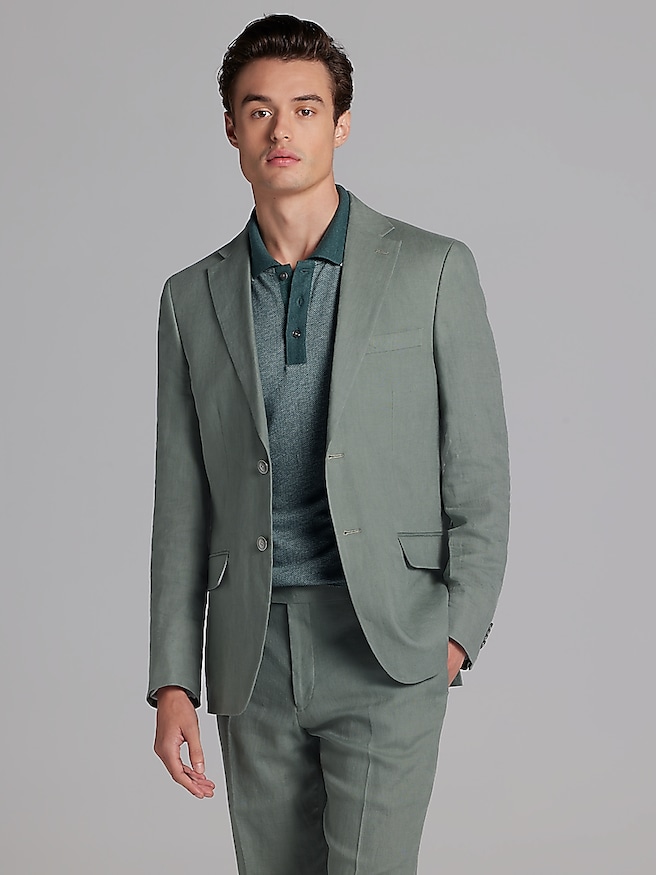
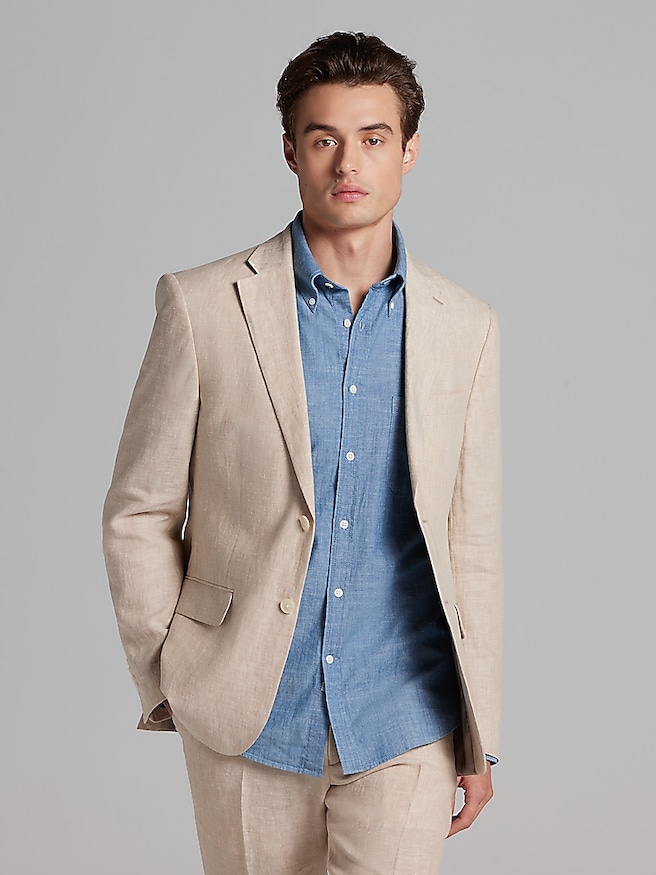
Summer wedding groomsmen suits combine lightweight, breathable fabrics with a polished fit and colors that suit the setting and dress code. For many celebrations, that means airy wool, linen blends, or lightweight cotton in shades such as light gray, tan, or blue. The right choice depends as much on fabric construction as fiber content: an open weave can allow more airflow, while a dense fabric may feel warm even when it looks light. Tropical-weight wool is often a useful option for a tailored appearance with natural resilience, especially when the day moves from an outdoor ceremony to an indoor reception. Linen has a relaxed texture and breathable feel, with creasing that becomes part of its character rather than a flaw to eliminate. Blends can soften that rumpled effect or add structure, depending on their composition. Cotton can create a crisp, less formal look, although its weight and weave deserve attention when comfort in humid conditions matters. A textured fabric may feel at home beside garden greenery or a waterfront backdrop, while a smoother finish can read more formally in a ballroom. Jacket construction matters, too. Half-lined and partially lined designs can reduce layers through the body, but lining still has a purpose: it helps a jacket slide over a shirt and supports a clean drape. A fully lined suit in a light, open-weave fabric may still be appropriate, particularly for a celebration held mostly indoors. The aim is a suit that looks composed without feeling cumbersome through photographs, seated dinners, and time on the dance floor. For groomsmen handling everything from an early arrival to a late toast, comfort needs to last beyond the ceremony. Fabric that recovers well after sitting, seams that lie flat, and smooth construction at the armholes all contribute to an outfit that can handle a full wedding day. A breathable shirt and comfortable underlayers complete that foundation without relying on a loose, oversized suit to create room.
Color gives summer wedding groomsmen suits much of their character, but the invitation and venue should establish the level of formality. Sand and pale gray can look easygoing at an afternoon garden ceremony, while medium blue or navy offers a more defined appearance for an evening celebration. A dark suit is not automatically too heavy for summer; fabric weight, airflow, and construction matter more than color alone. At a coastal venue, textured cloth and softer contrast can echo the relaxed setting without making the wedding party look casually dressed. For a formal dress code, lighter colors and relaxed styling may be less suitable, and a black-tie invitation calls for the appropriate evening attire rather than an ordinary business suit. Within the wedding party, consistency usually comes from a shared fabric, shade, and level of formality, not an identical silhouette on every person. A slim fit may suit one groomsman, while a roomier cut gives another the same clean appearance without pulling across the chest or thighs. The shoulder line should sit naturally, the jacket collar should rest against the shirt collar, and the front should close without pronounced strain. Trousers need enough room through the seat and thigh for sitting and walking, with a hem that falls neatly over the chosen shoes. These details become especially noticeable when the group stands together for photographs or takes a seat at dinner. Coordinated ties, pocket squares, and shoes can connect the group even when each suit requires individual alterations. The groom can stand apart through a distinct tie, boutonniere, or subtle change in color while the groomsmen maintain a cohesive backdrop. That distinction does not require every accessory to match exactly; a restrained palette often feels more natural than repeating one bright accent everywhere. For friends and family outside the wedding party, Summer Wedding Suits For Guests can reflect the same setting and dress code without duplicating the groomsmen’s coordinated look.
Summer wedding groomsmen suits should feel comfortable in motion, not just look sharp while standing still. A fitting is more useful when it includes sitting, reaching forward, and taking a few natural steps in the shoes intended for the event. Some movement at the jacket is normal, but strong pulling, a collar that lifts away from the neck, or trousers that bind at the waist can signal a fit issue. Alterations can refine sleeve length, trouser hems, and some areas of shaping, while a well-fitting shoulder remains an important starting point. For a ceremony on grass or a reception with plenty of dancing, properly hemmed trousers and supportive, well-broken-in dress shoes make a practical difference. Keeping the suit on a broad, supportive hanger before the celebration helps maintain the jacket’s shape, and a garment bag protects it during travel without forcing it into a tightly packed suitcase. After wear, giving the fabric time to air out and brushing away surface dust can help keep it looking fresh between professional cleanings. Always follow the care label, since fiber blends, lining, and internal construction can require different treatment. Excessive heat can damage delicate fabrics or affect a jacket’s structure, so pressing and steaming should follow the garment’s care requirements rather than a one-method-fits-all routine. Spills are best blotted gently instead of rubbed, with stubborn marks left to a qualified cleaner. Good care supports durability, but so does choosing a cut and color that remain useful after the wedding. A subtle blue or gray suit can transition to future celebrations, dressier dinners, or professional occasions with a change of shirt and accessories. Linen-rich styles may be especially appealing for other warm-weather gatherings where a relaxed texture belongs. For a groomsman who expects to wear the suit again, understated details and a comfortable fit can matter as much as how closely the outfit follows the wedding palette. The result is coordinated wedding-day clothing with a practical place in a wardrobe long after the final photograph.