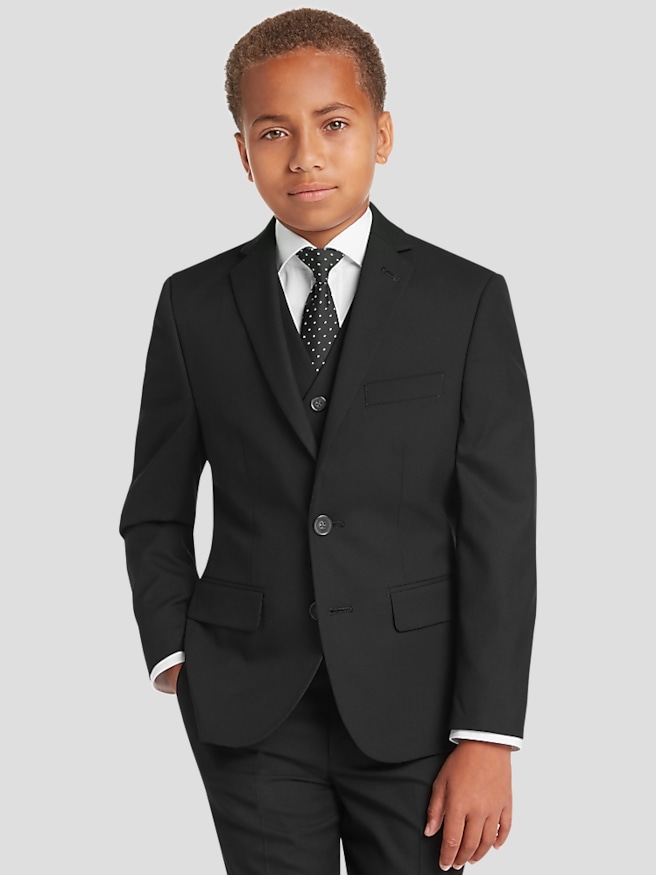
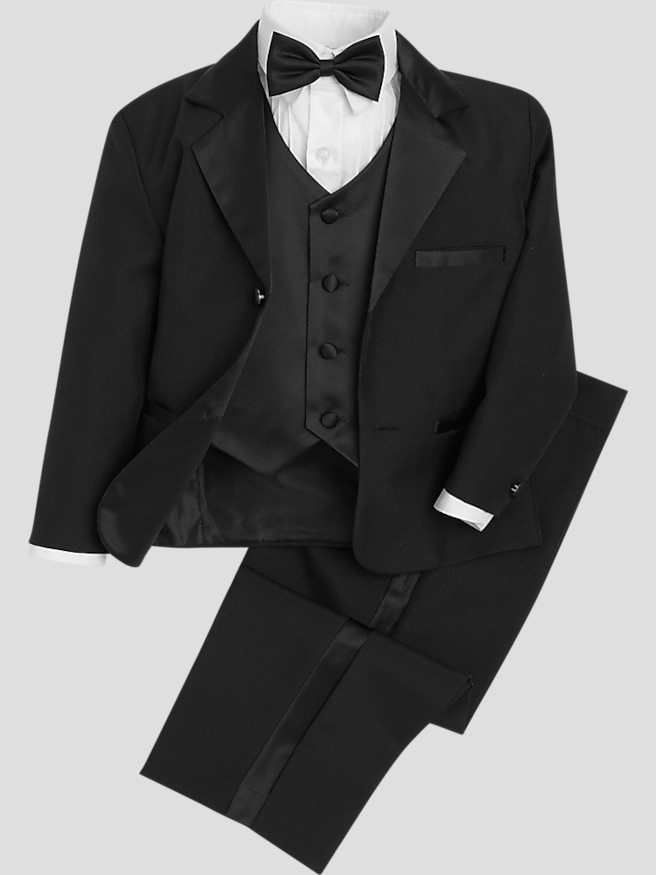
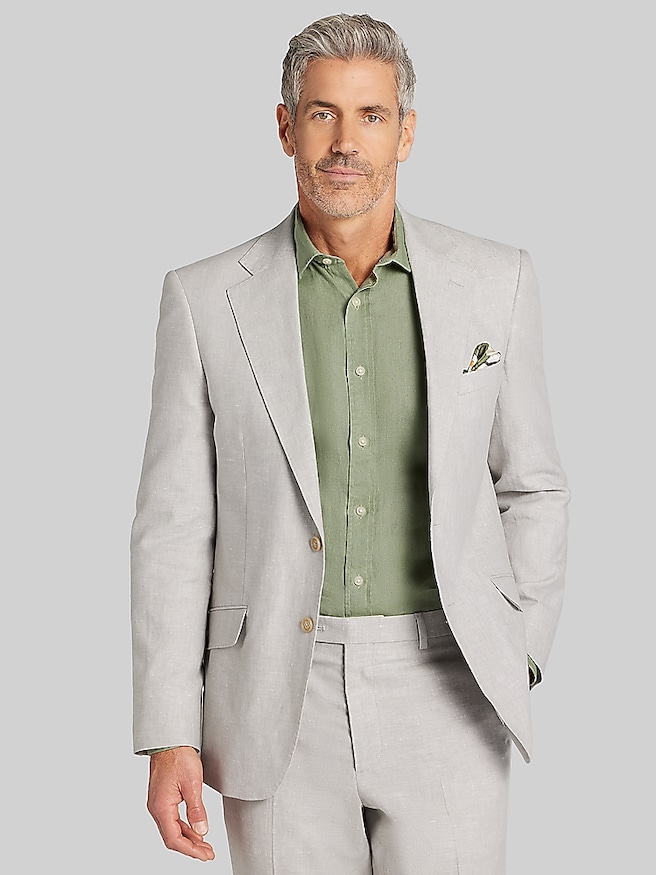
A solid navy or charcoal suit with a single-breasted, two-button jacket is a versatile choice for teenage boys who need one suit for several occasions. Either color looks polished with a white dress shirt and a subdued tie for a school awards ceremony, a wedding, or a first interview. The same suit can feel more personal at prom or homecoming with a tie in a favorite color or a pocket square that picks up a shade in a date’s outfit. Navy pairs well with black or dark brown dress shoes, while charcoal and black shoes make a classic combination for a more formal setting. A solid fabric also keeps the focus on the person wearing it in graduation portraits and big group photos. When the event leaves room for more expression, a burgundy suit or a subtle plaid can give the outfit some character without much extra styling. A suit with a matching vest has a dressier look, and the vest can keep the outfit looking put together when the jacket comes off at the reception. The invitation or school dress code matters more than any rule about color: a dark suit fits many formal occasions, but an event that calls for black tie typically calls for a tuxedo. For a teen building a dress wardrobe, it helps to think past the first event. A suit chosen for a family wedding might see use again at a scholarship interview or a graduation dinner. A quieter color makes that transition easy, but so does picking a cut the teen feels comfortable wearing. For someone accustomed to jeans and sneakers, a clean two-piece suit with a little room through the legs may feel more natural than a narrow cut. For someone who already likes fitted clothes, a closer cut can work just as well, provided there’s enough room to sit, walk, and move without tugging at the fabric.
Fit starts at the shoulders, where the jacket should follow the body without extending past the natural shoulder line or pulling across the upper back. With arms relaxed, the sleeves should end near the wrist bone and show a small amount of shirt cuff. On a two-button jacket, the top button should close without creating tight lines across the front; the bottom button is left undone. A slim fit can give the suit a neat outline without being tight, while a classic cut generally leaves more space through the chest and thighs. The distinction is easier to see in motion than in a mirror. Sitting down shows whether the trouser waistband digs in or the fabric pulls across the thighs, and reaching forward as if shaking hands shows whether the jacket binds across the back. Trousers should sit securely without a belt having to cinch loose fabric into folds. The shoes intended for the event are useful when checking the hem: the trousers can fall cleanly to the top of the shoe or make a slight crease in front, but fabric that bunches at the ankle can make an otherwise good fit look unfinished. For a growing teen, an adjustable waistband or a hem with enough fabric to let down can extend the useful life of the suit. Buying a jacket with oversized shoulders to leave room for growth is less practical because shoulders are harder to alter than sleeves or trouser hems. Younger teens between size ranges can use Suit For Youth to compare youth proportions with the longer sleeves and trouser lengths often found in adult cuts. Height alone won’t settle that choice. A teen with long legs and a short torso may need more length in the trousers without a longer jacket, while a broad-shouldered teen may need more room up top without extra width at the waist. Chest, waist, and inseam measurements give a clearer picture than age alone.
Fabric affects how a suit hangs, how it feels after a few hours, and how much upkeep it needs between events. Wool and wool blends generally drape well and can recover from light creasing after the suit has had time to hang. A polyester blend can resist wrinkles, which is helpful when a suit spends part of the day in a garment bag before a ceremony. A touch of stretch can make the trousers more comfortable through a long dinner or on a crowded dance floor, but stretch won’t correct a jacket that’s too narrow or trousers that are already tight. Construction matters alongside fabric: even stitching, secure buttons, and seams that lie flat are worth noticing, especially around pockets and at the trouser seat, where repeated wear puts more strain on the cloth. Care varies by fabric and by how the jacket is built. Some suits are machine washable, but the label on each piece is the deciding factor; washable trousers don’t necessarily mean the matching jacket can go in the same load. A broad hanger helps the jacket hold its shape, and hanging trousers neatly after wear can keep creases from setting in. Emptying the pockets before hanging the suit prevents a phone or a set of keys from stretching the fabric out of shape. For a minor spot, blotting rather than rubbing is gentler on the surface, and any cleaning should follow the care label. A first suit can also make a thoughtful gift for a teen approaching graduation, starting a job that calls for dress clothes, or taking on a role in a family wedding. Having the recipient take part in the fitting is more useful than guessing from a jeans size, and it gives them a say in the color and cut. That matters for a suit intended to earn a place in the closet after the milestone photos are taken.