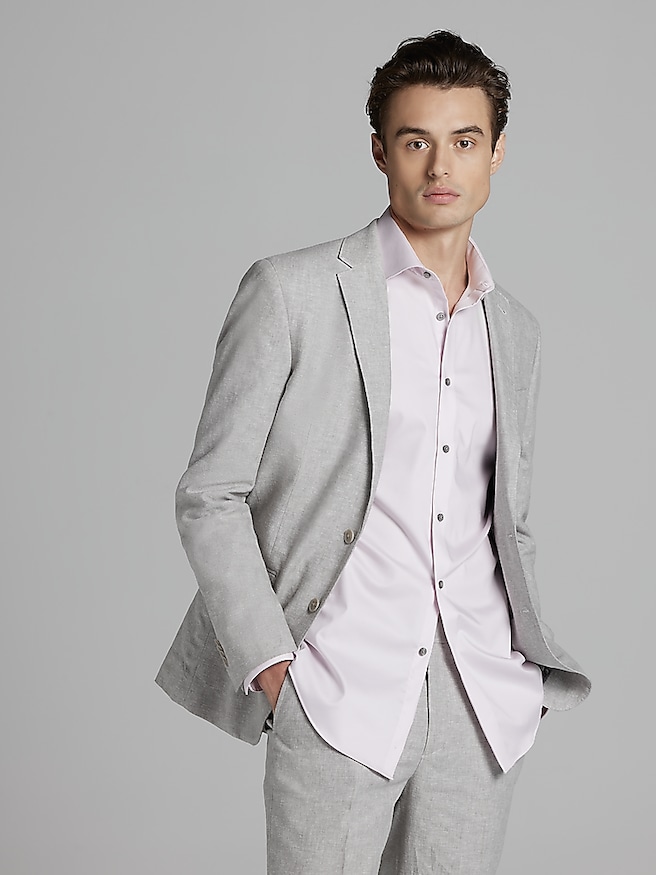
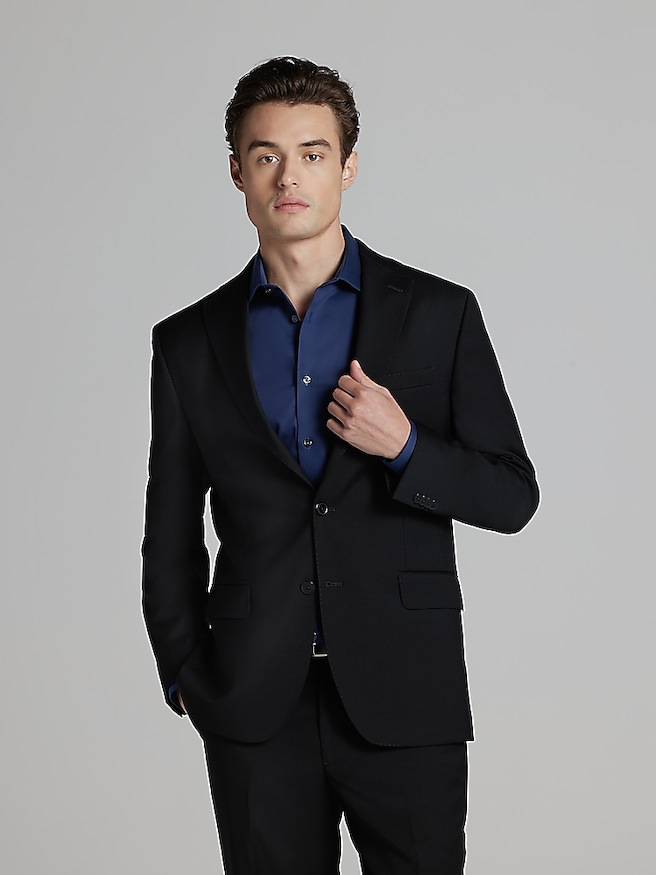
A suit jacket with slacks brings tailored structure to an outfit for work, weddings, interviews, and other occasions that call for more than casual clothing. The combination can be a matching two-piece suit or a jacket worn with contrasting dress trousers, but those looks serve different purposes. A matching suit uses the same fabric, color, and pattern for both pieces, creating an uninterrupted line from the shoulders to the shoes. Suit separates allow the jacket and trousers to be selected in individual sizes while retaining that coordinated appearance when both belong to the same matching collection. That flexibility can be especially useful for someone whose chest and waist measurements do not align with the proportions of a standard suit set. Simply pairing two pieces labeled navy or charcoal does not necessarily create a matching suit: weave, finish, and dye can vary enough to make close shades look unintentionally mismatched. Contrasting slacks make that difference deliberate. A navy jacket with medium-gray trousers, for example, establishes a clear separation while keeping the overall look appropriate for many business settings and dressy gatherings. Texture matters here, too. A jacket with a matte finish or visible weave often works more naturally with contrasting trousers than a sleek, lustrous jacket designed as part of a formal suit. The distinction between a sports coat or suit jacket helps explain why some combinations look relaxed and cohesive while others seem separated from their intended matching pieces. For an important interview or a wedding with a business-formal dress code, matching fabric generally provides the more traditional appearance. For a client lunch, an office presentation, or a dinner with a dressy but less formal atmosphere, distinct jacket and trouser colors can offer a little more personality. The intended setting, along with any stated dress code, determines whether a coordinated suit or contrasting separates make the better impression.
Fabric and construction influence how a suit jacket with slacks looks after several hours of wear, not just when it first goes on. Wool is a traditional suiting material because it drapes well, allows moisture vapor to pass through, and has natural resilience that helps ordinary wrinkles relax between wears. Worsted wool typically has a smoother surface and a crisp appearance suited to business clothing, while more visibly textured weaves give tailored pieces additional depth. Wool blends can combine those qualities with other characteristics, such as added stretch or a different surface texture. Polyester blends may offer wrinkle resistance and durability, although breathability, feel, and drape depend on the full fabric composition and construction. A small amount of elastane can add flexibility when sitting at a desk, reaching across a conference table, or moving through a crowded reception. Lining also affects comfort and movement; its material, coverage, and fit all contribute to how easily a jacket slips over a shirt. The best-looking combination balances those fabric qualities with proportions that suit the wearer. Jacket shoulders should follow the natural shoulder line without extending noticeably beyond it or pulling inward. Lapels should rest against the chest, and the front should close without pronounced strain lines around the fastening point. Enough room through the back and upper arms makes everyday movement easier without requiring excess fabric through the torso. Trousers need their own fit assessment, even when their labeled size seems familiar. The rise, seat, and thigh shape determine whether slacks sit comfortably and hang cleanly, especially when seated. Pockets that flare open or fabric that pulls across the lap can indicate insufficient room. Slim, tailored, and classic cuts describe different silhouettes, but the most useful distinction is how each balances comfort with a clean outline. A trouser hem with little or no break creates a sharper line, while a modest break offers a more traditional finish. Jacket length, sleeve length, and trouser length work together, so alterations can make a meaningful difference without changing the basic character of the outfit.
Thoughtful details make tailored clothing easier to wear repeatedly. Solid navy, charcoal, and medium-gray combinations provide a restrained foundation for dress shirts, ties, and leather shoes, while subtle checks or textured fabrics introduce interest without relying on bold accessories. A white shirt keeps attention on the jacket and trousers; a pale blue shirt softens the contrast while remaining familiar in professional settings. With contrasting slacks, a shirt or tie can connect the colors without trying to repeat every shade exactly. A fine-gauge knit can create a less formal impression where the setting permits, although a collared shirt remains the more conventional choice for interviews and business-formal events. The practical value of a suit jacket and slacks also depends on care. Following each garment’s care label is important because shell fabric, lining, internal structure, and trims may have different requirements. A broad, shaped hanger supports the jacket’s shoulders, while trousers benefit from hanging in a way that preserves their crease without distorting the waistband. Airing garments after wear and gently brushing away surface dust can reduce unnecessary cleaning. Professional cleaning is appropriate when required by the label or when soil and odors call for it; frequent cleaning without a specific need can add avoidable wear. Matching pieces benefit from being cleaned together when professional cleaning is necessary, helping limit differences in appearance over time. Rotating outfits, emptying pockets before storage, and avoiding overstuffed jacket pockets also help preserve shape. Durability comes from that combination of suitable fabric, sound construction, comfortable fit, and consistent care rather than from fiber content alone. For someone building a professional wardrobe, returning to an office, attending milestone celebrations, or replacing a well-worn outfit, these qualities make tailored clothing useful beyond a single occasion. As a gift, a jacket-and-slacks combination is most practical when the recipient’s measurements and preferences are known, with room for any necessary alterations. The result should feel natural in motion and look considered whether the wearer is standing for a photograph, greeting a client, or settling into a long meeting.