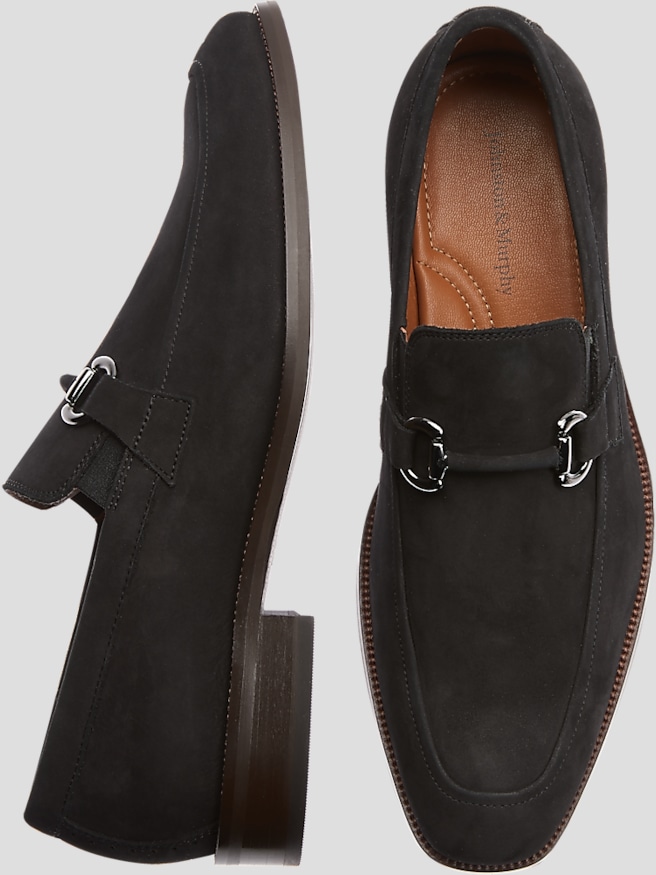
Suede prom loafers for men bring a soft, textured finish to an outfit built around sharp tailoring. Their slip-on shape keeps the line of a suit clean, while the brushed surface adds depth without the shine of polished leather. Traditional suede is leather with a raised nap, giving it a velvety feel and subtle variations in appearance as the fibers catch the light. Suede-look materials can create a similar effect, although their composition and care requirements may differ. The overall impression depends as much on the shape of the shoe as its color: a slim profile and gently tapered toe look refined beneath tailored trousers, while a rounded toe or substantial sole creates a more relaxed silhouette. Black suede offers a restrained foundation for a black, charcoal, or deep blue suit. Navy can lend depth to tonal dressing, and brown or tan works especially well with lighter tailoring when the event’s dress expectations allow it. A penny strap adds familiar structure across the vamp, while a metal bit introduces a small, noticeable accent. Tassels bring movement and a more decorative character. With any of these details, the shoe looks most intentional when it has something in common with the rest of the outfit, whether that is a dark color repeated in the tie or metal hardware that complements a watch. A clean trouser hem helps preserve that connection; excess fabric pooling over the shoe hides the details that make a loafer distinctive. For a tuxedo, a sleek black silhouette keeps the contrast between textured footwear and formal tailoring controlled. Strict black-tie requirements may favor more traditional formal shoes, so the invitation’s expectations matter. For prom settings that welcome individual style, suede provides a way to add personality without letting footwear overwhelm the suit, shirt, or accessories. The result can feel dressed up and expressive while still looking coherent in a full-length photograph or across the dance floor.
Comfort matters when the evening includes standing for pictures, sitting through dinner, and spending hours on foot. A well-fitting prom loafer should feel secure across the instep and around the heel, with enough room for the toes to rest naturally. Because there are no laces to adjust, the relationship between the shoe’s shape and the foot is especially important. A vamp that presses firmly into the top of the foot can become distracting, while a loose heel may create rubbing as it moves with every step. Suede leather may soften with wear, but that does not make a cramped toe box or an unstable fit a good starting point. Trying loafers with the socks intended for prom gives a more useful sense of fit than switching between thick athletic socks and thin dress socks. Lightweight dress socks create a continuous line under tailored trousers; no-show socks offer a more exposed-ankle look when the outfit and dress code suit that approach. In either case, a smooth sock surface and secure fit help reduce bunching inside the shoe. Interior construction also influences how a loafer feels over a long evening. A cushioned footbed can soften contact underfoot, a smooth lining can help limit friction, and a flexible forefoot can make walking feel more natural. Those features vary by construction and should not be assumed from appearance alone. Outsoles deserve the same attention. Leather soles have a traditional dress-shoe character, while rubber soles may provide added flexibility or grip, depending on their design. No sole makes every polished floor slip-proof. A stable heel and a shoe that stays comfortably in place are more useful than a dramatic shape that feels awkward on stairs. Wearing the shoes indoors before the event can reveal pressure points while there is still time to address fit. For someone attending prom in a suit for the first time, familiar, comfortable footwear can make the whole outfit feel easier to wear, from the first group picture to the last dance.
The appeal of suede extends beyond its appearance on prom night, but its textured surface benefits from thoughtful care. The nap can collect dust, flatten where it rubs against trouser hems, or develop marks from spills. A suede brush used gently on dry shoes helps lift loose dirt and restore the surface texture; vigorous scrubbing can leave the finish uneven. A suede eraser may help with some dry scuffs, while deeper stains are often better assessed by a professional leather cleaner. Smooth-leather polish and ordinary shoe cream are generally unsuitable because they can darken or flatten the nap. Any protective treatment should be labeled for the material and tested in an inconspicuous area, since even a compatible product may affect color. Protection also does not make suede waterproof or stain-proof. If the shoes become damp, air-drying away from direct heat helps protect their shape and finish. Absorbent, unprinted paper inside can help manage moisture, and appropriately sized shoe trees can support the silhouette between wears once the shoes are dry. Storage matters, too: a breathable shoe bag protects the surface from dust without trapping moisture, and keeping pairs from pressing against one another helps preserve decorative details. Durability depends on the quality of the upper, lining, stitching, and sole attachment, along with how the shoes are worn and maintained. Inspecting edges and seams for secure construction is more useful than judging longevity by softness alone. For a wardrobe that continues beyond one formal event, suede dressy casual loafers for prom night can also complement tailored separates at graduation celebrations, weddings, or dressier dinners, provided the occasion’s dress code fits. A simple design in a versatile color is particularly easy to wear again. As a gift for a prom attendee, loafers are most successful when the recipient’s fit and outfit preferences are known. With a comfortable shape, considered details, and suitable care, they can become a familiar part of dressing well rather than footwear associated with only a single evening.