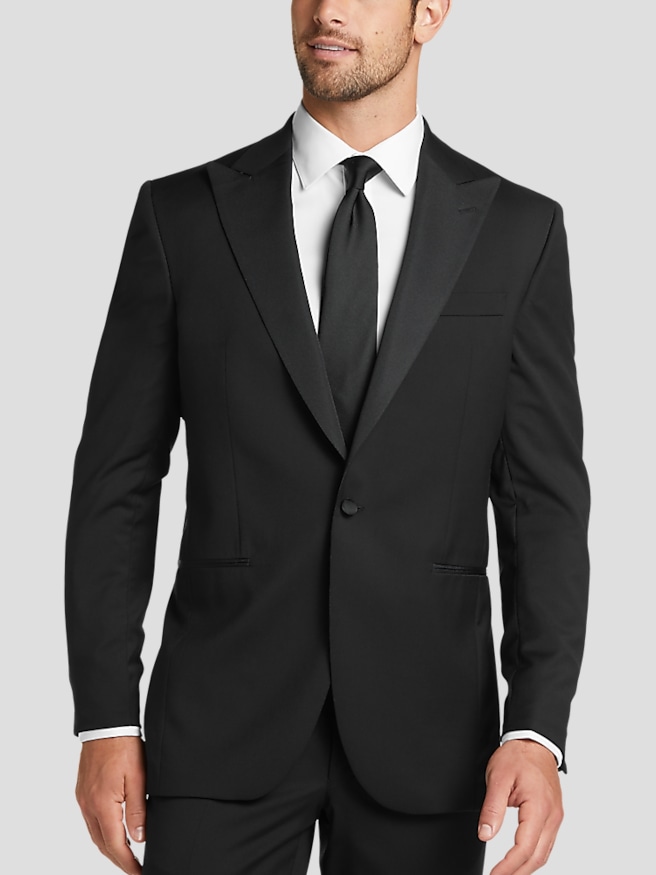
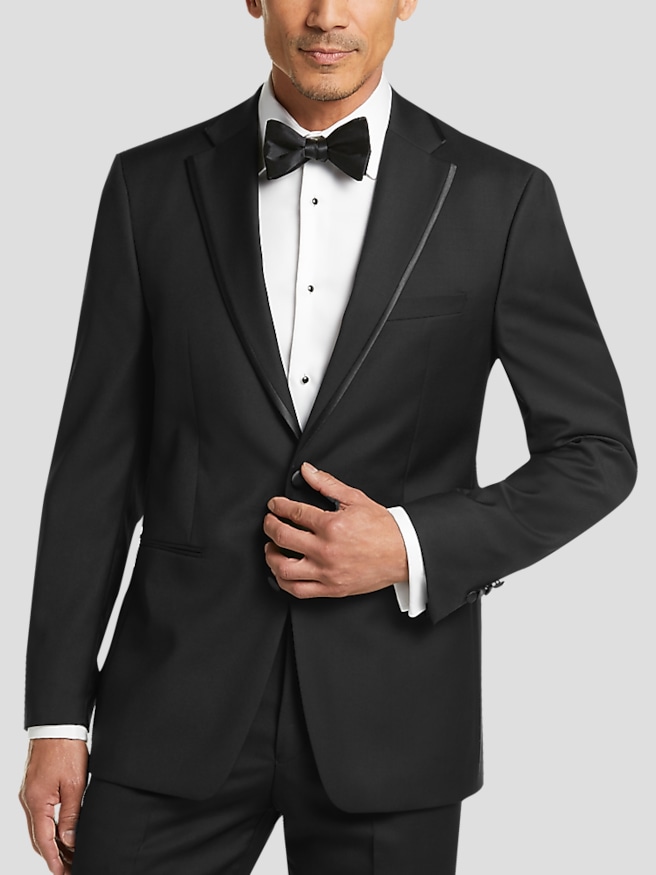
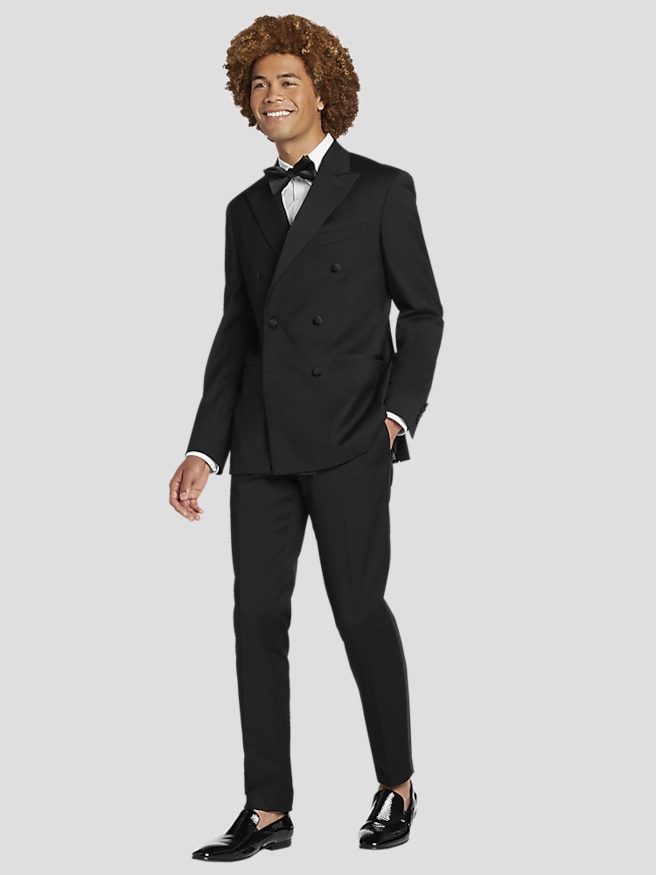
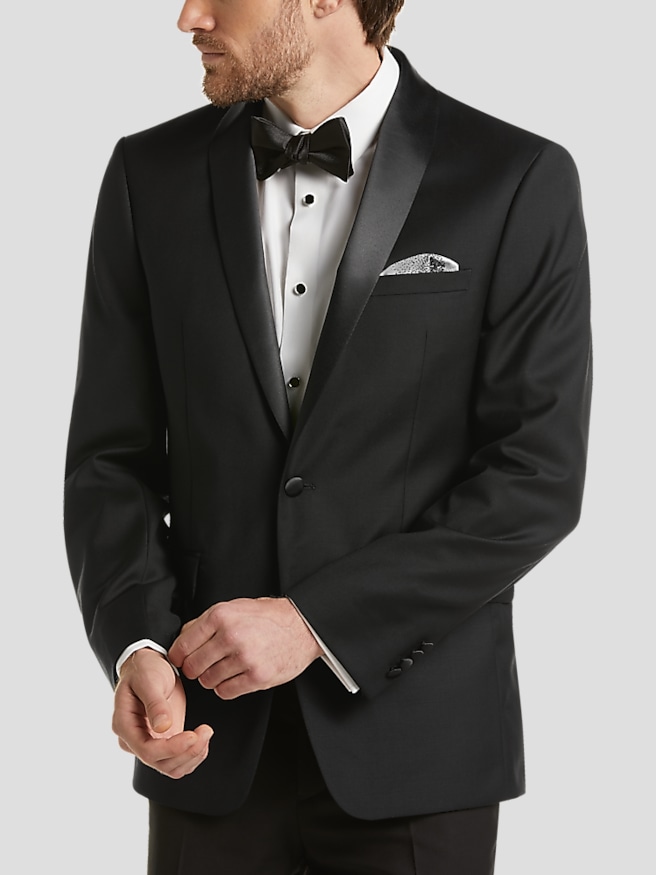
A black tuxedo jacket is the centerpiece of a black-tie outfit, whether the occasion is an evening wedding, a formal gala, or an awards dinner. What sets it apart from a black suit jacket is usually the lapel facing: satin gives the lapels a smooth sheen, while grosgrain has a fine ribbed texture and a more subdued finish. That contrast comes through in photographs even when the rest of the outfit is black. Lapel shape has just as much influence on the look. A peak lapel points upward toward the shoulder, creating a strong line across the chest. A shawl collar curves continuously around the neck and down the front, without a notch or point to interrupt the line. Both are traditional black-tie choices. A notch lapel has the familiar cutout seen on many suit jackets and gives the tuxedo a less traditional profile. The body fabric determines how pronounced the contrast with the lapels will be. Smooth worsted wool can give the jacket a crisp outline, while wool barathea has a fine-grained surface that sets off even a quiet grosgrain trim. A wool blend can also drape neatly; the weave and weight matter alongside the fiber content. Black velvet takes the look in another direction. Its pile catches the light at an angle, lending depth to a jacket that might look nearly matte from across the room. Worn as a dinner jacket with smooth black tuxedo trousers, velvet makes the contrast look deliberate. For a classic matching tuxedo, the jacket and trousers should read as one suit. Two black fabrics can look close on separate hangers but show a mismatch in shade or sheen when worn together, so it helps to look at them side by side under the same light.
A good fit starts at the shoulders, where the line should look smooth and the sleeve should begin near the end of the natural shoulder. The back of the collar should sit against the dress shirt without a gap, and the lapels should rest against the chest rather than bow away from it. On a single-breasted jacket, diagonal creases pulling from the fastened button often mean the body is too snug. A trim cut can still look clean without pinching when you shake hands or lift a glass for a toast. Check the fit over the dress shirt you plan to wear: with your arms relaxed, about a quarter to half an inch of shirt cuff can show below the jacket sleeve. A classic jacket generally covers the seat, and the hem should look balanced from the front and back. Small changes to sleeve length or waist shaping may be possible, but the shoulder fit is worth getting right from the start. For traditional black tie, a white tuxedo shirt, a black bow tie, matching tuxedo trousers, and polished black dress shoes let the lapels supply most of the contrast. A bow tie with a finish similar to the facing ties those details together without adding another texture. If the couple has specified a monochromatic dress code, the All Black Tux For Wedding collection is a starting point for building that look. At a wedding where the invitation simply says black tie, the traditional white shirt remains a sound choice. A jacket can also be a meaningful wedding gift for a groom who expects to wear formalwear again, particularly when a fitting is part of the gift and the trousers can be chosen alongside it.
The details that give a black tuxedo jacket its clean lines are also the ones that benefit most from careful handling. Satin facings can show a snag or scuff more readily than matte wool, and pressure can flatten the pile on velvet. A lining that sits smoothly and leaves a little ease across the upper back helps the jacket move with you instead of tugging when you reach forward. Keeping bulky keys or a phone out of the outer pockets helps preserve the line at the hips and reduces strain on the pocket openings. After an event, give the jacket time to air out on a broad, shaped hanger that supports the shoulders. A soft garment brush can lift lint from smooth wool, but velvet is better handled according to its care label to avoid marking the pile. If a spill lands on the front, blot rather than rub; rubbing can disturb the surface and leave a patch that catches the light, even after the mark itself is gone. Follow the care label for cleaning, and when professional cleaning or pressing is needed, point out any stains and call attention to the lapel trim. Direct heat or heavy pressure can leave an unwanted shine on wool, flatten a lapel’s natural roll, or mark a velvet surface. Between occasions, a breathable garment bag keeps dust off the jacket without crowding it against other clothes. Store matching trousers nearby so both pieces are easy to check well before the next event. A quick look at the cuffs, buttons, and pocket edges can catch a loose thread or a bit of lint before the jacket goes on, leaving the small details to do what they should: keep the focus on the cut and finish.